
Quick overview
A Brazilian Butt Lift (BBL) combines liposuction with fat transfer, so recovery has two parts: healing the donor sites where fat was harvested, and protecting the transferred fat in the buttocks so it survives. Most patients return to desk work in 2–3 weeks, light exercise around week 6, and see near-final results between months 3 and 6.
The single biggest determinant of your result is strict adherence to no-sitting and no-pressure rules during the first 2–8 weeks. Transferred fat has no immediate blood supply — pressure cuts off the supply it needs to "take," and dead fat does not come back.
This guide walks through what to expect week by week, what's normal versus what should trigger a call to your surgeon, and how recovery decisions affect your final result.
Brazilian Butt Lift — what to expect, week by week
Typical recovery 14–21 days before patients return to most normal activities.
- Day 1–7Most pain & swelling. Compression garment 23 h/day. Walk daily.
- Week 2Off prescription meds, light activity, swelling starts to drop.
- Weeks 3–4Return to desk work. Light cardio. Sleep position may relax.
- Weeks 5–8Resistance training cleared by most surgeons. Garment off.
- Months 3–6Final shape emerges, swelling fully resolved, scars mature.
General guidance only. Your surgeon's instructions take precedence.
Week 1 — the first seven days
The first week is the most uncomfortable. Expect:
- Significant swelling and bruising in the abdomen, flanks, and thighs (wherever fat was harvested), and in the buttocks.
- Drainage from liposuction incisions for 24–72 hours. This is normal and helps reduce fluid buildup.
- Soreness that feels closer to "extreme workout" than sharp pain — managed with prescription pain medication for the first 3–5 days, then over-the-counter.
- A compression garment worn 23 hours per day to control swelling at the donor sites. Most surgeons keep you in it for 6–8 weeks total.
The non-negotiable rule: no sitting or lying directly on your buttocks. You'll sleep on your stomach or sides and use a BBL pillow (or a rolled towel under your thighs) when you absolutely need to be seated — for example, in the car ride home.
By day 4–5, most patients can shower, walk slowly around the house, and eat normally. Plan for someone to be with you for the first 72 hours.
Week 2 — easing back in
Bruising starts to fade and the worst of the soreness lifts. Most patients:
- Stop prescription pain meds.
- Walk for 15–30 minutes a day to support circulation and reduce the risk of blood clots.
- Continue 23-hour compression garment use.
- Still avoid all direct sitting on the buttocks.
Swelling is still significant — your buttocks will look larger than the final result. Do not panic and do not weigh yourself. Fluid retention plus inflammation can add 5–10 pounds to the scale that has nothing to do with your actual weight.
If you have a desk job and can work remotely while standing or lying prone, some surgeons clear you to log back on at the end of week 2. Most prefer you take 14 days off completely.
Weeks 3 and 4 — sitting (carefully) and back to work
Around the start of week 3, most surgeons clear modified sitting with a BBL pillow that shifts pressure off the buttocks and onto the back of the thighs. Use it every time you sit, including in the car and at a desk.
Typical milestones in weeks 3–4:
- Return to desk work with a BBL pillow.
- Lymphatic massage sessions begin (many surgeons recommend 6–12 sessions starting around week 2 or 3 to speed swelling resolution).
- Driving returns once you're off opioid medication and can comfortably twist to check blind spots.
- Light walking can be extended to 45–60 minutes.
You're still avoiding direct sitting at home, on couches, on toilets without a cushion, and in restaurants. Most patients invest in a second BBL pillow to leave at the office.
Weeks 5 to 8 — exercise and shape clarity
Between weeks 5 and 8 the buttocks start to look less swollen and more like the final shape. Most surgeons clear:
- Light cardio (walking, stationary bike with care) at week 4–6.
- Resistance training (lower body excluded) at week 6.
- Glute-targeted exercise only after week 8 — and only with surgeon approval. Heavy squats and lunges too early can compromise transferred fat.
- Sleeping on your back typically returns around week 6–8.
By week 6, the compression garment usually comes off (your surgeon will tell you exactly when). Lymphatic massage and continued hydration help residual swelling.
Months 3 to 6 — your real result
Between month 3 and month 6, 40–60% of the transferred fat will have been reabsorbed by your body. What's left is permanent. This is why surgeons "overcorrect" — they transfer significantly more fat than the final desired volume, knowing that some will not survive.
You'll typically see:
- Final shape crystallizes around month 4–6.
- Sensation in the buttocks (which feels muted or numb in the first months) returns over 3–9 months.
- Scar maturation continues for 12–18 months. Liposuction scars are very small (3–4mm) and fade significantly.
- Weight stability is critical — large weight loss after a BBL can shrink the transferred fat; large weight gain can distort the shape.
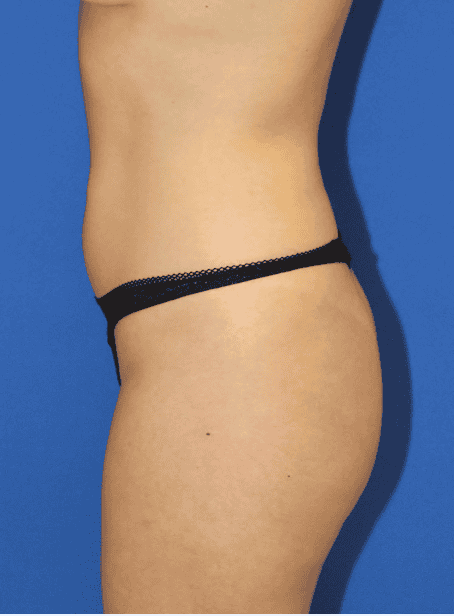
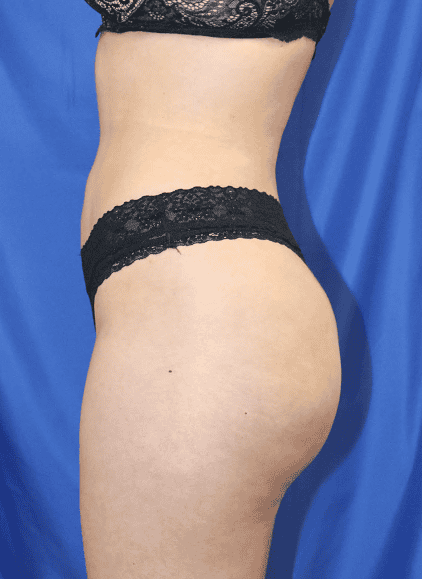
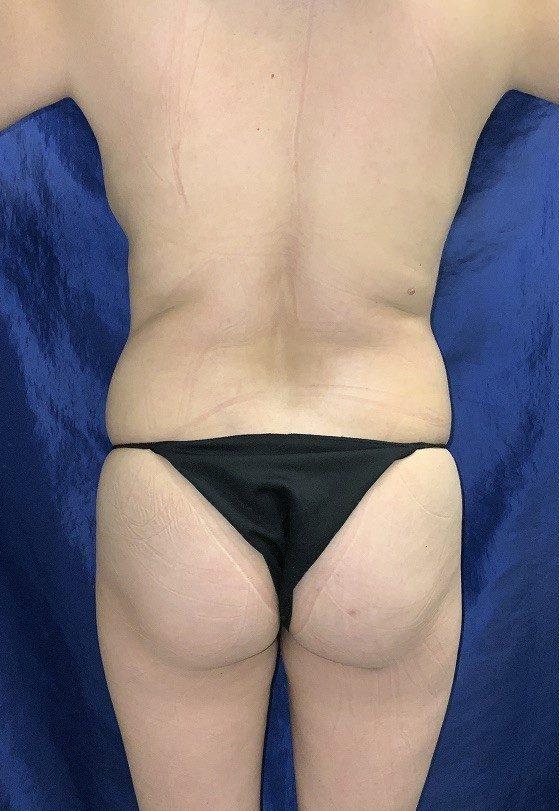
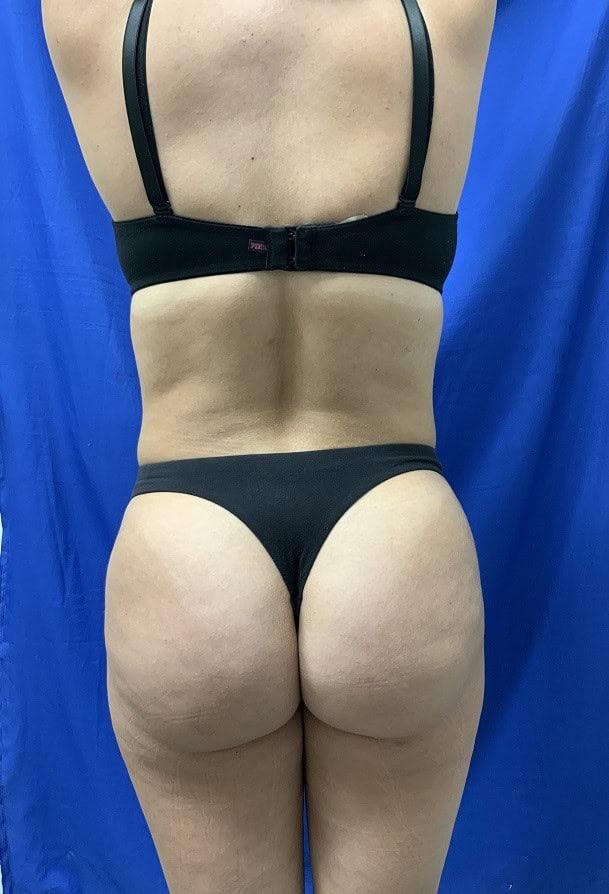
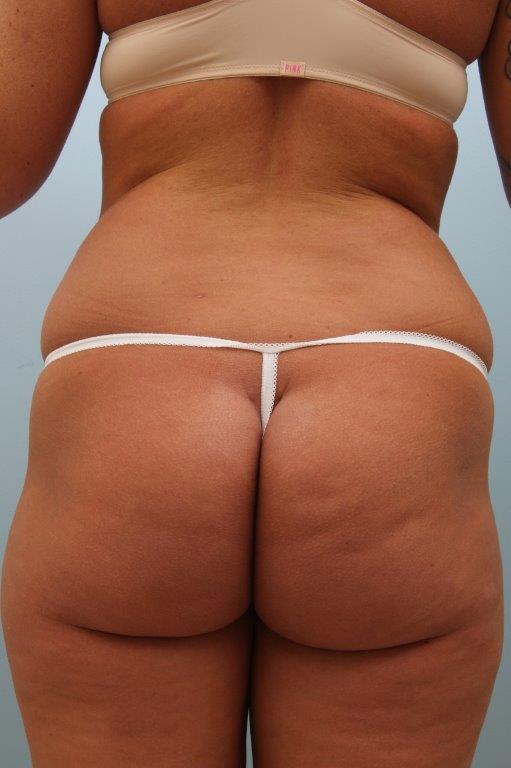
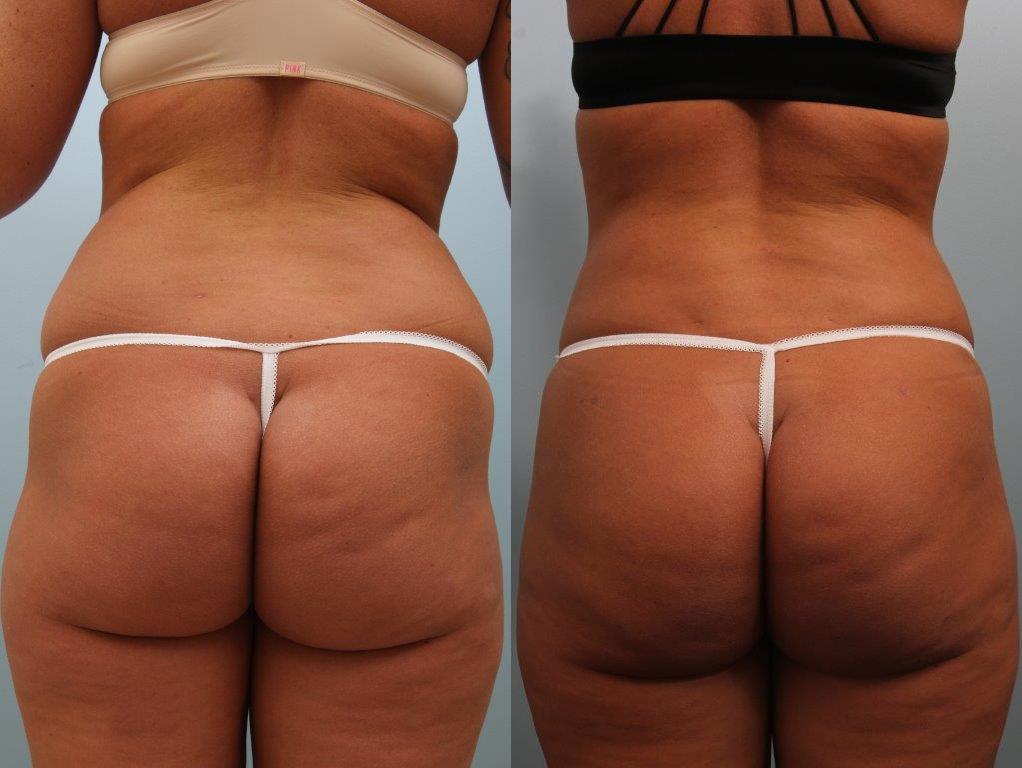
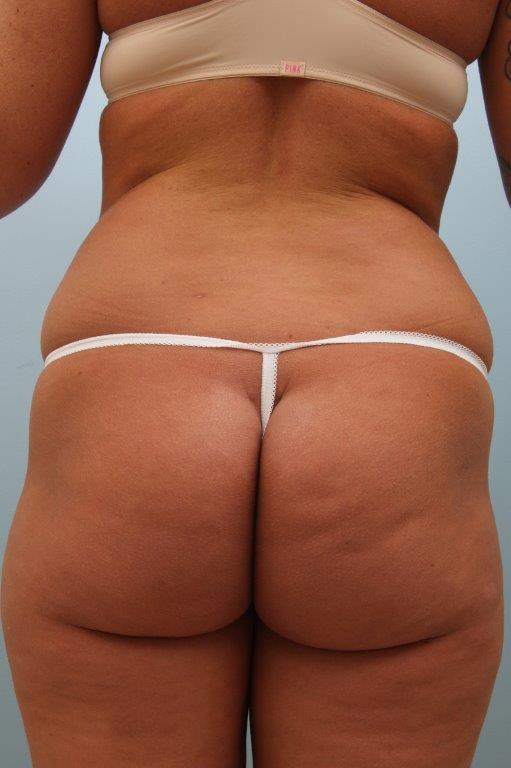
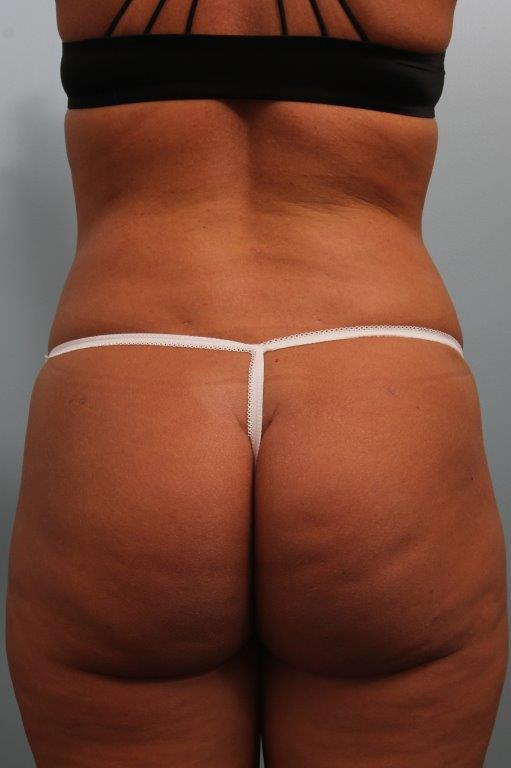
Real patient results
From verified board-certified surgeons in our directory.
When to call your surgeon — quick decision
Red flags — when to call your surgeon
BBL has historically had higher mortality than other cosmetic procedures, almost entirely linked to fat embolism from injection into deep gluteal muscle. Modern board-certified surgeons inject only into the subcutaneous layer (above the muscle) and many use ultrasound guidance. Ask about this in your consultation — it is the single most important safety question.
Tips that meaningfully affect fat survival
The science here is well-studied. The factors that actually move the needle:
- Strict no-pressure compliance for the first 8 weeks. Pressure on transferred fat causes cell death.
- No nicotine — including patches, gum, vapes — for 4 weeks before and 4 weeks after surgery. Nicotine constricts blood vessels and is one of the largest predictors of poor fat take.
- Adequate protein and hydration. Aim for 1g of protein per pound of goal body weight and 80+ oz of water daily.
- Lymphatic massage — multiple studies show faster swelling resolution and patients report better final contour.
- Stable weight — avoid losing or gaining more than 5–10 pounds in the first 6 months.
- Garment compliance at the donor sites. Loose skin and fluid pockets at the abdomen will undermine the result even if your buttocks heal perfectly.
What recovery costs (beyond the procedure fee)
Recovery has real costs that surprise patients. Budget for:
- 2–4 weeks off work if you can't work remotely.
- A BBL pillow ($30–80) — non-negotiable.
- Compression garments ($100–300) — your surgeon may include the first one.
- Lymphatic massage ($75–150 per session √ó 6–12 sessions) = $450–1,800.
- Childcare or help at home for 1–2 weeks.
- Medication and supplies ($100–300).
How to choose a BBL surgeon
Recovery success is shaped by the surgical decisions made before you ever wake up. The five questions that matter most:
- Are they board-certified by ABPS or the ABCS? This is non-negotiable.
- Do they inject only into the subcutaneous layer (not the muscle)? Ask explicitly.
- Do they use ultrasound guidance during fat injection? Increasingly the standard of care.
- Do they have before/after photos of patients with body types similar to yours?
- What is their revision policy if fat survival is poor?
Find a board-certified BBL surgeon
Get matched with verified BBL surgeons in your area.
This article is for educational purposes and does not replace medical advice. Always consult a board-certified plastic surgeon for guidance specific to your case.