
Quick overview
Liposuction recovery is shorter and less restrictive than most major plastic surgery procedures. Most patients return to desk work within 7 to 10 days, drop the compression garment around week 4 to 6, and resume full exercise by week 6. The final contour emerges around 3 to 6 months as swelling resolves and the skin retracts.
The biggest physical experience of liposuction recovery is not pain — most patients describe it as a deep soreness comparable to a hard workout. It is the swelling, the strict garment compliance, and the patience for the final shape that define the recovery.
This guide walks the recovery week by week, what is normal versus what should trigger a call to your surgeon, and how recovery decisions affect your final contour.
Liposuction — what to expect, week by week
Typical recovery 7–14 days before patients return to most normal activities.
- Day 1–7Most pain & swelling. Compression garment 23 h/day. Walk daily.
- Week 2Off prescription meds, light activity, swelling starts to drop.
- Weeks 3–4Return to desk work. Light cardio. Sleep position may relax.
- Weeks 5–8Resistance training cleared by most surgeons. Garment off.
- Months 3–6Final shape emerges, swelling fully resolved, scars mature.
General guidance only. Your surgeon's instructions take precedence.
Week 1 — soreness, drainage, garment
The first week is the most uncomfortable, but rarely the most painful. Expect:
- Deep soreness at the treated areas, similar to a brutal workout
- Drainage of pinkish-tinged fluid from the small incisions for 24 to 72 hours. This is normal and beneficial — it helps reduce post-op swelling.
- Significant swelling and firmness in the treated areas. The tissue will feel hard, lumpy, and uneven temporarily.
- A compression garment worn 23 hours per day, removed only for showering. Most surgeons keep you in it for 4 to 6 weeks total.
Pain peaks days 2 to 3 and drops sharply after day 4 or 5. Most patients are off prescription pain meds by day 5. Movement helps — short walks several times per day reduce stiffness and prevent blood clots.
By day 4 or 5, most patients can shower, dress without major help, and eat normally. The first 72 hours are best spent at home with someone nearby for help getting up and moving.
Week 2 — back to office, light walking
Most patients return to desk work between days 7 and 10. By the end of week 2:
- Soreness is at 2 to 3 out of 10
- Walking 30 to 45 minutes a day is comfortable
- Compression garment use continues full-time
- Drainage incisions have healed shut
Swelling is still substantial. The treated area will look puffier than the original pre-op state — this is fluid retention, not surgical failure. Many patients are alarmed at this stage and worry the procedure did not work. It did; the timing simply doesn't match the patient's expectations.
Lymphatic massage sessions, if your surgeon prescribed them, typically begin around week 1 to 2 and run for 4 to 8 sessions over the next month.
Weeks 3 and 4 — the swelling drop
This is where the result starts to be visible. Swelling drops noticeably, the firmness softens, and the treated areas begin to look like the contour you were aiming for. By the end of week 4:
- Most patients drop the compression garment to 12 to 18 hours per day
- Light cardio (walking briskly, stationary bike) clears
- Driving is back to normal
- Travel by plane is generally fine
You still cannot do strenuous exercise or anything that compresses the treated area heavily (e.g., heavy contact sports).
Weeks 5 to 8 — exercise return, final shape emerging
Most surgeons clear the following at week 6:
- Resistance training, including for the body areas treated
- Running and high-impact cardio
- Yoga, including inversions
- Swimming
The compression garment usually comes off entirely around week 6, sometimes earlier or later per surgeon protocol. By week 6 to 8, swelling has dropped substantially and the contour looks like the final result minus the last 15 to 20 percent of residual fluid.
Months 3 to 6 — your real result
Per ASPS recovery guidance, the final result of liposuction emerges over months 3 to 6. By month 3, the treated areas look like the final shape, and by month 6, residual deep swelling has fully resolved.
You will typically see:
- Final contour crystallizes around month 3 to 4
- Skin retraction continues through month 6 to 9 for patients whose skin needed to tighten over the treated area
- Small irregularities (lumps, dimples) that may have been present at week 6 typically resolve over 3 to 6 months
- Scarring at the small access incisions fades to barely visible at 6 to 12 months
If you have persistent irregularities, ripples, or asymmetry at 6 months, this is when a discussion with your surgeon about touch-up procedures (revision lipo or fat injection) is appropriate.
Red flags — when to call your surgeon
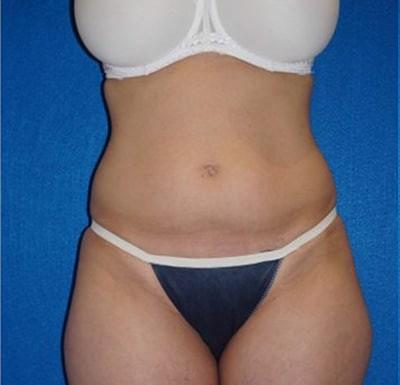
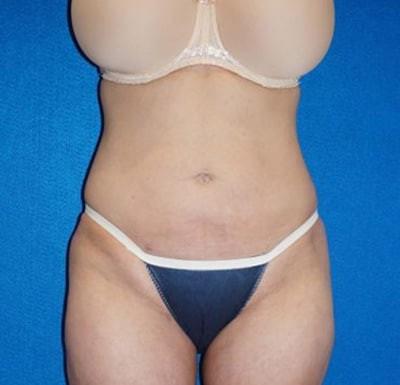
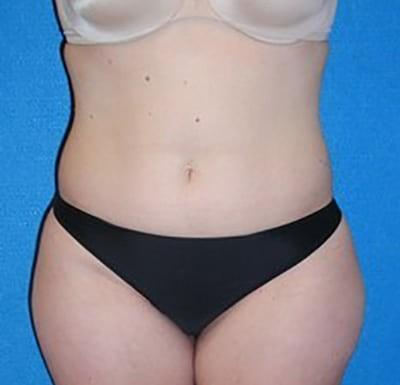
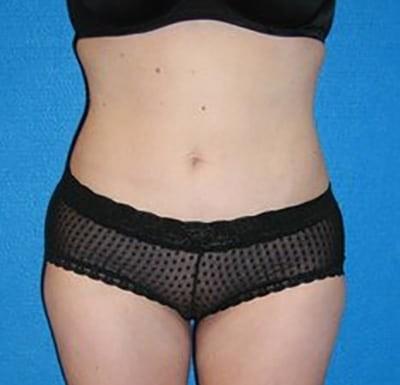
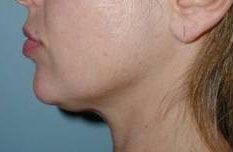
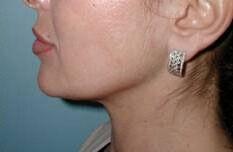
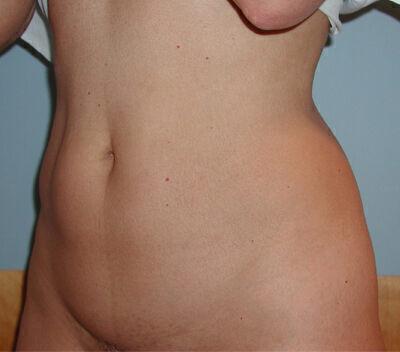
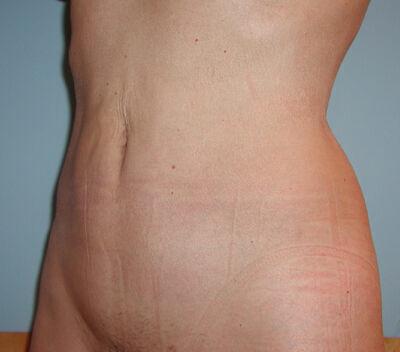
Real patient results
From verified board-certified surgeons in our directory.
Find a board-certified liposuction surgeon
Get matched with verified Liposuction surgeons in your area.
Lumpiness, firmness, soreness, mild numbness, and uneven appearance in the first 6 weeks are all normal and improve with time. The list above is the smaller set of complications that need urgent attention.
Tips that meaningfully affect your final contour
The factors that actually move the needle:
- Compression garment compliance. Wear it as prescribed. The garment is uncomfortable and easy to skip; doing so worsens swelling, prolongs recovery, and can cause contour irregularities as fluid pockets form.
- Lymphatic massage. Multiple studies show faster swelling resolution and patients describe softer, more even contours after a course of 6 to 12 sessions.
- Walk early and often. Daily walking from day 1 reduces blood clot risk and accelerates fluid resolution.
- No nicotine — patches, vapes, gum — for 4 weeks before and 4 weeks after. Nicotine is the largest preventable cause of skin retraction failure.
- Stable weight. Liposuction permanently removes fat cells from treated areas, but existing cells elsewhere can grow with weight gain. The result is best preserved at a stable weight.
- Adequate protein and hydration. 1 g of protein per pound of goal body weight, 80+ oz of water daily. Healing tissue needs protein.
What liposuction is not
Liposuction is a contouring procedure, not a weight-loss procedure. The American Society of Plastic Surgeons is explicit on this point: lipo is for patients within roughly 30 percent of their goal body weight who have stubborn fat deposits in specific areas, not for general weight reduction.
If your goal is significant weight loss, lipo will disappoint. Bariatric surgery, medical weight management, or sustained lifestyle change are the right tools for that. Liposuction shines once you are near your goal weight and want to address specific contour issues that diet and exercise cannot reach.
Cost factors
Liposuction cost reflects the number of areas treated, the volume of fat removed, surgeon experience, and geographic market. Common combinations (abdomen + flanks, or thighs + saddlebags) cost more than a single area.
Recovery costs beyond the surgical fee:
- 1 to 2 weeks off work
- Compression garment ($75 to $250)
- 4 to 8 lymphatic massage sessions ($75 to $150 each)
- Prescription medications
For pricing by city, see our liposuction cost guide.
How to choose a liposuction surgeon
The five questions that matter most:
- Are you board-certified by the American Board of Plastic Surgery? Non-negotiable. Many physicians without surgical training perform liposuction in non-medical settings; this is the highest risk category.
- What technique do you use, and why? Tumescent, VASER, SmartLipo, or PAL each have specific indications. A good surgeon explains the why.
- Do you operate in an accredited surgical facility? Hospital, ASC, or accredited office. Not a med-spa.
- Can you show me one-year before-and-after photos of patients with body types similar to mine? Six-week photos still show swelling; one-year photos show the real outcome.
- What is your revision policy for asymmetry or contour irregularities? Even excellent lipo sometimes needs touch-up. A clear policy upfront prevents friction later.
Compare board-certified liposuction surgeons
Get matched with verified Liposuction surgeons in your area.
This article is for educational purposes and does not replace medical advice. Always consult a board-certified plastic surgeon for guidance specific to your case.