
Quick overview
Rhinoplasty is one of the most precise procedures in plastic surgery, and its recovery is unusually long compared to body procedures. Most patients return to desk work and social life within 2 weeks, but the final nose takes between 12 and 18 months to fully settle as residual swelling resolves and tissues remodel.
The early recovery is driven by swelling and bruising; the late recovery is driven by patience. The nose at week 2 is not the nose at month 6, and the nose at month 6 is not the nose at month 12. Patients who set their expectations on the right timeline are dramatically happier with their results.
This guide walks through week-by-week recovery, what is normal versus what should trigger a call to your surgeon, and how to protect your result for the months when small choices matter most.
Week 1 — the splint, the bruising, the breathing
The first week is the most visibly dramatic. Expect:
- An external splint or cast on the bridge for 5 to 7 days. It protects the new bone and cartilage structure while it settles.
- Internal nasal packing or splints in many cases, removed at the 5- to 7-day visit. Some surgeons use dissolvable packing.
- Bruising around the eyes that peaks around days 2 to 4 — sometimes spreading lower into the cheeks. It fades through yellow and green stages over 7 to 14 days.
- Substantially blocked breathing through the nose for the first 1 to 2 weeks because of swelling inside, even after packing is removed. This is normal.
- Sleeping at a 30- to 45-degree angle (recliner or stacked pillows). Flat sleeping increases morning swelling and is uncomfortable around the splint.
Pain is generally milder than patients expect for the structural change involved — most describe it as 3 to 5 out of 10 the first 48 hours, dropping to over-the-counter level by day 4 or 5. The bigger discomforts are congestion and the inability to blow your nose.
Week 2 — splint off, back to public-facing life
The splint and any internal packing come off, usually around day 5 to 7. The nose underneath looks swollen and not quite final — this is expected. Most patients are surprised at how puffy the tip remains after a week, even though bruising has faded.
By the end of week 2, most patients are:
- Cleared to return to desk work (week 1 to 2 is the typical range)
- No longer visibly bruised, or only with subtle yellowing under makeup
- Breathing somewhat through the nose again, though still partially congested
- Off prescription pain meds
Strenuous activity, cardio, and any contact with the face — including bending over to pick something up — remain off-limits.
Weeks 3 and 4 — normal-looking, still swollen
For most patients, the nose looks almost normal to a casual observer by week 3 or 4. To you in the mirror, however, the tip still feels firm, slightly upturned, and not quite settled. This is the most psychologically tricky phase: you feel like the result should be visible, but it isn't yet.
Per ASPS guidance, light cardio (walking, stationary bike) usually returns at week 3 to 4. Most surgeons clear:
- Light jogging at 3 to 4 weeks
- Weightlifting (no strain on the face) at 4 to 6 weeks
- Yoga (no inverted poses, no forward folds) at 4 weeks
- Swimming pool laps at 4 to 6 weeks
Contact sports, anything with risk of nose impact (basketball, soccer, martial arts), and high-altitude activities are off-limits until at least 6 to 8 weeks. Per ASPS recommendations, the bones of the nose take 6 weeks to heal solidly; until then, a knock to the nose can shift the result.
Weeks 5 to 8 — settling and shape clarity
Swelling visibly decreases over weeks 4 to 8. The tip starts to refine and look more like the final shape. Most patients drop the rigid "nothing on my face" caution and return to normal social activity, photography, and exercise.
Around week 6:
- Glasses can rest on the bridge again (confirm with your surgeon)
- Full exercise except contact sports
- Nose massage may be prescribed by some surgeons to help residual tip swelling
- Most patients are no longer noticing day-to-day pain or pressure
The nose is still swollen by 20 to 30 percent compared to its final size, especially at the tip. The change is gradual and you may not notice it day to day.
Months 3 to 6 — your real result begins to emerge
By month 3, most of the visible swelling is gone for patients with thinner skin. For patients with thicker skin (especially over the tip), residual swelling persists much longer — sometimes up to a year. This is one of the biggest sources of impatience post-rhinoplasty: the timeline scales with skin thickness, and your surgeon will have told you this at consultation.
You will typically see:
- The mid-vault and bridge look final around month 3 to 4
- The tip continues to refine for 6 to 12 months
- Contact sport return at month 6 once bone consolidation is complete
- Numbness over the tip is common and typically resolves over 6 to 12 months
By month 6, most patients describe themselves as feeling "this is mostly my nose now" but acknowledge subtle refinement is still happening.
Month 12 and beyond — final shape and scar
Per the American Society of Plastic Surgeons, complete swelling resolution and final shape can take up to a full year, sometimes 18 months for thicker-skinned patients or revision cases. After that point:
- The shape stops changing
- Any residual swelling has resolved
- Internal incisions (for closed rhinoplasty) are invisible
- External columellar scar (for open rhinoplasty) is typically a thin pale line under the nose, hidden in normal viewing angles
If you are unhappy with the result at this point, this is when a revision consultation is appropriate. Reputable surgeons will not consider revision before the 12-month mark because the nose is still actively remodeling.
Red flags — when to call your surgeon
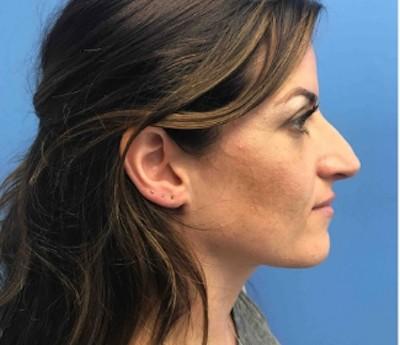
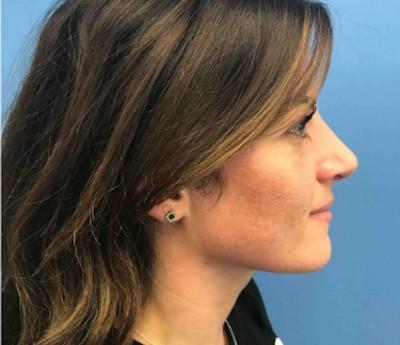
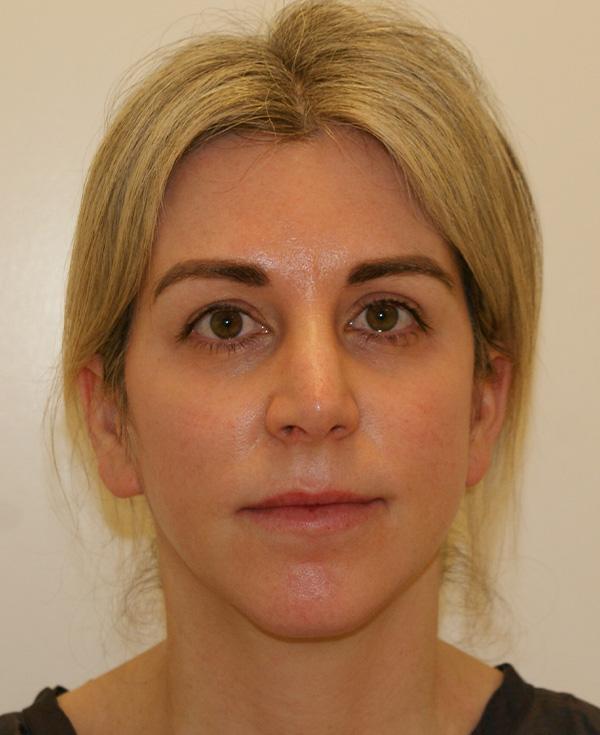
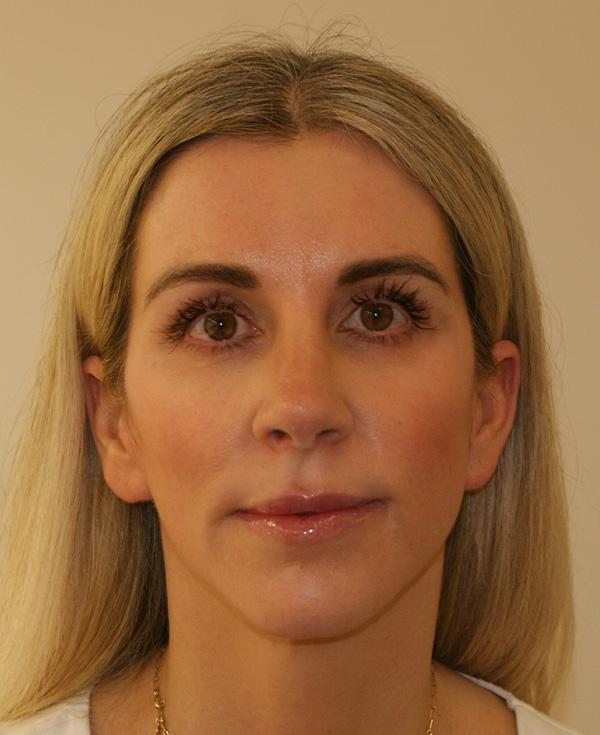
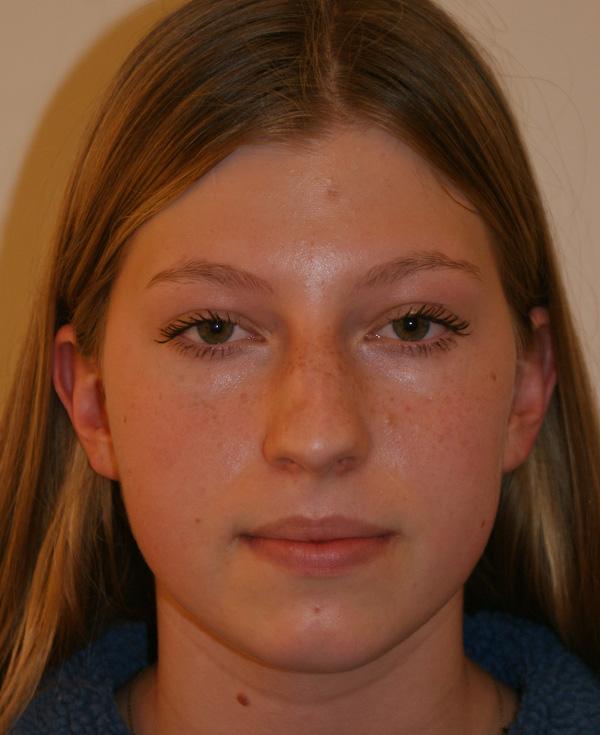
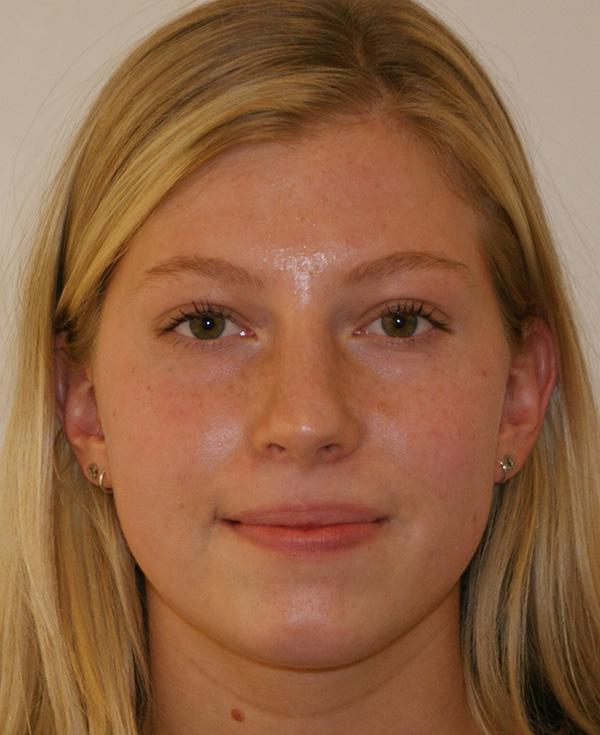
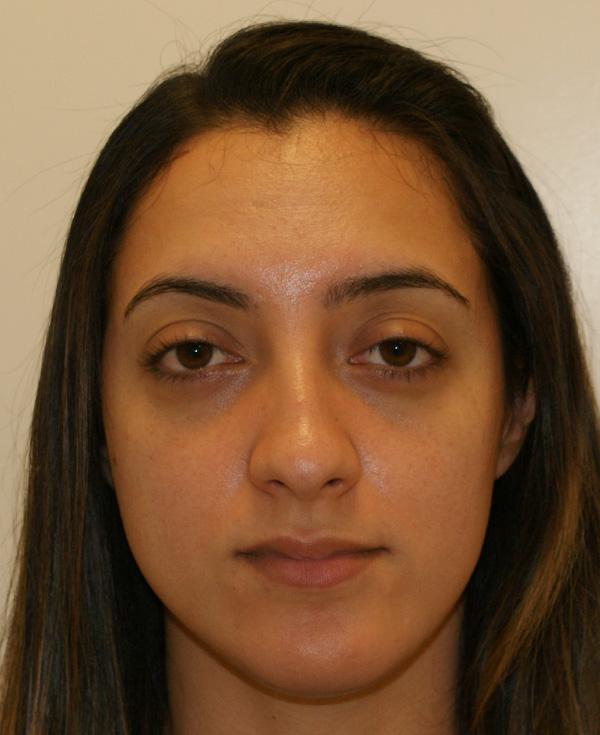
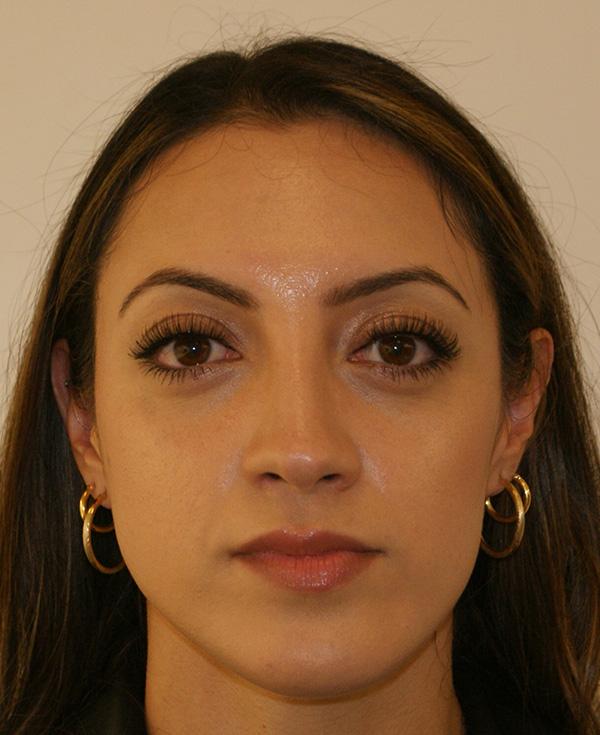
Real patient results
From verified board-certified surgeons in our directory.
Find a board-certified rhinoplasty surgeon
Get matched with verified Rhinoplasty surgeons in your area.
Minor crusting inside the nose, oozing of pink-tinged fluid for the first few days, and mild headaches are normal. The list above is for the small set of complications that need surgeon attention immediately.
Tips that meaningfully affect your result
The factors that move the needle:
- Strict no nose contact for 6 to 8 weeks. No glasses on the bridge (if bony work was done), no rubbing, no sleeping face down. The bones consolidate at 6 weeks.
- Keep your head elevated even at night for the first 2 weeks. This single behavior reduces morning swelling more than most patients realize.
- Avoid sun exposure on the nose for at least 6 months. UV worsens scar pigmentation on a healing nose. Wear high-SPF sunscreen and a hat.
- No nicotine — including vapes and gum — for at least 4 weeks before and after. Nicotine constricts the small blood vessels that supply healing tissue and is a leading predictor of poor outcomes.
- Saline rinses to keep the inside of the nose clean and reduce crusting. Use as your surgeon directs.
- Be patient. Photograph the same angles monthly under the same lighting. Day-to-day, you will not see change; month-to-month, you will. Comparison photos help with the patience curve.
Cost factors
A rhinoplasty's price reflects the complexity (primary vs revision, ethnic considerations, structural cartilage grafting), the surgeon's experience and reputation, and the geography. Revision rhinoplasty typically costs 30 to 60 percent more than primary because it is technically much harder.
Beyond the surgical fee, plan for the recovery costs:
- 1 to 2 weeks off work
- A second pair of glasses if you switch to taped-to-forehead glasses during recovery
- Saline rinse supplies, prescription medications
- Possible massage sessions per surgeon protocol
- Time off from contact sports (months)
For a deeper look at pricing by city, see our rhinoplasty cost guide.
How to choose a rhinoplasty surgeon
Rhinoplasty is the procedure where surgeon skill matters most. The same nose in two surgeons' hands can produce dramatically different results. The five questions that matter:
- Are you board-certified by the American Board of Plastic Surgery (ABPS)? Non-negotiable. The American Board of Facial Plastic and Reconstructive Surgery (ABFPRS) is also acceptable for facial-only surgeons.
- How many primary rhinoplasties do you perform per year? Look for at least 50 to 100 per year in active practice. Rhinoplasty is among the most volume-sensitive procedures in plastic surgery.
- Can you show me before-and-after photos of patients with similar starting noses to mine — at one year post-op? One-year photos are the only honest reference; six-week photos still show swelling.
- Open or closed approach, and why for my case? A surgeon should explain their technique decision in your specific anatomy.
- What is your revision rate, and what is your revision policy? Even excellent rhinoplasty surgeons have a 5 to 10 percent revision rate. Surgeons claiming zero have either done very few or are not being honest.
Compare board-certified rhinoplasty surgeons in your area
Get matched with verified Rhinoplasty surgeons in your area.
This article is for educational purposes and does not replace medical advice. Always consult a board-certified plastic surgeon for guidance specific to your case.