
Quick overview
BBL and liposuction are often pitched as alternatives, but they answer different questions. Liposuction is subtraction — it removes unwanted fat from areas like the abdomen, flanks, thighs, or back. A Brazilian Butt Lift is redistribution — it uses liposuction to harvest your own fat, then re-injects a portion of it to shape the buttocks. Every BBL includes liposuction; every liposuction does not include a BBL.
The right choice depends on what you actually want at the end. If you want a flatter, more contoured midsection or smaller saddlebags, liposuction alone is usually enough. If you want a fuller, lifted, more projected backside in addition to slimming somewhere else, a BBL is the procedure that combines both.
This guide compares both side by side: who they fit, recovery, results, cost, safety, and how to choose between them with a board-certified surgeon.
The procedures, side by side
Brazilian Butt Lift — what to expect, week by week
Typical recovery 14–21 days before patients return to most normal activities.
- Day 1–7Most pain & swelling. Compression garment 23 h/day. Walk daily.
- Week 2Off prescription meds, light activity, swelling starts to drop.
- Weeks 3–4Return to desk work. Light cardio. Sleep position may relax.
- Weeks 5–8Resistance training cleared by most surgeons. Garment off.
- Months 3–6Final shape emerges, swelling fully resolved, scars mature.
General guidance only. Your surgeon's instructions take precedence.
What liposuction does
Liposuction permanently removes fat cells from targeted areas through small cannula incisions. Common treated zones are the abdomen, flanks ("love handles"), thighs, arms, back rolls, and chin. The surgeon contours the area — the goal is a smoother, more defined shape, not weight loss. Modern techniques include tumescent liposuction (most common), ultrasound-assisted (VASER), and laser-assisted (SmartLipo). They differ in equipment and how fat is broken up, not in the basic principle.
What a BBL does
A BBL is technically a two-procedure operation under a single anesthesia: first, liposuction in two or more donor areas to harvest fat; second, that fat is purified and injected into the deep and middle layers of the buttock fat to create projection and lift. The American Society of Plastic Surgeons calls it "augmentation of the buttock region using a patient's own fat tissue" — a process medically known as autologous fat grafting.
The harvested fat is injected as microdroplets across the buttock's subcutaneous layer. Around 60% of the transferred fat typically survives long-term; the rest is reabsorbed by the body, which is why surgeons consistently overcorrect at the time of surgery to land at the right final volume around month 4 to 6.
Who each procedure fits
Liposuction alone is generally the right call if all of the following are true:
- You're within roughly 30% of your goal body weight (lipo is not a weight-loss procedure)
- Your skin has decent elasticity and will retract over the treated area
- You want a slimmer, more contoured shape — not added volume anywhere else
- You're comfortable with the small risk of contour irregularities (more common with poor skin elasticity)
A BBL is the right call if:
- You want both slimming (from the donor sites) and more projected, lifted buttocks
- You have enough harvestable fat to transfer — usually at least 1,000 to 1,500 mL across two donor sites for a noticeable result
- You can commit to 6–8 weeks of strict no-pressure positioning to protect transferred fat
- You're a non-smoker (or willing to stop 4 weeks before and after surgery — nicotine is one of the biggest predictors of poor fat survival)
If you don't have enough fat to harvest, neither procedure delivers a meaningful BBL result. Some surgeons combine a BBL with implants or recommend gaining 5–10 pounds beforehand to give the donor sites enough material.
Recovery: the biggest practical difference
Liposuction and BBL share the first part of recovery — compression garments, swelling, bruising at the donor sites, light walking from day one, return to desk work in around 1–2 weeks. After that, they diverge sharply.
A BBL adds the most demanding rule in cosmetic surgery: no direct pressure on the buttocks for at least 2 weeks, then only modified sitting with a BBL pillow for another 4–6 weeks. Transferred fat needs to revascularize (form new blood supply) to survive. Pressure cuts off circulation and kills the fat cells you just paid to keep. Most lifestyle setbacks of a BBL — desk work, driving, sleeping on your back, sitting at restaurants — come from this single constraint.
Liposuction-only patients can sit normally from day one. They're back to most regular activities in 2–3 weeks and cleared for full exercise around week 6.
For a much deeper look at week-by-week BBL recovery, see our BBL recovery guide.
Results: what's permanent, what isn't
Fat cells removed during liposuction are gone for good. The body does not generate new fat cells in adulthood under normal conditions, so the contour gain is permanent — as long as you maintain roughly the same weight. Major weight gain after liposuction can distribute fat unevenly to untreated areas, which is why surgeons emphasize that lipo is a contouring tool, not a weight maintenance shortcut.
BBL results follow the same logic on both ends. The fat that survives the first 6 months behaves like fat anywhere else on your body — it grows with weight gain and shrinks with weight loss. The final shape stabilizes around month 4 to 6 once swelling resolves and unviable fat has been reabsorbed.
The visible "lift" of a BBL is created by adding volume to the upper buttock pole. It's not a surgical lift in the sense of removing skin (that procedure is called a buttock lift, distinct from a BBL). If significant skin laxity is the problem, a BBL alone will disappoint.
Cost: BBL is liposuction plus
A BBL is more expensive than a comparable liposuction because it includes the liposuction, plus the time and skill to harvest, purify, and graft the fat. Pricing tracks the number of donor sites and the volume transferred. As a national reference, liposuction starts around $4,000–$8,000 for a single area; a BBL with two donor areas (the typical setup) starts around $8,000 and climbs from there based on geography, surgeon experience, and complexity.
Both procedures also have recurring "hidden" costs: compression garments, lymphatic massage sessions, time off work, post-op visits. Plan for 15–25% on top of the surgical fee.
Safety: the BBL has a heavier risk profile
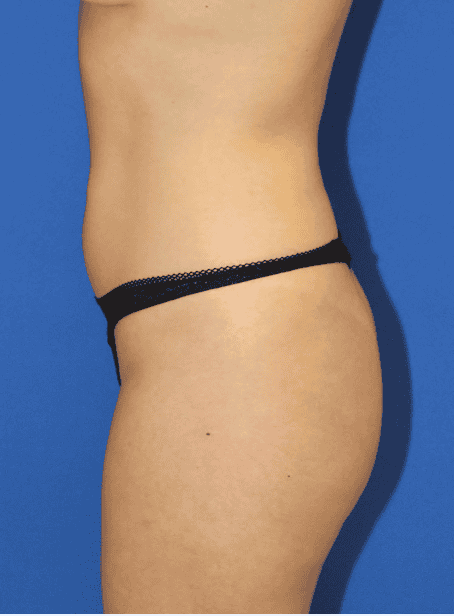
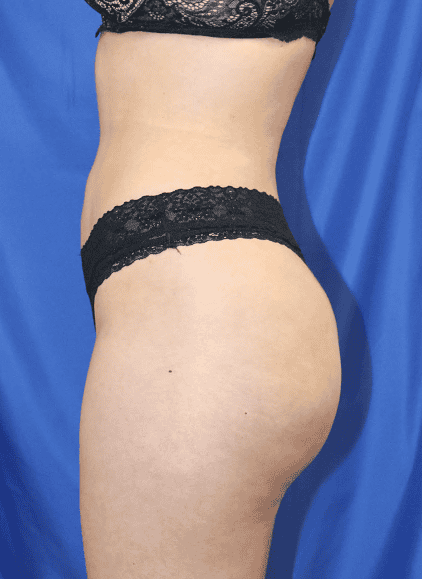
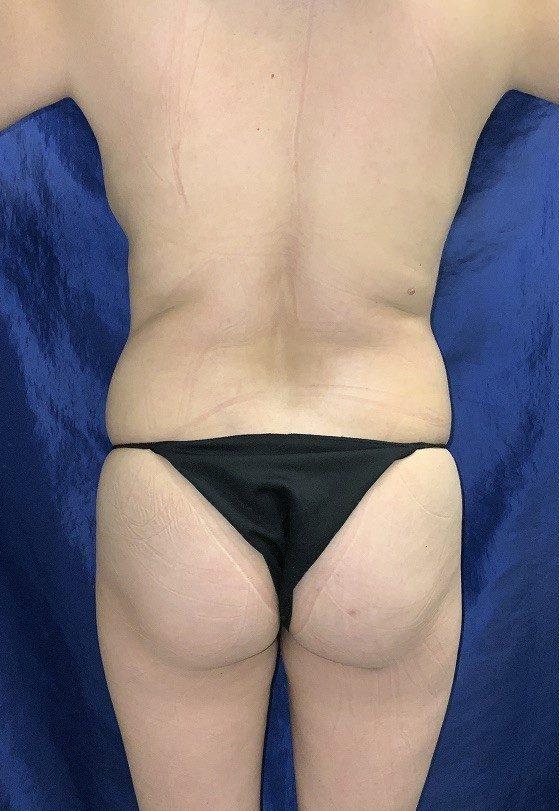
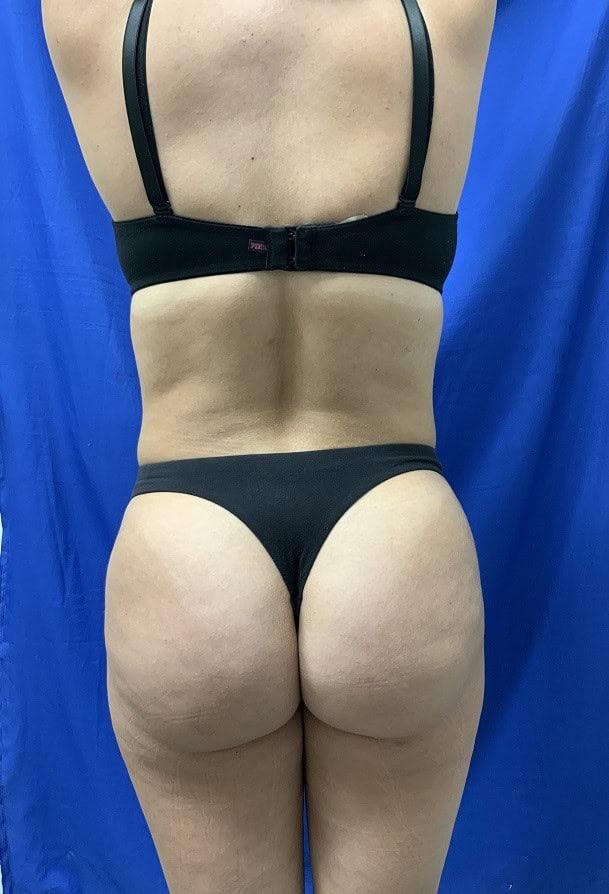
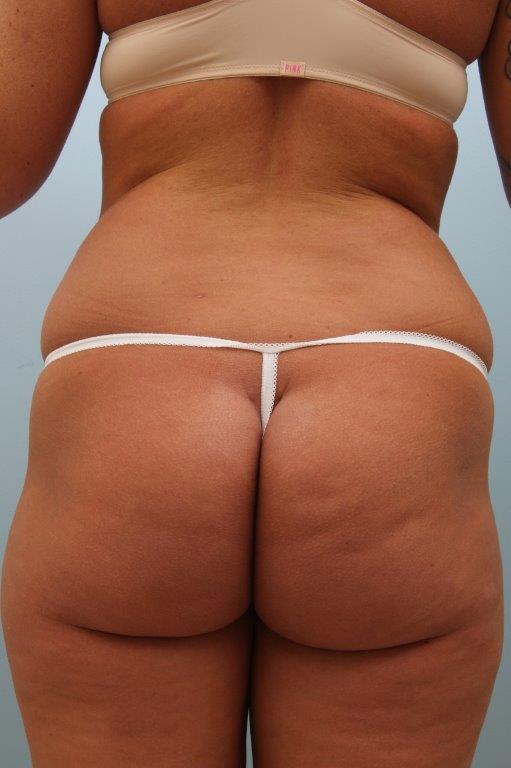
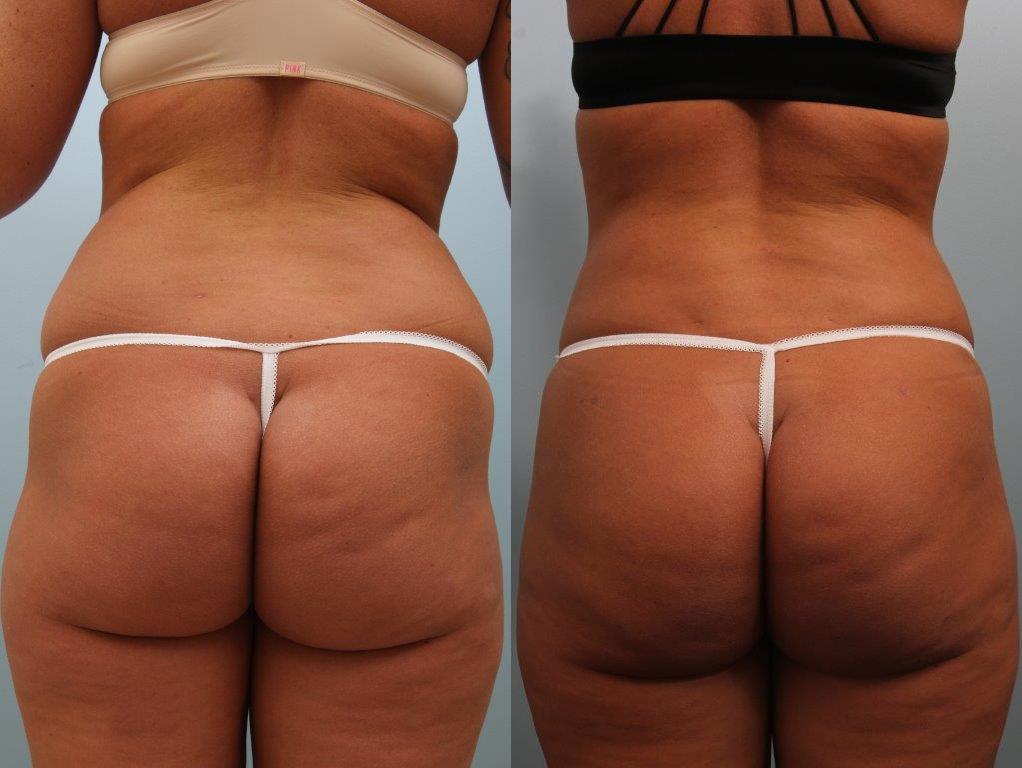
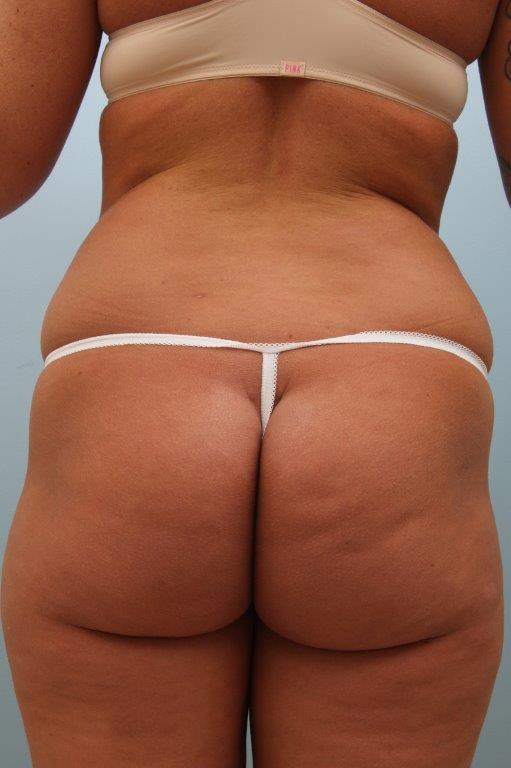
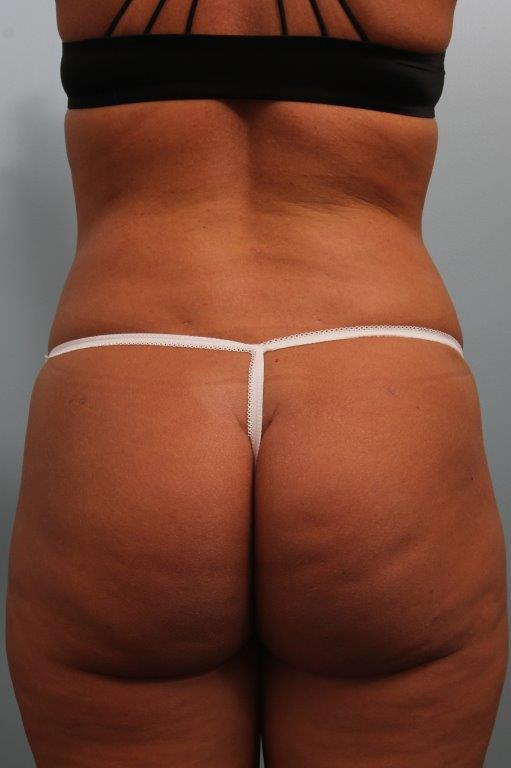
Real patient results
From verified board-certified surgeons in our directory.
Find a board-certified BBL surgeon
Get matched with verified BBL surgeons in your area.
Both procedures are routinely performed under general anesthesia by board-certified plastic surgeons. Both share the standard surgical risks: bleeding, infection, blood clots, anesthesia complications, fluid imbalances, contour irregularities.
The BBL carries one additional risk class that liposuction does not: fat embolism. If fat is injected too deep — into the gluteal muscle rather than the subcutaneous layer above it — fat droplets can enter the venous system and reach the heart and lungs. This is the cause behind a disproportionately high historical mortality rate for the BBL specifically.
Modern safety practice from the American Society of Plastic Surgeons (joint safety statement on gluteal fat grafting) is clear: fat must be injected only in the subcutaneous layer above the gluteal muscle, with a stiff blunt-tip cannula, and increasingly under live ultrasound guidance. The single most important question to ask a BBL surgeon is whether they inject only subcutaneously and use ultrasound. A "yes" to both is the modern standard. Anything else, walk away.
How to choose between them
In a good consultation, a board-certified plastic surgeon will recommend one over the other based on three factors: what you want at the end (more contour vs more volume), how much fat is harvestable in your donor sites, and your skin quality.
If you're not sure which you actually want, the simplest framing is: a BBL is what you choose when you want a different shape, not just a smaller version of your current shape. If your goal is "I want to fit clothes better, look smoother in profile," liposuction alone usually wins on cost, recovery time, and risk. If your goal is "I want a fuller, lifted backside that holds shape," then a BBL is the procedure that addresses it.
A surgeon who recommends the more invasive option without an honest analysis of your anatomy is a signal to get a second opinion.
Compare board-certified liposuction surgeons
Get matched with verified Liposuction surgeons in your area.
This article is for educational purposes and does not replace medical advice. Always consult a board-certified plastic surgeon for guidance specific to your case.