
Quick overview
Silicone and saline are the two FDA-approved types of breast implants in the United States. They produce different feels, different long-term monitoring needs, and different failure behaviors. There is no universally "better" option — the right choice depends on your body type, your priorities, and what you are willing to trade off.
The short version: silicone feels and looks more like natural breast tissue, especially in thinner patients. Saline is less expensive, requires no MRI monitoring, and signals its own ruptures immediately by deflating. Modern implants of both types have approximately 10- to 15-year median lifespan, and both are considered safe by the American Society of Plastic Surgeons when used as approved.
This guide compares the two side by side: feel, look, safety, monitoring, cost, and how to choose between them with a board-certified surgeon.
Silicone implants — what they are
Modern silicone breast implants are filled with a cohesive silicone gel — sometimes called "gummy bear" implants because the gel holds its shape even when cut. They come pre-filled and are inserted through a slightly larger incision than saline.
Available in:
- Smooth round (most common)
- Textured round (less common in the U.S. since FDA restrictions on certain textured implants)
- Anatomical (teardrop) shaped for a more sloped natural look
The FDA approved cohesive silicone gel implants for cosmetic use in patients 22 and older in 2006. They have been studied extensively since.
Saline implants — what they are
Saline implants are filled with sterile saltwater. They are inserted empty and filled to the desired size during surgery, which allows for smaller incisions. The shell is silicone (every implant is, including saline) — only the filling differs.
Saline implants are FDA-approved for cosmetic use in patients 18 and older — younger than silicone, by FDA designation, because of the perceived lower complexity profile if a rupture occurs.
Feel and look
This is where the choice usually lands.
Silicone:
- Feels closer to natural breast tissue
- Less prone to rippling, especially in thinner patients
- Holds shape better over time
- More natural in the upper pole
Saline:
- Can feel firmer or "water balloon"-like, especially in patients with less natural breast tissue to camouflage the implant
- More prone to visible or palpable rippling, particularly along the sides and bottom
- Holds shape but with a slightly less natural feel
- Better suited to patients who have substantial natural breast tissue to cover the implant
For patients with very thin tissue (low BMI, minimal natural breast volume), silicone is almost always recommended for cosmetic reasons. For patients with moderate to ample natural breast tissue, either can work — and the choice often comes down to other factors.
Safety: both are safe when used as approved
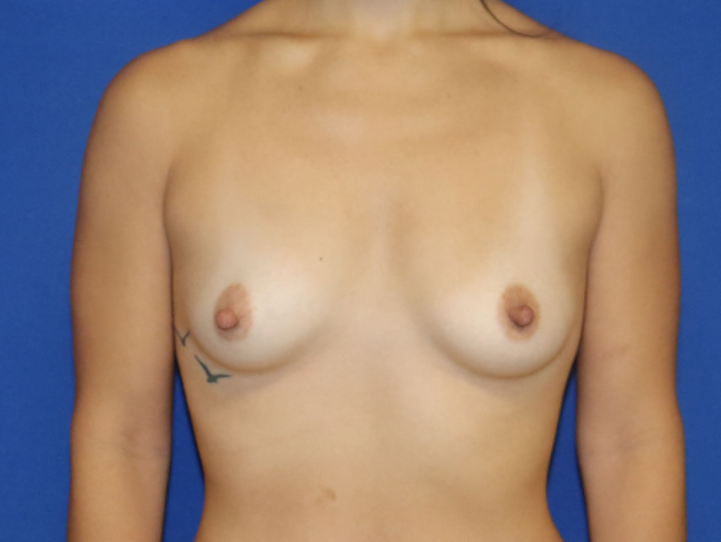
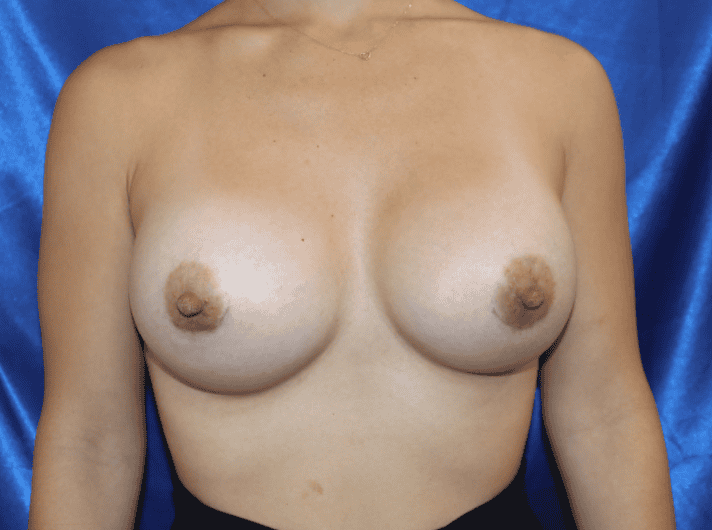
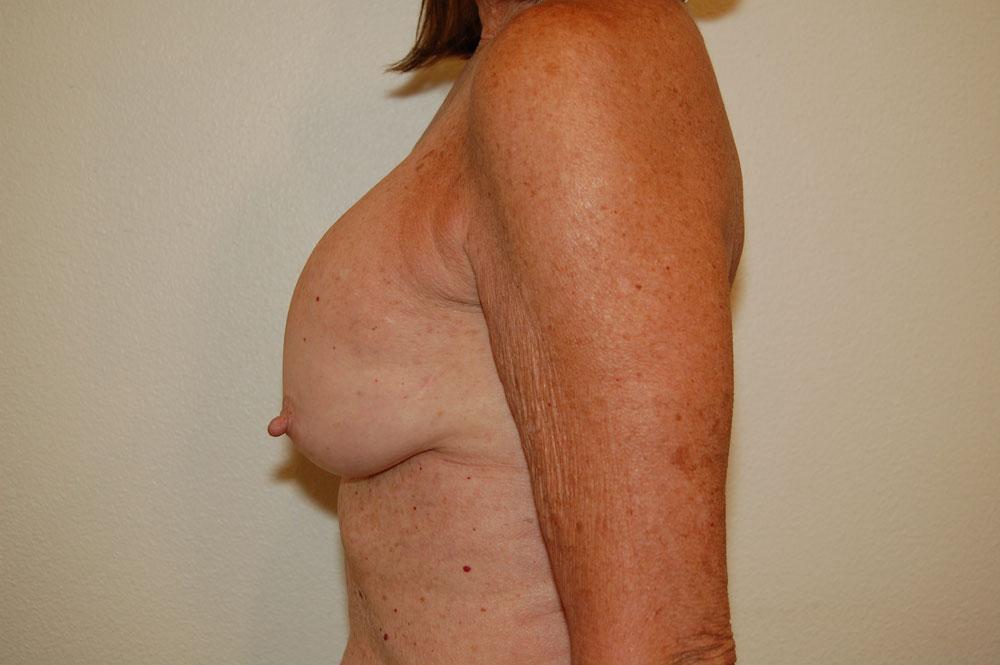
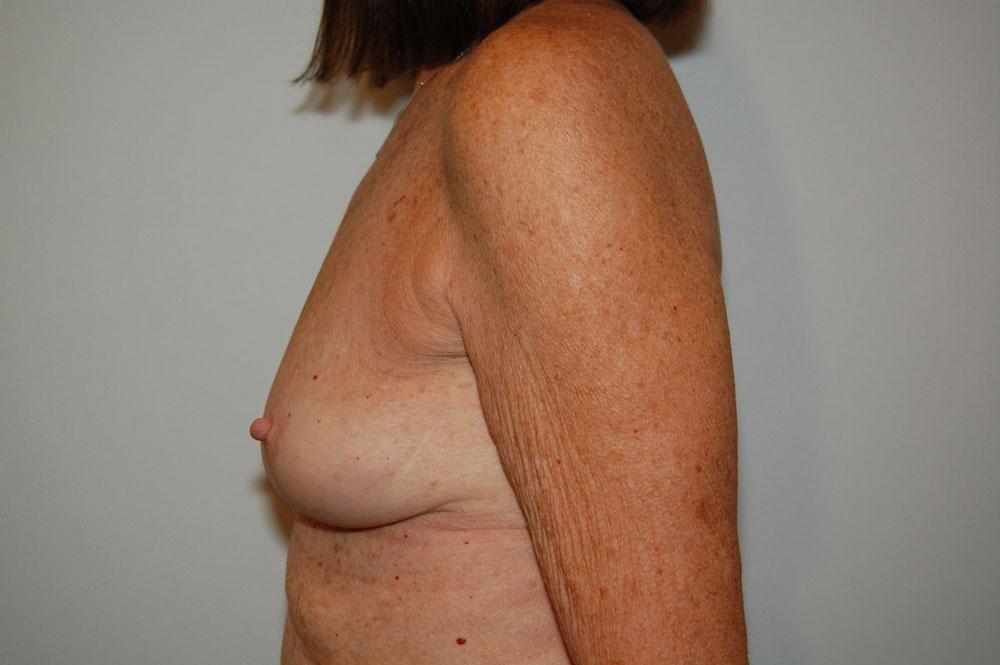
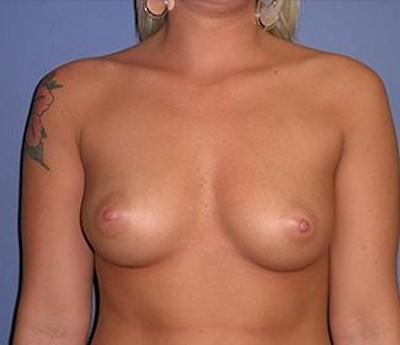
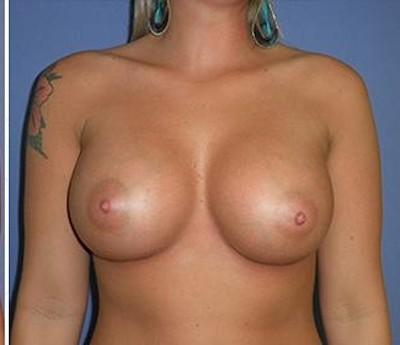
Real patient results
From verified board-certified surgeons in our directory.


Find a board-certified breast surgeon
Get matched with verified breast augmentation surgeons in your area.
Both silicone and saline implants have been studied extensively and are FDA-approved. The American Society of Plastic Surgeons and the FDA consider both safe when used in approved patient populations and monitored appropriately.
There are some risks common to both:
- Capsular contracture — the body's normal scar tissue capsule around the implant tightens, causing firmness, distortion, or discomfort. Rate: 5 to 15 percent over 10 years.
- Rupture — slow over years for both types. Modern silicone gel does not migrate broadly even when the shell ruptures, but rupture is harder to detect (see below).
- Bleeding, infection, and asymmetry at standard surgical rates
A specific consideration unique to textured implants: BIA-ALCL (Breast Implant Associated Anaplastic Large Cell Lymphoma) is a rare lymphoma associated almost exclusively with macro-textured implants. The FDA recalled Allergan textured implants in 2019 over this concern. Smooth implants are not associated with BIA-ALCL. Most U.S. surgeons now use smooth implants by default for this reason.
Monitoring: the practical difference
This is the second decision driver after feel.
Saline: A ruptured saline implant deflates visibly within hours to days. The saltwater is absorbed harmlessly by the body. You and your surgeon know there is a rupture because the breast visibly shrinks. No imaging needed.
Silicone: Modern cohesive gel implants do not leak broadly even when the shell tears. This is good (the gel stays where it is) and bad (you cannot tell from the outside if a rupture has occurred). The FDA therefore recommends:
- MRI or high-resolution ultrasound at 5 to 6 years post-op, then every 2 to 3 years thereafter
- Some patients elect ultrasound instead of MRI for cost reasons; both are FDA-acceptable
Silicone monitoring adds a real cost over the implant lifespan — typically $400 to $1,200 per MRI, less for ultrasound. Insurance does not generally cover this for cosmetic implants.
Cost
Silicone is more expensive than saline upfront:
- Saline implants: $1,000 to $2,000 per pair as the implant component of the surgery
- Silicone implants: $1,500 to $3,500 per pair for standard cohesive gel; up to $5,000 for anatomical/highly cohesive ("gummy bear") implants
The total surgery cost difference between silicone and saline is typically $1,500 to $3,000, before factoring in lifetime monitoring costs for silicone.
For pricing by city, see our breast augmentation cost guide.
When silicone wins
Choose silicone if:
- You have low BMI or minimal natural breast tissue (under 22 BMI, A-B cup naturally)
- The most natural feel is a top priority
- You are willing to accept the MRI/ultrasound monitoring schedule
- You are 22 or older (FDA requirement for silicone)
- Cost is not your primary constraint
Silicone is the most-chosen implant type in the U.S. — approximately 85 percent of breast augmentation patients select it, per ASPS statistics.
When saline wins
Choose saline if:
- You are between 18 and 22 (FDA approves saline at 18, silicone at 22)
- You prefer the simplicity of "I'll know immediately if it ruptures"
- You have ample natural breast tissue to camouflage the implant
- Cost is a meaningful factor
- You want to avoid the ongoing MRI/ultrasound schedule
Saline implants account for approximately 15 percent of breast augmentations in the U.S. per ASPS statistics — a small but stable minority.
Other choice factors
Beyond silicone vs saline, other variables drive your final implant:
- Profile (low, moderate, high, ultra-high) — controls how much projection you get for a given volume
- Shape (round vs anatomical) — round is dominant in the U.S.
- Surface (smooth vs textured) — smooth is now standard
- Placement (above muscle vs below muscle) — affects look, recovery, and feel
- Incision (inframammary fold, periareolar, transaxillary) — affects scar location and surgeon technique
A consultation with a board-certified surgeon will work through all of these decisions in the context of your anatomy and goals.
How to choose between them
The decision often goes like this:
- If you are under 22: saline is your only FDA-approved option.
- If you are very thin or have minimal natural tissue: silicone is almost always recommended for cosmetic feel.
- If you have ample natural tissue and cost matters: saline becomes competitive.
- If MRI monitoring is a dealbreaker: saline.
- If maximum natural feel is paramount: silicone (especially cohesive/anatomical gel).
A board-certified plastic surgeon will weigh your specific anatomy and lifestyle in this decision. If a surgeon recommends one type without explaining why or asking about your priorities, get a second opinion.
Compare board-certified breast surgeons
Get matched with verified breast augmentation surgeons in your area.
After surgery: what to expect with each
Recovery is essentially the same for silicone and saline. Most patients return to desk work within 5 to 10 days, drop the surgical bra around week 6, and resume full exercise (including chest work) between weeks 4 and 8. The implants drop and fluff into their final position over 3 to 6 months.
For a deeper look at recovery, see our breast augmentation recovery guide.
This article is for educational purposes and does not replace medical advice. Always consult a board-certified plastic surgeon for guidance specific to your case.