
A mommy makeover is not a single operation. It is a customized surgical plan that combines two or more body-contouring procedures to address the specific changes pregnancy and breastfeeding leave behind — stretched abdominal skin, separated abdominal muscles, deflated or sagging breasts, and stubborn fat deposits that do not respond to diet or exercise. The term is marketing shorthand for what plastic surgeons call combined post-pregnancy body contouring. This article breaks down exactly what is included, why certain procedures are paired together, who is a candidate, and what the realistic tradeoffs look like.
Quick overview
At its core, a mommy makeover almost always includes some form of abdominoplasty (tummy tuck) and some form of breast surgery (lift, augmentation, reduction, or a combination). Liposuction of the flanks, hips, or thighs is added in most cases. Less commonly, labiaplasty or non-surgical skin treatments are layered in. According to the American Society of Plastic Surgeons, mommy makeover procedures rose 29% between 2020 and 2023, making it one of the fastest-growing categories in aesthetic surgery [2].
The defining feature is not which procedures are chosen, but the fact that they are performed in a single operative session under one anesthesia. Published outcomes data shows that when an experienced surgeon performs combined procedures under six hours of total operative time, complication rates are comparable to those of single procedures [5]. That single-session efficiency is the entire clinical rationale for the category — one recovery, one anesthesia exposure, one block of time off work.
What follows is a procedure-by-procedure breakdown, the logic behind common pairings, candidacy criteria, and the honest tradeoffs that consultations often gloss over.
The core procedures included in a mommy makeover
In published case series, the three procedures that appear most often are abdominoplasty (in roughly 95% of cases), breast surgery in some form (around 60% include augmentation, with lift and reduction making up most of the remainder), and liposuction (around 55%) [1]. These are the anchors. Everything else is an add-on.
Abdominoplasty (tummy tuck)
The abdomen is the area pregnancy changes most permanently. Two issues are at play: stretched, often crepe-textured skin that no longer retracts, and diastasis recti — the separation of the rectus abdominis muscles along the midline. No amount of core training fully corrects diastasis once the linea alba has stretched, and topical or energy-based treatments cannot eliminate true skin redundancy.
A full abdominoplasty addresses both. The surgeon makes a low horizontal incision hip-to-hip, lifts the skin and fat off the abdominal wall, sutures the separated muscles back together in the midline, removes the excess skin, and repositions the belly button. A mini-abdominoplasty (smaller incision, no muscle repair above the navel, no belly button repositioning) is occasionally appropriate, but published data is clear that pregnancy-related skin laxity and diastasis usually require a full abdominoplasty for a durable result [3].
Reported complication rates for abdominoplasty in this population include seroma (fluid collection) in 5–10% of cases, infection in 2–3%, and hematoma in 1–2% [3]. Recovery to light activity takes 2–3 weeks; return to unrestricted activity, 6–8 weeks.
Breast surgery
Pregnancy and breastfeeding stretch breast skin and deflate glandular tissue. The result is some combination of volume loss, ptosis (sagging), and asymmetry. The right operation depends on which of those changes dominates [4].
- Breast augmentation alone — appropriate when the nipple still sits at or above the inframammary fold and the primary complaint is lost volume. An implant restores fullness without needing to reshape the skin envelope.
- Breast lift (mastopexy) alone — appropriate when there is enough native tissue but the breast has dropped. The surgeon removes excess skin, repositions the nipple-areola complex higher on the chest, and tightens the breast mound.
- Augmentation plus lift — the most common combination after multiple pregnancies. Adds volume and corrects position. Technically demanding and carries a higher revision rate than either procedure alone.
- Breast reduction — appropriate when breasts became larger and heavier after pregnancy and are causing back, neck, or shoulder pain.
Key tradeoffs: implants carry an ongoing complication profile, including capsular contracture in 10–15% of patients over time and implant rupture at roughly 0.5–1% per year [4]. Breast lift and reduction procedures generally end the ability to breastfeed future children, since milk duct continuity is altered [4].
Liposuction
Liposuction in a mommy makeover targets pockets that do not respond to weight loss — typically the flanks ("love handles"), the upper hips, the bra-line, the inner thighs, and sometimes the upper abdomen above the tummy tuck flap. Modern tumescent technique, which infiltrates the treatment area with dilute local anesthetic and epinephrine before suctioning, reduces blood loss and improves safety [6].
Fat embolism, the most feared complication, occurs in less than 0.001% of cases with proper technique [6]. The more common cosmetic issue is contour irregularity, which appears in 5–10% of cases and usually resolves within 6–12 months as swelling settles and tissues remodel [6].
Liposuction is not a weight-loss tool. It is a contouring tool. Patients within 10–15 pounds of their goal weight see the best results.
Optional additions
Depending on the patient, surgeons may add:
- Labiaplasty — reduction of the labia minora, sometimes requested after vaginal deliveries.
- Fat grafting — using fat harvested during liposuction to restore volume to the breasts or buttocks.
- Non-surgical skin tightening — radiofrequency or ultrasound treatments for mild skin laxity that does not warrant excision.
- Stretch mark treatment — laser or microneedling, usually staged after the surgical recovery is complete.
Why these procedures are combined
The pairing logic is not arbitrary. Pregnancy creates a coordinated set of changes — abdominal stretching, breast remodeling, and fat redistribution to the hips and flanks — driven by the same hormonal and mechanical forces over the same nine months. Addressing one component in isolation often makes the others more visible. A flat, tightened abdomen draws attention to deflated breasts. Lifted breasts make a protruding lower abdomen more obvious.
There is also a practical case. One anesthesia exposure, one operative facility fee, one block of time off work, and one recovery period is meaningfully easier than three separate operations spread over two years. Published safety data supports the combined approach: when total operative time stays under six hours and the surgeon is experienced in combined procedures, complication rates do not differ meaningfully from those of single procedures [5]. DVT and pulmonary embolism risk in combined body contouring sits at 0.2–0.5%, and infection rates run 1–3% across the combined procedures [5].
The limits matter, though. Adding procedures indefinitely is not safe. Most board-certified surgeons cap a single mommy makeover session at the procedures that can be completed safely in 4–6 hours [1]. Anything beyond that — for example, adding a thigh lift or arm lift — is typically staged into a second operation.
Who is and is not a candidate
The published candidacy criteria are consistent across major academic sources [7][8]:
- Stable weight for at least three months. Significant weight change after surgery will distort results.
- Completed childbearing, or accepting that future pregnancies may compromise results. Pregnancy after abdominoplasty is generally safe for the mother and baby, but it will likely re-stretch the repaired tissue.
- At least 6 months postpartum, and ideally 12 months, to allow hormonal normalization and breast involution to complete [7].
- No active smoking for at least 2–4 weeks before and after surgery. Nicotine constricts blood vessels and dramatically increases the risk of wound healing failure, especially in abdominoplasty.
- No untreated medical conditions — uncontrolled diabetes, untreated sleep apnea, or active autoimmune flares are contraindications.
- Realistic expectations. Patients who score higher on validated expectation questionnaires consistently report higher post-operative satisfaction [8].
Who is not a candidate, or should defer:
- Patients still breastfeeding (breast tissue is not at its baseline).
- Patients planning another pregnancy in the next 1–2 years.
- Patients with a BMI well outside the healthy range, where the procedure becomes higher-risk and lower-yield.
- Patients with untreated body dysmorphic disorder. Published guidelines specifically recommend psychological screening when red flags appear [8].
Customization: how the right combination is chosen
A good surgical plan starts with a physical exam, not a procedure menu. The relevant findings:
- Abdominal skin quality and diastasis. A surgeon will pinch the skin, ask the patient to lift their head off the table to engage the rectus muscles, and palpate the gap between them. This determines whether full abdominoplasty, mini-abdominoplasty, or liposuction alone is appropriate.
- Breast position and volume. The relationship between the nipple and the inframammary fold determines whether augmentation alone is sufficient or whether a lift is required. Skin quality and asymmetry are noted.
- Fat distribution. Flanks, hips, bra-line, and upper thighs are assessed for liposuction candidacy.
- Scarring tolerance. All of these procedures leave permanent scars. The patient's priorities around incision length and location are part of the decision.
The output of that exam is a written surgical plan with named procedures, expected operative time, and an itemized cost. Patients reviewing options at board-certified plastic surgeons in Miami or Los Angeles should expect this level of specificity before paying any deposit.
How to choose a surgeon
The single most important credential is board certification by the American Board of Plastic Surgery (ABPS). This is not the same as "board-certified cosmetic surgeon," which is a different and less rigorous credential. ABPS certification requires completion of an accredited plastic surgery residency and ongoing maintenance of certification.
Beyond that:
- Hospital privileges for the procedures being performed — even if the surgery is done in an accredited office surgical suite. Hospitals vet credentials independently.
- Accredited operating facility (AAAASF, AAAHC, or state-licensed). This matters more for combined procedures with longer operative times.
- Volume. Ask how many mommy makeovers the surgeon performs annually and what their personal complication and revision rates are.
- Before-and-after portfolio of their own patients with body types similar to the patient's own.
- Clear written quote that breaks out surgeon's fee, anesthesia, facility, garments, and follow-up.
Find a board-certified mommy makeover surgeon
Get matched with verified Mommy Makeover surgeons in your area.
Cost and what drives it
A mommy makeover is priced as a bundle of component procedures plus shared overhead (one anesthesia, one facility fee). ASPS data places the typical total in the $15,000–$30,000 range, with significant variation by geography and the specific combination chosen [2]. A tummy tuck plus liposuction sits at the lower end; tummy tuck plus augmentation plus lift plus liposuction sits at the upper end.
For a detailed breakdown of every line item — surgeon's fee, anesthesia, facility, garments, medications, time off work — see the complete mommy makeover cost breakdown and the city-by-city pricing for mommy makeover.
Recovery and realistic timeline
The combined recovery is dominated by the abdominoplasty, which is the longest-healing component. A typical timeline:
- Days 0–7: Most restricted period. Drains in place. Walking bent forward at the waist. Significant fatigue.
- Weeks 2–3: Return to desk work, light activity. Compression garments worn continuously.
- Weeks 4–6: Driving resumed. Light cardio. Continued swelling.
- Weeks 6–8: Cleared for unrestricted activity, including strength training.
- Months 3–6: Swelling continues to settle. Scars begin to mature.
- Months 9–12: Final result visible. Scars continue to fade for up to 18 months.
Mommy Makeover — what to expect, week by week
Typical recovery 21–42 days before patients return to most normal activities.
- Day 1–7Most pain & swelling. Compression garment 23 h/day. Walk daily.
- Week 2Off prescription meds, light activity, swelling starts to drop.
- Weeks 3–4Return to desk work. Light cardio. Sleep position may relax.
- Weeks 5–8Resistance training cleared by most surgeons. Garment off.
- Months 3–6Final shape emerges, swelling fully resolved, scars mature.
General guidance only. Your surgeon's instructions take precedence.
A week-by-week version of this timeline, including practical guidance on sleeping positions, drain care, and return-to-work planning, is available in the mommy makeover recovery week-by-week guide.
Realistic results: what to expect
Patient satisfaction in published series exceeds 85% when procedures are appropriately combined and patients have realistic expectations going in [1]. The results are durable but not permanent. Significant weight gain, future pregnancy, and normal aging all affect the long-term appearance. Most patients see a meaningful improvement that lasts a decade or more without revision.
Real patient results
From verified board-certified surgeons in our directory.
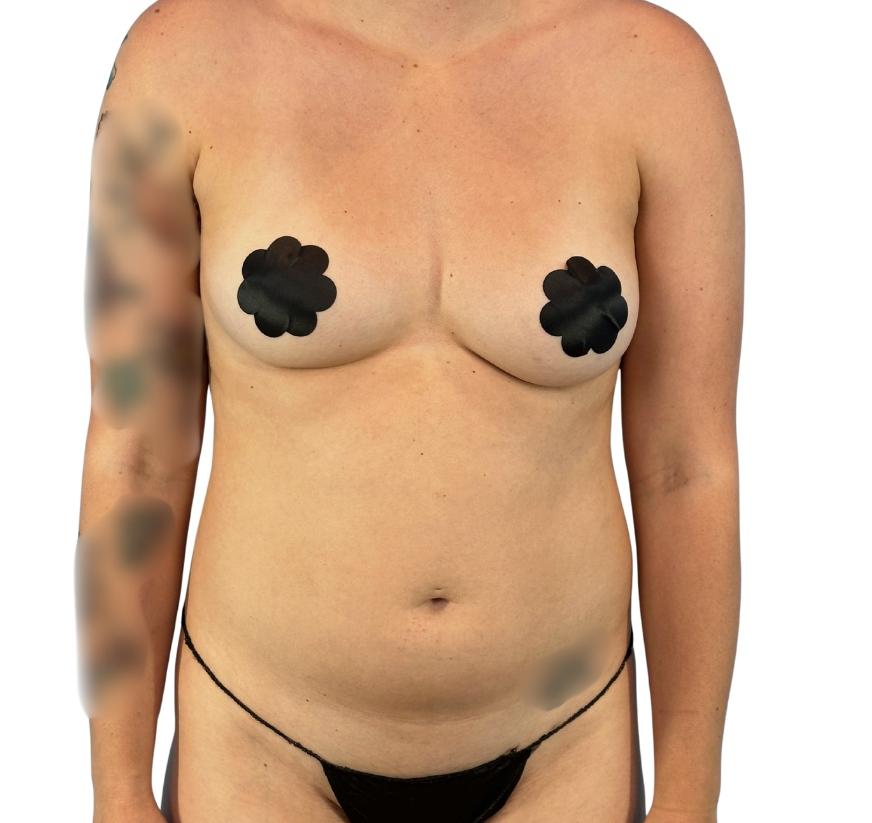
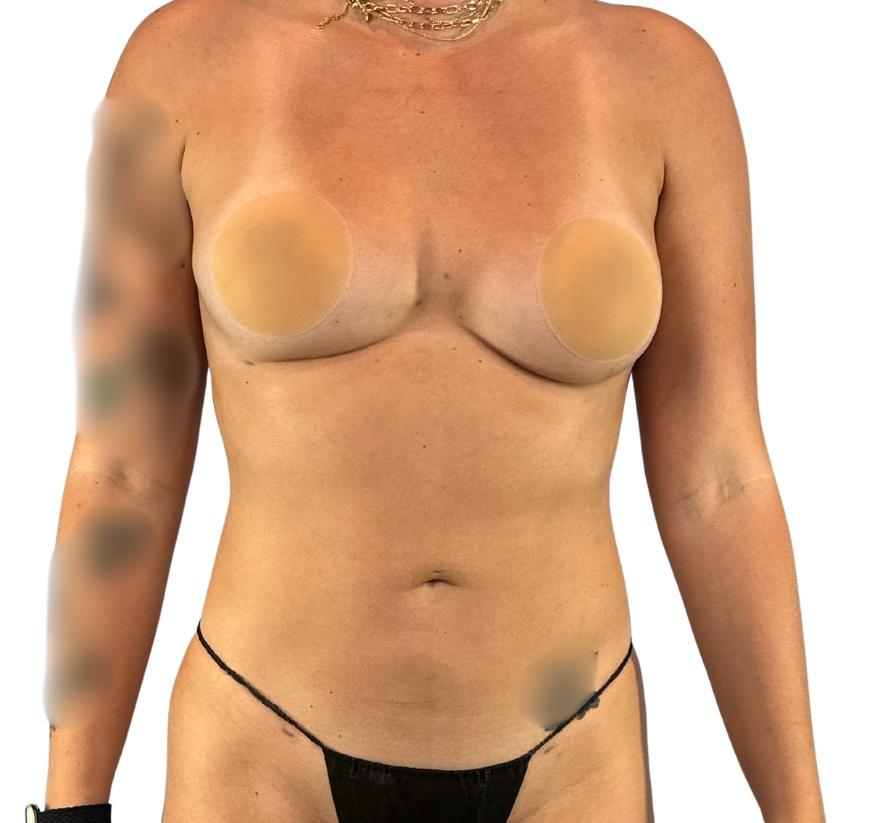
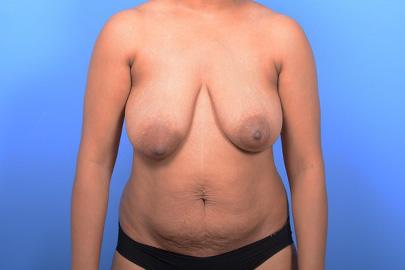
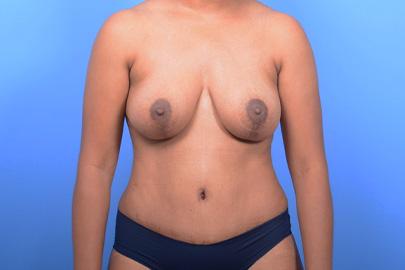
Revision rates vary by component. Breast augmentation combined with lift carries the highest revision rate of any cosmetic operation — often quoted around 15–20% over ten years, primarily driven by implant-related issues. Abdominoplasty revision rates are much lower, in the 5–10% range. Liposuction touch-ups for contour irregularities are needed in roughly 5–10% of cases [6].
Readers comparing surgeons across multiple cities — for example, New York, Houston, or Dallas — should ask each candidate for their own revision rate, not the published average.
The honest verdict
A mommy makeover is the most efficient way to address the coordinated set of changes pregnancy leaves on the abdomen, breasts, and torso. The published safety data supports combined procedures when performed by a board-certified surgeon in an accredited facility with total operative time under six hours [5]. Patient satisfaction is consistently high.
What the marketing tends to understate: this is major surgery with a real recovery, a real complication profile, and a real price tag. It is not a cosmetic indulgence to be undertaken casually. The procedures are durable but not pregnancy-proof or weight-proof. The breast lift component, in particular, has a higher revision rate over time than patients are often told upfront.
The "mommy makeover" label itself is marketing. The clinical reality is a customized combined body-contouring operation. The patients who do best are the ones who understand exactly which component procedures they are signing up for, why those specific procedures were chosen for their anatomy, and what the realistic recovery and long-term maintenance look like.
Find a board-certified mommy makeover surgeon
Get matched with verified Mommy Makeover surgeons in your area.
This article is for educational purposes only and does not constitute medical advice. All surgical decisions should be made in consultation with a board-certified plastic surgeon who has examined you in person.