
The choice between a mini facelift and a full facelift is rarely a matter of preference. It is a matter of anatomy. Patients shopping for a "weekend facelift" often have aging changes that a limited procedure cannot correct, while patients pushed toward a full facelift sometimes need far less surgery than they have been quoted. This guide breaks down the actual surgical differences, the data on longevity and complications, and the decision framework board-certified plastic surgeons use to recommend one approach over the other. The verdict, stated plainly: a mini facelift is a real operation with real limits, and a full facelift is the right answer when those limits are exceeded.
Quick overview
A mini facelift and a full facelift are not the same procedure performed at different intensities. They are distinct operations with different incision lengths, different depths of tissue manipulation, different anesthesia requirements, and different longevity profiles. The mini facelift addresses the lower face and jawline through limited incisions, typically using SMAS plication — folding and suturing the superficial muscular layer rather than fully releasing it [1][6]. The full facelift addresses the midface, jowls, and neck through extended incisions, with full SMAS elevation and repositioning [3][6].
The practical consequences follow from those technical differences. Mini facelift results last roughly 5 to 7 years; full facelift results last 10 to 15 years [2][8]. Mini facelift recovery averages 10 to 14 days back to normal activity; full facelift requires 3 to 4 weeks [1][5]. Complication rates are lower for the mini, but so is the scope of correction [2][4].
The wrong question is "which is better." The right question is which one matches the aging pattern, the skin envelope, and the realistic goals of the patient sitting in the consultation chair.
What a mini facelift actually does
The term "mini facelift" is not a single trademarked procedure. It refers to a category of limited-incision lower-face procedures, sometimes marketed as the S-lift, MACS lift, or short-scar facelift. Despite the branding variation, the surgical anatomy is consistent.
Incisions are confined to the temporal hairline and the area in front of the ear (periauricular), without extending behind the ear or into the postauricular scalp [1]. Through these limited incisions, the surgeon undermines the skin over the lateral cheek and jawline, then addresses the SMAS layer — the superficial musculoaponeurotic system — typically through plication sutures that fold and tighten the layer without fully elevating it [6]. Skin excision is conservative, generally 1 to 2 cm [6].
The targets of a mini facelift are early jowling, mild loss of jawline definition, and modest laxity of the lower cheek. It does not meaningfully address the midface (cheek descent), the platysmal bands of the neck, or submental fullness under the chin [3][5]. Marketing that suggests otherwise is misleading.
Who the mini facelift is built for
The American Society of Plastic Surgeons describes the ideal mini facelift candidate as a patient under 60 with early signs of aging, good skin elasticity, and no significant neck involvement [3]. In practice, this often means patients in their late 40s to mid-50s noticing early jowls but not yet showing platysmal banding or deep nasolabial folds. Patients with substantial neck laxity who undergo a mini facelift are typically the ones who request revision within five years [4].
What a full facelift actually does
A full facelift — sometimes called a traditional or extended SMAS facelift — uses incisions that begin in the temporal hairline, run in front of the ear, curve around the earlobe, and extend into the postauricular hairline [1]. A submental incision under the chin is frequently added to address platysmal bands and submental fat, at which point the procedure is technically a facelift with neck lift [5][7].
The SMAS is not simply plicated. It is elevated as a flap, repositioned, and secured under tension in a more vertical vector [6]. Skin excision is larger, typically 2 to 4 cm, and the dissection planes are broader [6]. This is the operation that corrects deep nasolabial folds, marionette lines, midface descent, jowls, and the neck simultaneously.
Full facelift is performed under general anesthesia in most practices, while mini facelifts are often performed under local anesthesia with sedation [5]. The difference in anesthesia is not trivial: it changes preoperative clearance requirements, recovery profile, and the upper safe limit on operative time when combination procedures are added.
Side-by-side: the data that matters
The following comparisons reflect outcomes reported in peer-reviewed surgical literature and ASPS guidance.
Longevity. Mini facelift results last approximately 5 to 7 years before patients perceive meaningful recurrence of laxity. Full facelift results last 10 to 15 years [2][8]. This is the single largest differentiator and the reason a mini facelift can end up costing more over a lifetime if revisions are needed.
Recovery. Mini facelift patients return to non-strenuous work and social activity in 10 to 14 days [1][5]. Full facelift patients require 3 to 4 weeks before resuming normal activities, with residual swelling and tightness continuing to refine for several months [5].
Complication rates. Overall complication rates run 5 to 10% for mini facelift and 10 to 15% for full facelift [2]. Hematoma — the most common serious complication — occurs in 3 to 5% of mini facelifts and 5 to 8% of full facelifts [4]. Facial nerve injury, the most feared complication, occurs in 0.5 to 1% of mini facelifts and 1 to 3% of full facelifts, with permanent injury being substantially rarer [4].
Revision rates. Within five years, 12% of mini facelift patients undergo revision; 8% of full facelift patients do [8]. The higher mini facelift revision rate reflects both shorter longevity and the proportion of patients whose original aging pattern exceeded what the limited procedure could correct [4].
Satisfaction. Patient satisfaction is high for both: 85 to 90% for mini facelift, 90 to 95% for full facelift [3][8]. Satisfaction with natural appearance specifically runs 88% mini, 92% full [8]. Working professionals weighting downtime heavily often report higher satisfaction with the mini even when the correction is smaller [8].
Cost. Mini facelift surgeon fees typically range $4,000 to $8,000; full facelift fees range $8,000 to $15,000 [2]. These are surgeon fees only and exclude facility, anesthesia, and post-op care. Total all-in costs are reviewed in the facelift cost breakdown and in the cost-of facelift reference.
Recovery, in honest detail
The phrase "weekend facelift" — sometimes attached to the mini procedure or to the marketing-driven "Cinderella lift" — sets unrealistic expectations. No facelift, mini or full, has a weekend recovery.
Mini facelift patients typically experience visible bruising and swelling for 7 to 10 days. Drains, if used, come out within 48 hours. Sutures are removed at 5 to 7 days. Most patients are presentable for non-public-facing work at 10 to 14 days, though residual tightness and minor asymmetry persist for 4 to 6 weeks [1][5].
Full facelift recovery is structurally similar but longer at every phase. Bruising and swelling are more pronounced, drains may stay 2 to 3 days, and sutures are removed in stages through day 10. Most patients are socially presentable at 3 weeks and back to full exercise at 4 to 6 weeks. Final results — once all swelling resolves and scars mature — are typically assessed at 6 to 12 months [5].
Numbness along the cheek and around the ears is universal in the early postoperative period and resolves over weeks to months in most patients. For a comparable week-by-week breakdown of a different facial procedure, the rhinoplasty recovery timeline illustrates how facial surgery recovery progresses in distinct phases.
Facelift — what to expect, week by week
Typical recovery 14–21 days before patients return to most normal activities.
- Day 1–7Most pain & swelling. Compression garment 23 h/day. Walk daily.
- Week 2Off prescription meds, light activity, swelling starts to drop.
- Weeks 3–4Return to desk work. Light cardio. Sleep position may relax.
- Weeks 5–8Resistance training cleared by most surgeons. Garment off.
- Months 3–6Final shape emerges, swelling fully resolved, scars mature.
General guidance only. Your surgeon's instructions take precedence.
Candidacy: matching the operation to the anatomy
The single most common error in facelift consultation is recommending a mini facelift to a patient whose anatomy demands a full facelift, usually because the patient asked for less surgery. The result is predictable: visible undercorrection, dissatisfaction, and revision surgery within a few years.
A mini facelift is appropriate when:
- Aging changes are limited to early jowling and the lower cheek
- The neck is essentially unchanged — no platysmal banding, no submental fullness
- Skin elasticity remains good
- The patient is generally under 60, in good health, non-smoking
- The midface (cheek pads) has not significantly descended
A full facelift is appropriate when:
- There is meaningful neck laxity, platysmal banding, or submental fullness
- Jowling is moderate to advanced
- The midface has descended, deepening the nasolabial folds
- The patient wants a result that holds for a decade or more
- Multiple facial zones require correction simultaneously
Combination procedures
Mini facelifts are frequently paired with upper or lower eyelid surgery (blepharoplasty), brow positioning, or non-surgical adjuncts such as fractional laser resurfacing and conservative filler [7]. The combination addresses adjacent areas the mini facelift does not reach. Cost and recovery implications of adding eyelid surgery are detailed in the eyelid surgery cost breakdown.
Full facelifts are most commonly combined with formal neck lift (when not already included), brow lift, and skin resurfacing performed at the same operative session [7]. Combination operations require longer surgical time and careful patient selection but reduce overall recovery compared to staging procedures separately.
How board-certified surgeons decide
When a board-certified plastic surgeon evaluates a facelift candidate, the recommendation flows from a structured assessment, not from what the patient initially asks for. Key factors include:
- Neck examination. Visible platysmal bands, submental fat, or cervicomental angle obtuseness essentially rules out a mini facelift as a complete solution [5].
- Midface assessment. Cheek descent and deepening nasolabial folds require the longer vector and deeper SMAS work of a full facelift [6].
- Skin quality. Patients with thin, sun-damaged, or highly inelastic skin require more conservative tension and often benefit from resurfacing adjuncts regardless of which facelift is chosen.
- Medical history. Smoking, uncontrolled hypertension, anticoagulation, and connective tissue disorders affect complication risk and may shift the recommendation toward the less extensive operation [4].
- Realistic longevity goals. A 52-year-old who wants a 15-year result is a poor candidate for a mini facelift even if the anatomy is borderline acceptable.
Verification of board certification through the American Board of Plastic Surgery is the minimum threshold for safe surgical care [7]. "Cosmetic surgeon" and "facial cosmetic surgery" are not equivalent credentials, and they do not require completion of an accredited plastic surgery residency.
Find a board-certified facelift surgeon
Get matched with verified Facelift surgeons in your area.
Cost, longevity, and the lifetime math
Mini facelift looks meaningfully cheaper on paper — $4,000 to $8,000 in surgeon fees compared to $8,000 to $15,000 for full facelift [2]. The lifetime calculation is less flattering. A 50-year-old who undergoes a mini facelift can expect 5 to 7 years of result, meaning a second procedure in the late 50s, and possibly a third in the late 60s. The cumulative cost approaches or exceeds a single full facelift performed once with 10 to 15 years of longevity.
This is not an argument that the mini facelift is the wrong choice. For a patient whose anatomy genuinely matches the operation, who values shorter downtime, and who accepts the longevity tradeoff, the mini is appropriate. It is an argument against using cost as the primary decision driver. Regional pricing varies substantially — surgeons in Manhattan, Los Angeles, and Miami typically price 20 to 40% above national averages, while Houston and Atlanta trend closer to the median.
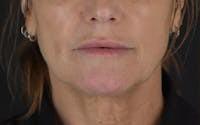
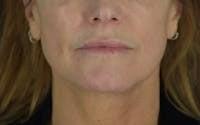
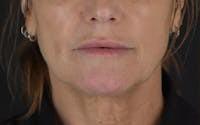
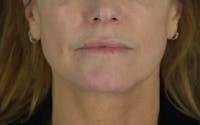
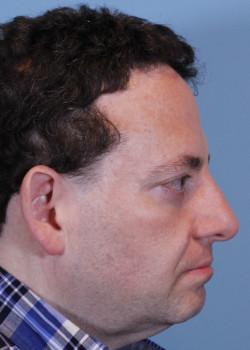
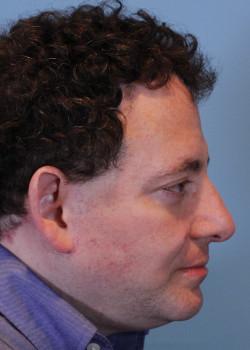
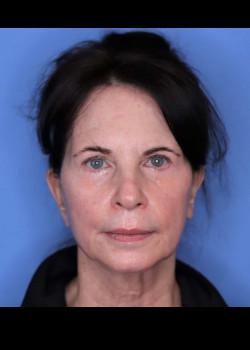
Real patient results
From verified board-certified surgeons in our directory.

Risks and what makes them more or less likely
Both procedures carry the risks common to any facial surgery: bleeding, infection, hematoma, scarring, asymmetry, nerve injury, skin necrosis, and unsatisfactory aesthetic result. The relative magnitudes differ.
Hematoma is the most time-sensitive complication and the leading reason for unplanned reoperation in the first 24 to 48 hours. Risk is elevated by hypertension, anticoagulant medications, and smoking. Drains and meticulous hemostasis reduce but do not eliminate the risk [4].
Facial nerve injury is rare but consequential. The temporal branch is most vulnerable in extended dissections, particularly in the full facelift [6]. Most reported nerve injuries are neuropraxic (temporary) and resolve over weeks to months; permanent injury is uncommon in experienced hands [4].
Skin necrosis is more common in smokers and in patients with prior facial surgery or radiation. Both procedures require strict smoking cessation for a minimum of 4 weeks before and after surgery.
Scarring is more visible in the mini facelift in absolute terms only if the limited incision is poorly placed; in well-executed cases the shorter incisions of a mini facelift produce less total scar [7]. Full facelift scars are longer but are typically hidden in the hairline and natural creases around the ear.
The honest verdict
A mini facelift is a real operation, and a good one — for the right patient. It is not a smaller version of a full facelift any more than a partial knee replacement is a smaller version of a total knee replacement. It is a different operation with a different target.
The patients who do best with a mini facelift are in their late 40s to mid-50s, have early lower-face changes only, have an intact neck, and accept that the result will need to be revisited in 5 to 7 years. The patients who do best with a full facelift have moved past that window — the neck is involved, the midface has descended, or the longevity goal is a decade or more.
The mistake is treating these as a tier-list with the mini as the entry point and the full as the upgrade. They are parallel options, and the right one is determined by anatomy, not by budget or downtime preference. A surgeon who lets the patient pick the procedure rather than guiding the recommendation based on examination findings is not delivering the standard of care a board-certified plastic surgeon is trained to provide.
Find a board-certified facelift surgeon
Get matched with verified Facelift surgeons in your area.
This article is for educational purposes only and does not constitute medical advice. Surgical recommendations require in-person evaluation by a board-certified plastic surgeon.