
A drainless tummy tuck replaces the post-operative drains traditionally placed under the abdominal flap with internal quilting sutures that close the dead space surgically. The technique has become the default at many high-volume aesthetic practices, marketed as more comfortable, faster to recover from, and equally safe. The clinical evidence is more nuanced: drainless abdominoplasty eliminates drain-related complications and shortens early recovery, but published data show modestly higher seroma rates than drained procedures [1][5]. This article breaks down what the technique actually is, what the peer-reviewed literature says about outcomes, who is a candidate, and where the marketing diverges from the data.
Quick overview
A drainless tummy tuck is not a different operation. The skin excision, muscle plication, and umbilical repositioning are identical to a standard abdominoplasty. The difference is in how the surgeon manages the potential space between the abdominal flap and the underlying fascia. In a traditional tummy tuck, one or two closed-suction drains sit in that space for one to three weeks, evacuating serous fluid until the tissues seal. In a drainless approach, the surgeon eliminates that space at the operating table using progressive tension sutures — also called quilting sutures — that anchor the flap to the fascia in rows [2].
The stakes of that technical choice are real. Seroma — a collection of inflammatory fluid under the flap — is the most common complication of abdominoplasty regardless of technique. Drains reduce its incidence; quilting sutures, when properly placed, reduce it differently. The literature shows both approaches work, with different complication profiles [1][2][5].
This is a comparison article, not a sales page. The goal is to give a realistic read on what the drainless technique offers, what it costs in tradeoffs, and how to evaluate whether a surgeon performing it has the technical depth the procedure actually requires.
What the drainless technique actually does
During a standard abdominoplasty, the surgeon elevates a large flap of skin and fat from the pubic incision up to the ribcage. That dissection creates a wide raw surface — the underside of the flap on top, the abdominal fascia below. Lymphatic vessels are transected. For days to weeks after surgery, those vessels weep serous fluid into the cavity.
Drains handle this by suction. Two soft silicone tubes exit through small stab incisions near the pubic area, collecting fluid into bulbs that the patient empties and measures several times a day. Drains stay in until output falls below roughly 30 mL per 24 hours, typically 10 to 21 days.
The drainless approach handles the same problem mechanically. Progressive tension sutures — usually absorbable — are placed in rows from the upper flap downward, each suture anchoring the deep surface of the flap to the abdominal fascia [2]. By the end of the closure, the potential space is largely obliterated. There is no cavity for fluid to pool in, so in principle no drain is needed. The technique also reduces shear forces on the closure, which proponents argue lowers tension on the final scar [2].
Properly executed, quilting requires 20 to 40 individual sutures and adds 20 to 40 minutes to the operation, although some series report a net time saving from eliminating drain placement protocols [1]. The technique's effectiveness depends almost entirely on surgeon experience with fascial closure [4].
What the evidence says about seroma and complications
This is where the marketing and the literature diverge.
A systematic review and meta-analysis published in Plastic and Reconstructive Surgery reported seroma formation rates of 5–15% in drainless abdominoplasty compared with 2–8% in drained procedures [1]. A comparative analysis in the Journal of Plastic Surgery found that 8–12% of drainless cases required seroma aspiration versus 2–4% of drained cases [5]. Aesthetic Surgery Journal data show progressive tension sutures can bring seroma incidence down to 3–7% when the technique is properly executed, narrowing but not eliminating the gap [2].
The interpretation matters. A higher rate of small, asymptomatic seromas in the drainless group does not necessarily mean worse outcomes. Ultrasound-guided aspiration successfully resolves 85–90% of these collections in an office visit, avoiding reoperation [8]. Chronic seroma persisting beyond six months occurs in fewer than 1% of cases [7]. But patients considering the drainless route should understand they trade the inconvenience of drains for a modestly higher probability of needing one or more in-office aspirations during recovery.
Other complication rates are largely equivalent between techniques:
- Infection: under 2% in drainless cases with standard antibiotic prophylaxis [3]
- Hematoma: 1–3%, comparable to drained procedures [3]
- Nerve injury: 0.5–2%, unchanged by drain status [8]
- Skin necrosis and contour irregularity: under 1% in both approaches with proper technique [8]
Drain-specific complications — drain-site infection, premature dislodgement, pain at the drain site, patient anxiety around drain care — are eliminated entirely in the drainless approach [5].
Recovery: where drainless actually wins
The most defensible advantage of the drainless technique is early recovery comfort and mobility. Patients return to light activity 1 to 2 weeks earlier on average than drained counterparts, primarily because drain management itself is a logistical and physical burden [3].
No drain emptying, measuring, or stripping. No tubes catching on clothing. Easier showering — many surgeons clear drainless patients for showering at 48 to 72 hours versus 1 to 2 weeks for drained patients. No drain removal appointment, which many patients describe as the most uncomfortable moment of the entire recovery.
Compression garments become more important, not less. Most drainless protocols require continuous compression for 4 to 6 weeks to support the quilted closure and minimize fluid accumulation [4]. Patients who skip the garment compromise the technique.
Tummy Tuck — what to expect, week by week
Typical recovery 14–28 days before patients return to most normal activities.
- Day 1–7Most pain & swelling. Compression garment 23 h/day. Walk daily.
- Week 2Off prescription meds, light activity, swelling starts to drop.
- Weeks 3–4Return to desk work. Light cardio. Sleep position may relax.
- Weeks 5–8Resistance training cleared by most surgeons. Garment off.
- Months 3–6Final shape emerges, swelling fully resolved, scars mature.
General guidance only. Your surgeon's instructions take precedence.
Return to desk work typically occurs at 10 to 14 days. Resumption of unrestricted exercise — including core work — sits at 6 to 8 weeks regardless of drain status, because that timeline is driven by fascial healing from the muscle repair, not by the flap.
Who is actually a candidate
The drainless approach is not appropriate for every body type. The American Society of Plastic Surgeons describes the technique as best suited for patients with a BMI under 30 and moderate (not extreme) excess skin [4]. The technical reason: progressive tension sutures must close a finite dead space. The larger the dissection — the more skin and fat removed, the more weight in the flap — the harder it is to mechanically eliminate that space without drains.
Reasonable candidates for a drainless tummy tuck:
- BMI under 30, ideally under 28
- Moderate skin laxity and diastasis
- Stable weight for at least 6 months
- Non-smoker, or off nicotine for at least 4 weeks
- No history of bleeding disorders or anticoagulation that cannot be paused
- Realistic expectations about a 3 to 7% chance of needing seroma aspiration [2]
Patients who are typically better served by traditional drained abdominoplasty:
- BMI over 32
- Massive weight loss patients with substantial pannus
- Patients undergoing extended abdominoplasty (flank-to-flank) or fleur-de-lis abdominoplasty
- Concurrent extensive liposuction of the flanks and back
- Patients on chronic anticoagulation
Reading Lipo vs Tummy Tuck: Which Procedure Actually Fits Your Body is worthwhile for patients still deciding whether a tummy tuck is the right procedure at all.
Cost comparison
Drainless abdominoplasty is typically priced at parity with traditional tummy tuck or marginally higher, reflecting the additional operative time for quilting. Published comparative data suggest a 15–20% total cost reduction when accounting for drain supplies, drain-removal visits, and the occasional drain-related complication, although this savings rarely shows up as a lower sticker price — it shifts the math at the practice level, not the patient level [5].
Nationally, tummy tuck pricing runs from roughly $8,000 to $20,000 depending on geography, surgeon experience, and surgical complexity. Drainless cases typically sit in the middle to upper end of that range when performed by surgeons who have invested in mastering the technique. For a detailed breakdown, see Tummy Tuck Cost in 2025: Real Pricing & Hidden Fees and the cost-of/tummy-tuck reference page.
Regional variation is significant. Surgeons in Miami and Los Angeles typically price 20–30% above the national median. Surgeons in Houston and Dallas tend to align with the national median. Surgeons in Atlanta and Chicago sit between those poles.
Patients combining abdominoplasty with breast surgery as part of a postpartum restoration should also review Mommy Makeover Cost: The Real Total Price Breakdown.
How to choose a surgeon for a drainless tummy tuck
The drainless technique is more dependent on surgeon skill than any other aspect of abdominoplasty. Drains forgive imperfect closure. Quilting does not. A surgeon adopting the technique without dedicated training will produce higher seroma and aspiration rates than the published averages.
Questions worth asking in consultation:
- How many drainless abdominoplasties have you performed?
- What is your personal seroma rate over the past 12 months?
- What is your aspiration rate?
- How many quilting sutures do you typically place?
- At what point would you convert to a drained procedure intraoperatively?
- Are you board-certified by the American Board of Plastic Surgery (ABPS)?
ABPS certification is the floor, not a differentiator. Beyond that, the surgeon should be able to describe their technique in specific terms — number of suture rows, suture material, plication approach — without defaulting to brand names or trademarked phrases.
Find a board-certified tummy tuck surgeon
Get matched with verified Tummy Tuck surgeons in your area.
Long-term results: what the 2-year data show
Aesthetic outcomes at 12 to 24 months are equivalent between drainless and drained abdominoplasty when both are performed competently [7]. Scar appearance, abdominal contour, and umbilical position do not differ meaningfully between groups. Patient quality-of-life scores at long-term follow-up are actually higher in the drainless group, attributed to the reduced post-operative restrictions during the first weeks [7].
What the literature does not yet have is robust 10- and 20-year follow-up. Long-term contour changes in abdominoplasty patients are driven by weight stability, pregnancy, and aging — not by drain status at the time of surgery. There is no biological reason to expect the techniques to diverge in long-term outcome, but there is also no published evidence to confirm 20-year parity.
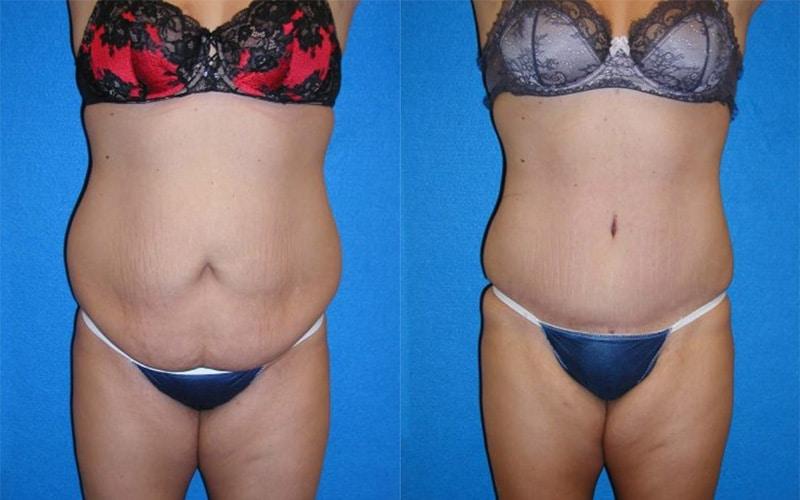
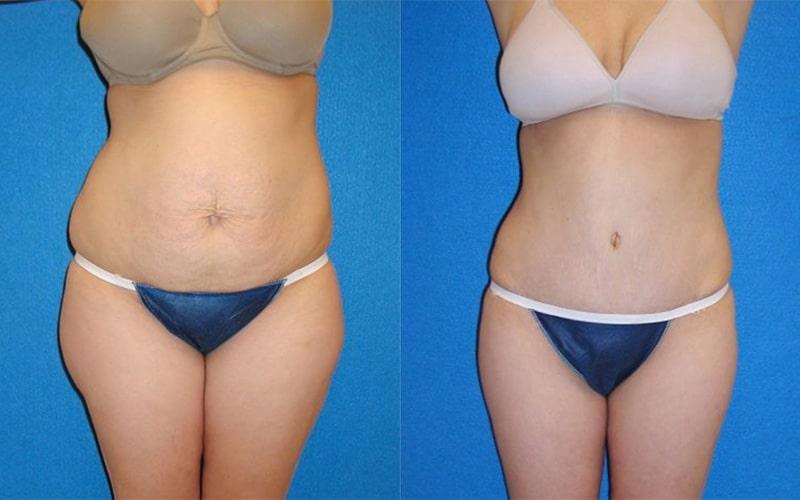
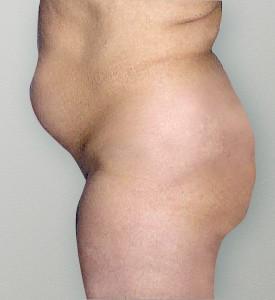
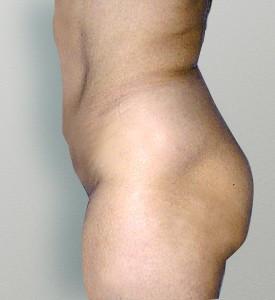
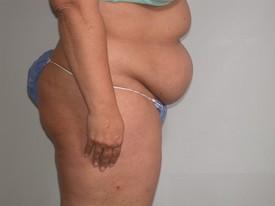
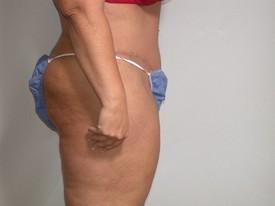
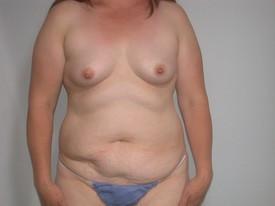
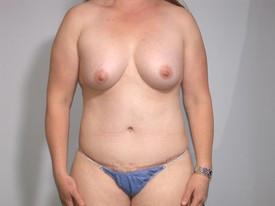
Real patient results
From verified board-certified surgeons in our directory.
The honest verdict
The drainless tummy tuck is a legitimate technical evolution, not a marketing gimmick. For appropriately selected patients operated on by surgeons experienced with progressive tension sutures, it offers meaningfully better early recovery and eliminates drain-related complications. Long-term aesthetic results are equivalent [7].
It is not, however, complication-free or universally superior. Seroma rates and aspiration rates are higher than with traditional drained abdominoplasty in most published series [1][5]. Patients with higher BMI, extensive skin excess, or concurrent extensive liposuction may be better served by drains. The decision should be driven by the patient's anatomy and the surgeon's specific experience, not by whichever technique the practice happens to market.
The correct frame: drains are a tool to manage a known complication. Eliminating them requires either (a) eliminating the underlying problem surgically, which is what quilting does, or (b) accepting a modestly higher rate of office-based fluid aspiration. Both are reasonable; neither is automatically better.
A surgeon offering a drainless tummy tuck to a 5'4", 180-pound patient with massive weight loss skin excess is making a marketing decision, not a clinical one. A surgeon offering a drainless tummy tuck to a 5'7", 145-pound postpartum patient with moderate diastasis is practicing modern abdominoplasty.
Find a board-certified tummy tuck surgeon
Get matched with verified Tummy Tuck surgeons in your area.
This article is for educational purposes and does not constitute medical advice. Surgical decisions should be made in consultation with a board-certified plastic surgeon who has evaluated the patient in person.