
Patients shopping for a flatter abdomen almost always start with the same question: liposuction or tummy tuck. The marketing language around both procedures has blurred the distinction, but anatomically they solve different problems. Liposuction removes subcutaneous fat. Abdominoplasty removes excess skin and repairs separated abdominal muscle. One is a contouring procedure for fat. The other is a reconstructive procedure for skin and the abdominal wall. Choosing the wrong one produces a predictable failure: a body that still looks pregnant despite tens of thousands of dollars spent, or a long horizontal scar on a patient who only needed fat reduction. This article walks through the decision honestly, including the scenarios where neither procedure alone is enough.
Quick overview
Liposuction is the second most common cosmetic surgical procedure in the United States, with 445,130 cases performed in 2023. Abdominoplasty ranked sixth, with 145,263 procedures [1]. The price gap is significant: liposuction averages $2,000–$4,000 per treatment area, while a full tummy tuck typically costs $8,000–$15,000 before anesthesia, facility, and garment fees [1][3].
The two procedures are not interchangeable. Liposuction works on patients with good skin elasticity and isolated fat deposits. Tummy tuck works on patients with stretched, redundant skin, separated rectus muscles (diastasis recti), or both — typically post-pregnancy or post-major-weight-loss patients. A patient who needs a tummy tuck and gets liposuction instead will end up with a deflated, hanging abdomen. A patient who needs liposuction and gets a tummy tuck will accept a permanent hip-to-hip scar for a problem fat removal alone would have fixed.
The rest of this article breaks down the anatomy each procedure addresses, the recovery reality, long-term outcomes beyond the first year, and the combination approaches that have become standard for post-pregnancy abdominal restoration.
What each procedure actually does
Liposuction
Liposuction removes subcutaneous fat — the layer of fat sitting between the skin and the abdominal muscles. A surgeon makes small incisions (typically 3–5 millimeters), infiltrates the area with tumescent fluid containing saline and epinephrine to reduce bleeding, then uses a thin cannula to aspirate fat [6]. Modern variations include suction-assisted lipoplasty (SAL), ultrasound-assisted lipoplasty (UAL), and power-assisted lipoplasty (PAL), all FDA-regulated devices with comparable safety profiles when used by trained surgeons [8].
What liposuction does not do: it does not tighten loose skin, it does not repair separated abdominal muscles, and it does not remove visceral fat (the deep fat surrounding internal organs that causes the "hard" belly in some patients). The American Board of Plastic Surgery recommends against removing more than 5 liters of fat in a single outpatient session to minimize fluid-shift complications [6].
Tummy tuck (abdominoplasty)
A full tummy tuck involves a horizontal incision running hip to hip, just above the pubic area. The surgeon lifts the skin and fat layer off the abdominal wall, repairs any separation of the rectus abdominis muscles with internal sutures (plication), removes the excess skin, and re-drapes what remains. The belly button is repositioned through a new opening [3].
This is a real abdominal surgery. It addresses three problems liposuction cannot: stretched skin that won't retract, diastasis recti (the muscle separation that causes the persistent post-pregnancy "pooch"), and the apron of tissue that hangs after major weight loss. The tradeoff is a permanent horizontal scar, longer recovery, and higher complication rates [5].
The mommy pooch problem
The single most common reason patients research this comparison is the post-pregnancy lower-abdominal bulge that doesn't respond to diet or exercise. Understanding what causes that bulge determines which procedure works.
In many post-pregnancy patients, the bulge is not primarily fat. It's a combination of stretched skin and diastasis recti — the linea alba (the connective tissue between the left and right rectus muscles) has thinned and widened during pregnancy, allowing the abdominal contents to push forward. No amount of liposuction will fix this. Removing fat from a patient with significant diastasis often makes the muscle separation more visible, not less.
A tummy tuck with muscle plication is the procedure that addresses diastasis. Liposuction alone is appropriate only when the abdominal wall is intact, the skin still retracts, and the issue is genuinely excess fat. A surgeon should assess muscle separation during the physical exam — often by having the patient perform a partial sit-up while supine, which makes diastasis visible and palpable.
Recovery: what the timelines actually look like
Liposuction
Most patients return to desk work within 5–10 days. Compression garments are worn around the clock for 2–4 weeks, then for shorter periods up to 6 weeks. Bruising affects roughly 40–50% of patients, swelling 30–40%, and temporary numbness 10–15% in the treated area [4]. Full results are visible at 3–6 months once swelling resolves and skin retraction completes [7].
Detailed week-by-week expectations are covered in the liposuction recovery timeline.
Tummy tuck
Recovery is significantly more demanding. Patients walk hunched forward for the first 1–2 weeks to avoid tension on the incision and muscle repair. Drains are typically in place for 1–2 weeks. Return to desk work occurs at 2–4 weeks; return to exercise at 6–8 weeks. Full settling of the scar and final contour takes 12–18 months [3].
Liposuction — what to expect, week by week
Typical recovery 7–14 days before patients return to most normal activities.
- Day 1–7Most pain & swelling. Compression garment 23 h/day. Walk daily.
- Week 2Off prescription meds, light activity, swelling starts to drop.
- Weeks 3–4Return to desk work. Light cardio. Sleep position may relax.
- Weeks 5–8Resistance training cleared by most surgeons. Garment off.
- Months 3–6Final shape emerges, swelling fully resolved, scars mature.
General guidance only. Your surgeon's instructions take precedence.
Cost: the real numbers
Liposuction averages $2,000–$4,000 per area in surgeon's fees alone [1]. A typical abdomen-and-flanks case runs $5,000–$8,000 all-in once anesthesia, facility, garments, and labs are included. Full pricing breakdowns by region are covered in the liposuction cost guide.
Tummy tuck averages $8,000–$15,000 in surgeon's fees, with all-in totals frequently reaching $12,000–$20,000 [3]. The tummy tuck cost article breaks down what's included and what isn't. Insurance virtually never covers either procedure when performed for cosmetic reasons, though panniculectomy (removal of an overhanging skin apron after massive weight loss) may be partially covered when it causes documented hygiene or skin breakdown issues.
Scarring and incisions
Liposuction scars are 3–5 millimeter punctate marks, typically placed in skin creases or the navel rim. Most fade to barely visible over 6–12 months.
Tummy tuck scars are permanent and substantial. The standard incision runs from hip to hip, low enough to sit beneath underwear or a swimsuit bottom when placed well. A second scar circles the repositioned navel. Mini tummy tucks use a shorter incision but address only the area below the navel and cannot correct diastasis above it. Scar quality depends on genetics, surgical technique, and post-op care — but the scar itself is non-negotiable. Patients unwilling to accept a permanent horizontal scar are not tummy tuck candidates.
Complications and revision rates
The safety profiles differ meaningfully.
Liposuction: Major complication rate is 0.2–0.3% when performed by board-certified surgeons. Mortality is approximately 1 in 5,000–10,000 procedures, with the highest risk coming from large-volume cases, combination procedures, and non-accredited facilities [4].
Tummy tuck: Overall complication rate is 10–20%. Seroma (fluid collection) is the most common, affecting roughly 1 in 10 patients. Infection rates are 2–5%, higher than liposuction because of the long incision and undermining involved [5]. Wound healing problems are more common in smokers, diabetics, and patients with BMI over 30.
Both procedures share venous thromboembolism risk (DVT and pulmonary embolism), which rises significantly when liposuction and tummy tuck are combined in the same session.
How to choose a surgeon
Board certification by the American Board of Plastic Surgery is the minimum threshold. Cosmetic surgery is not a protected specialty in most states, and dermatologists, OB-GYNs, and family physicians can legally perform liposuction after weekend courses. Complication rates correlate strongly with surgeon training and facility accreditation [6].
Verify that the surgical facility is accredited by AAAASF, AAAHC, or state licensure as an ambulatory surgery center. Ask how many of each procedure the surgeon performs annually — high-volume surgeons (100+ tummy tucks or 200+ liposuction cases per year) generally have better outcomes. Request to see unretouched before-and-after photos of patients with similar body types, not just the best-case results.
Geography matters less than credentials, but patients in major metros often have more board-certified options to compare. TrustClinic maintains verified directories for liposuction surgeons in Miami, Los Angeles, New York, and Houston.
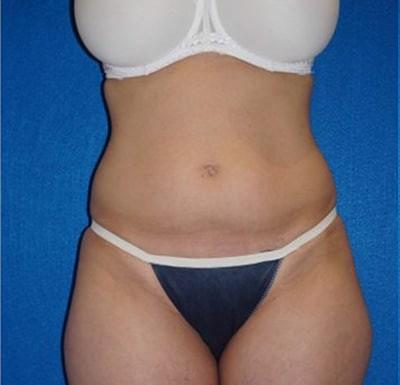
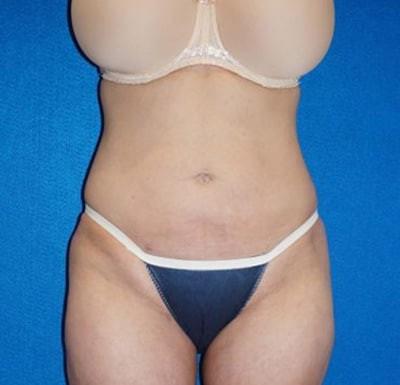
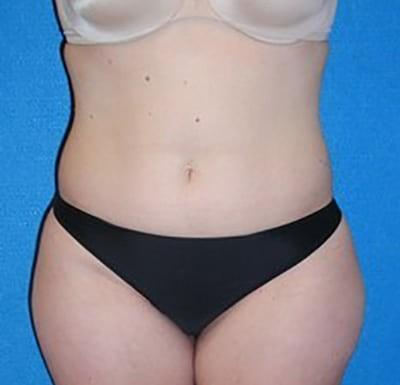
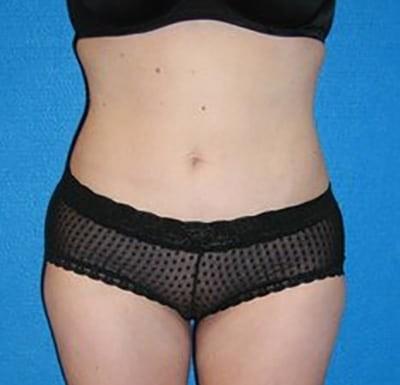
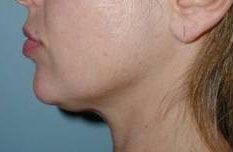
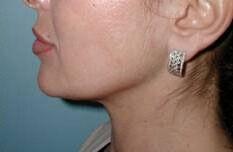
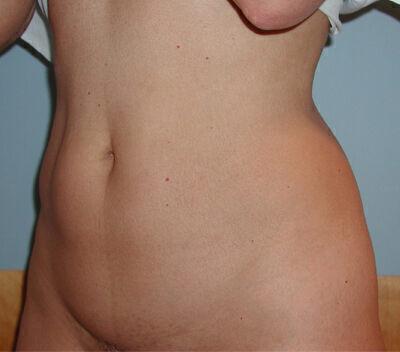
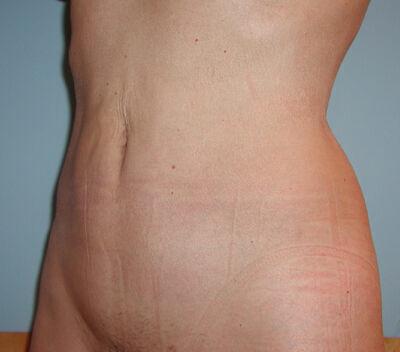
Real patient results
From verified board-certified surgeons in our directory.
Find a board-certified liposuction surgeon
Get matched with verified Liposuction surgeons in your area.
Combination approach: lipoabdominoplasty
In the past decade, lipoabdominoplasty — combining liposuction of the flanks and upper abdomen with a full tummy tuck — has become a standard approach for post-pregnancy patients who need both skin removal and contouring of adjacent areas. The combination produces a more comprehensive result than either procedure alone but increases operative time and complication risk.
The approach is not appropriate for every patient. Combining procedures elevates VTE risk, extends anesthesia exposure, and increases seroma formation. Surgeons performing lipoabdominoplasty should be experienced in both procedures individually before combining them, and the case should be done in an accredited facility with overnight monitoring available.
Patients considering body contouring after pregnancy frequently combine abdominoplasty with breast procedures (the "mommy makeover") or with BBL — though BBL safety considerations deserve separate review before adding fat grafting to an abdominoplasty case.
Long-term results: what happens after 5 years
Liposuction patient satisfaction rates run 85–90% at one year [7]. Fat cells removed during liposuction do not regenerate, but remaining fat cells can enlarge with weight gain. Patients who gain significant weight after liposuction often see disproportionate enlargement in untreated areas — the back, arms, or face — because the treated area has fewer fat cells to expand into. Skin retraction completes by 12 months; results that look good at one year generally hold at five.
Tummy tuck results are more durable in terms of skin and muscle correction. The muscle repair holds long-term in the absence of another pregnancy or major weight fluctuation. The scar continues to fade for up to 18 months. Pregnancy after a tummy tuck is medically safe but will likely stretch the abdomen again and may require revision.
Neither procedure is a substitute for weight stability. Patients within 10–15 pounds of their long-term maintenance weight, who do not plan additional pregnancies, see the most durable outcomes.
Which procedure if — a decision framework
- Isolated fat, good skin tone, no muscle separation: liposuction.
- Stretched skin, mild muscle separation, modest fat: tummy tuck, possibly with conservative liposuction of the flanks.
- Significant diastasis recti from pregnancy: tummy tuck. Liposuction alone will not address the bulge.
- Apron of skin after major weight loss: tummy tuck or panniculectomy.
- Stable weight, fat distribution issue only (love handles, bra roll, thighs): liposuction.
- Patient unwilling to accept a hip-to-hip scar: liposuction only, with the understanding that skin and muscle issues will not be corrected.
The honest verdict
The lipo-vs-tummy-tuck question is rarely a real choice. Most patients have an anatomical answer that an experienced surgeon can identify in a 15-minute physical exam. The decision becomes ambiguous only in borderline cases — mild skin laxity, small diastasis, modest fat — where either approach could produce a reasonable result. In those cases the choice usually comes down to scar tolerance, recovery time available, and budget.
What is not a real choice: trying to substitute liposuction for a tummy tuck because the recovery is easier and the cost is lower. That substitution is the single most common source of dissatisfaction in abdominal contouring. The patient ends up paying twice — once for the liposuction, then again for the tummy tuck that was needed all along.
Find a board-certified liposuction surgeon
Get matched with verified Liposuction surgeons in your area.
This article is for educational purposes only and does not constitute medical advice. Procedure suitability, risks, and outcomes vary by individual. Consult a board-certified plastic surgeon for personalized evaluation.