
Liposuction recovery is not a single timeline — it is a layered process where surface healing, deep tissue remodeling, and final aesthetic settling each move at their own pace. Most patients return to desk work within a week, resume light exercise around three to four weeks, and see final results between three and six months as residual swelling resolves [1][4]. This guide breaks down the full arc — day by day, then week by week, then month by month — and addresses the variables most articles skip: age, technique, complication scenarios, and what actually moves the needle on healing speed.
Quick overview
Liposuction is a contouring procedure, not a weight-loss surgery, but the recovery profile is closer to a moderate body procedure than a minor in-office treatment. Tissues are bruised, lymphatic channels are temporarily disrupted, and the body responds with a predictable inflammatory cascade that peaks in the first 48–72 hours and gradually resolves over months [2].
The headline numbers most patients want: 3–7 days off work for sedentary jobs, 2–3 weeks for bruising to clear, 4–6 weeks before strenuous exercise, and 3–6 months before the final contour is visible [1][4][7]. These are averages. The actual range depends on how many areas were treated, the volume of fat removed, the technique used, the patient's age and baseline health, and how strictly post-operative protocols are followed.
What the SERP rarely says clearly: the swelling phase is longer than most patients expect, the emotional dip around week two is common, and the difference between a good and a poor recovery is often determined in the first 14 days — by compression garment compliance, hydration, walking, and sleep position, not by anything dramatic.
Week-by-week liposuction recovery timeline
Days 1–3: Acute phase
The first 72 hours are the most uncomfortable. Tumescent fluid — the saline, lidocaine, and epinephrine solution injected during surgery — leaks from incision sites for the first 24–48 hours, which is normal and expected [6]. Drainage tubes are occasionally placed for 24–48 hours when large volumes are removed [5]. Swelling peaks during this window, bruising begins to appear, and the treated areas feel tight, sore, and warm.
Pain is typically described as moderate and is well-controlled with oral analgesics — usually a short course of prescription pain medication followed by acetaminophen and, when cleared, NSAIDs [3][6]. Most surgeons require the compression garment to be worn continuously, removed only briefly for showering after 24–48 hours.
Walking short distances every two to three hours starts on day one. This is non-negotiable: early ambulation reduces the risk of deep vein thrombosis and supports lymphatic drainage.
Days 4–7: Transition phase
Drainage from incisions slows and stops. Bruising deepens in color before it begins to fade. Swelling remains significant but the worst tightness eases. Most patients with desk jobs return to work between day 5 and day 7, often working half-days initially [4]. Driving resumes once narcotic pain medication is no longer needed — usually by day 4 or 5.
Weeks 2–3: Early healing
Bruising resolves in most patients during this window [2]. Numbness and altered sensation in treated skin are common and can persist for several months — this is expected nerve recovery, not damage [2]. The treated areas often feel firm, lumpy, or uneven — this is normal post-operative induration as the tissue planes heal and fluid reabsorbs.
Lymphatic massage is frequently introduced at 1–2 weeks, which may accelerate swelling resolution [5]. Light cardiovascular activity — walking at a brisk pace, stationary cycling at low resistance — is generally permitted around day 10–14. Resistance training, core work, and high-impact exercise remain off-limits.
The two-week follow-up appointment assesses incision healing, garment fit, and screens for seroma or infection [8].
Weeks 4–6: Return to activity
Most activity restrictions lift between four and six weeks [1][5][7]. Strenuous exercise — running, weightlifting, HIIT, contact sports — typically resumes during this window, often progressively rather than all at once. Compression garments may be downgraded from 23-hour wear to 12-hour or nighttime-only wear, depending on the surgeon's protocol and remaining swelling [1][4].
The contour begins to emerge but is not final. Approximately 60–70% of swelling has resolved by week six in most patients.
Liposuction — what to expect, week by week
Typical recovery 7–14 days before patients return to most normal activities.
- Day 1–7Most pain & swelling. Compression garment 23 h/day. Walk daily.
- Week 2Off prescription meds, light activity, swelling starts to drop.
- Weeks 3–4Return to desk work. Light cardio. Sleep position may relax.
- Weeks 5–8Resistance training cleared by most surgeons. Garment off.
- Months 3–6Final shape emerges, swelling fully resolved, scars mature.
General guidance only. Your surgeon's instructions take precedence.
Months 2–3: Contour refinement
Visible improvement accelerates between weeks 8 and 12 [7]. Skin retraction continues, fibrosis softens, and the surface smooths. Many patients consider this the point at which they feel comfortable in fitted clothing and swimwear again. Residual deep swelling — particularly in the lower abdomen, inner thighs, and ankles — may still be present.
Months 3–6: Final results
The final aesthetic outcome typically becomes apparent between three and six months post-procedure [2][4]. Numbness usually resolves within this window [2]. Scar maturation continues for up to a year, with the small incision sites fading from pink to flesh-toned.
Contour irregularities, if present, are best evaluated after the six-month mark, when revision can be considered if indicated [6].
Swelling and bruising: a more honest timeline
Swelling is the variable that most consistently exceeds patient expectations. The peak occurs at 48–72 hours, but a meaningful baseline of swelling persists for months [2]. The typical pattern:
- Days 1–3: maximum swelling, treated areas appear larger than pre-op
- Week 1–2: dramatic reduction in surface swelling; bruising visible
- Weeks 2–3: bruising resolves [2]
- Weeks 4–8: steady but slower swelling resolution
- Months 3–6: residual deep tissue swelling clears, final contour emerges [4][7]
Gravity-dependent areas — ankles, lower legs, lower abdomen — hold swelling longest. Fluctuations are normal: swelling that increases by evening or after sodium-heavy meals is not a complication.
Pain management and what's normal
Pain after liposuction is typically rated mild to moderate and is described more often as deep soreness and bruising-type tenderness than sharp pain [6]. Oral analgesics control symptoms in 7–14 days [3][6]. The discomfort is generally worse with movement initially, then improves rapidly after the first week.
Compression garments: what the data shows
Compression garments are worn for 2–4 weeks post-operatively in most protocols, with continuous (23-hour) wear during the first 1–2 weeks and reduced wear thereafter [1][4]. The garment supports the treated tissue, limits seroma formation, encourages skin retraction, and reduces swelling.
Non-compliance is one of the most common controllable factors in suboptimal outcomes. Patients who abandon the garment early often experience prolonged swelling, more contour irregularity, and slower resolution of induration.
Recovery by liposuction technique
Not all liposuction recovers identically. Technique affects the depth and pattern of tissue trauma.
- Tumescent (suction-assisted) liposuction: the standard. Recovery profile as described above [2].
- Ultrasound-assisted liposuction (UAL/VASER): thermal energy is applied to emulsify fat. Recovery is broadly similar but may involve slightly more initial swelling due to thermal effect, often offset by reduced bruising.
- Power-assisted liposuction (PAL): mechanized cannula motion. Recovery is comparable to tumescent, sometimes with reduced surgeon fatigue translating to more even results.
- Laser-assisted liposuction (SmartLipo and similar): marketing often suggests faster recovery; the peer-reviewed evidence does not consistently support a meaningfully shorter timeline. Skin tightening claims should be evaluated cautiously.
The single biggest driver of recovery duration is volume removed and number of areas treated — not the brand of device.
Recovery and age: what changes after 40, 50, and 60
Older patients are not poor liposuction candidates, but recovery trajectories differ:
- Under 40: skin retracts most readily, swelling resolves faster, and final contour often emerges closer to the 3-month mark.
- 40–50: healing remains robust but skin retraction is somewhat slower; final results typically settle at 4–5 months.
- 50–60: swelling may persist longer, and skin laxity may limit how dramatic the contour improvement appears without adjunctive skin-tightening procedures.
- 60+: medical clearance becomes more important, and recovery often extends toward the longer end of every range. Comorbidities — hypertension, diabetes, anticoagulant use — meaningfully affect healing.
Age alone is not a contraindication. Physiologic health, skin quality, and realistic expectations matter more than the number on the chart.
When recovery takes longer than expected
A minority of patients experience extended recoveries. The most common reasons:
- Seroma: fluid collection occurs in 1–5% of cases and may require needle aspiration [3]. Extends recovery by 1–3 weeks.
- Infection: 0.1–1% incidence with proper post-operative care [3]. Treated with antibiotics; may delay return to activity.
- Contour irregularities: seen in 5–10% of cases [6]. Often improve with time and massage; revision considered after 6 months.
- Prolonged numbness: sensation typically returns by 3–6 months [2]. Persistent numbness beyond a year is uncommon.
- Persistent firmness or fibrosis: responds to manual lymphatic drainage and time.
Optimizing your recovery: what actually helps
The evidence-supported levers patients control:
- Compression garment compliance — the single highest-yield intervention [1][4].
- Hydration — supports fluid mobilization and lymphatic clearance.
- Protein-adequate nutrition — supports tissue repair.
- Early, frequent walking — reduces DVT risk and supports drainage.
- Sleep position — keeps pressure off treated areas and reduces dependent swelling.
- Avoiding nicotine — nicotine constricts microvasculature and meaningfully impairs healing.
- Limiting alcohol for the first 2 weeks — interferes with medications and worsens swelling.
- Lymphatic massage beginning at 1–2 weeks, when recommended [5].
What does not help: supplements marketed as "recovery accelerators," arnica (mixed evidence at best), and any product promising to shortcut the timeline.
How to choose a surgeon who supports good recovery
Recovery quality is determined as much in the operating room as it is after. A surgeon who removes too much fat, treats too many areas in one session, or uses technique poorly creates a recovery that is longer, more painful, and more likely to require revision. Cost varies meaningfully by region and surgeon experience — see the complete liposuction cost breakdown and the procedure pricing data at /cost-of/liposuction.
Board certification by the American Board of Plastic Surgery is the minimum standard. Beyond that, look for a surgeon who:
Major metropolitan areas offer the deepest concentration of qualified surgeons. Browse vetted practitioners in Miami, Los Angeles, New York, or Houston.
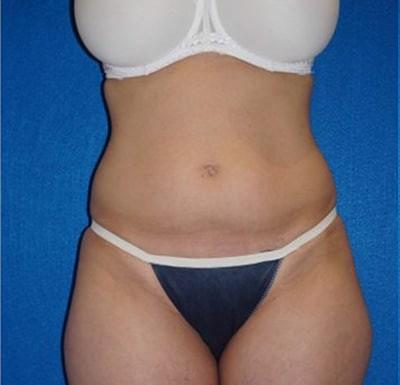
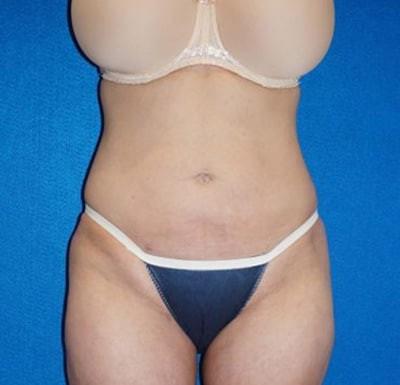
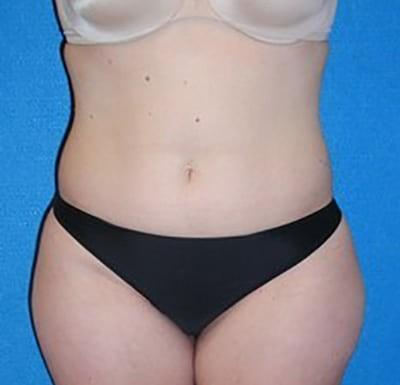
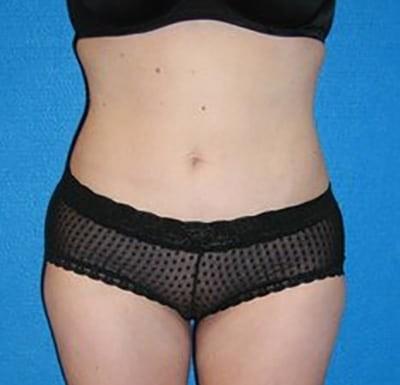
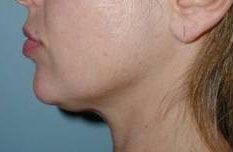
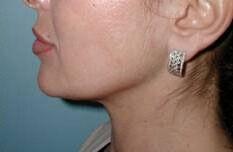
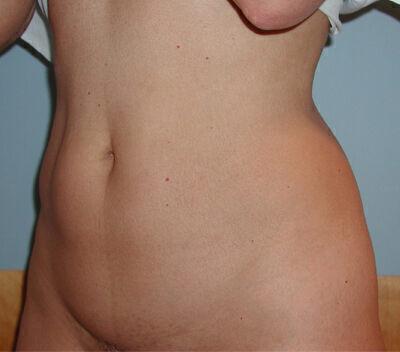
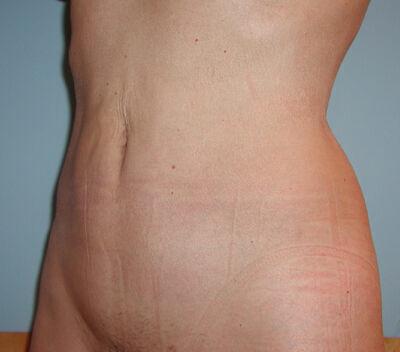
Real patient results
From verified board-certified surgeons in our directory.
Find a board-certified liposuction surgeon
Get matched with verified Liposuction surgeons in your area.
The honest verdict
Liposuction recovery is more demanding than most marketing suggests and less dramatic than horror stories imply. The realistic expectation: a week of meaningful discomfort, two to three weeks of visible bruising, a month before normal exercise, and three to six months before the final result. Patients who comply with compression protocols, walk early, hydrate, and avoid nicotine consistently report better outcomes than those who do not.
The procedure produces durable results when paired with stable body weight — but it does not exempt the treated areas from future weight fluctuation. Long-term outcome data at one and two years post-procedure show maintained contour in patients whose weight remains within 5–10 pounds of their post-recovery baseline.
For patients also considering complementary procedures, the tummy tuck cost guide and mini vs full tummy tuck comparison cover scenarios where skin removal may be appropriate alongside or instead of liposuction. Surgeons across Chicago, Atlanta, and Dallas can advise on combined approaches.
Find a board-certified liposuction surgeon
Get matched with verified Liposuction surgeons in your area.
This article is for educational purposes only and does not constitute medical advice. Recovery timelines vary by individual. Consult a board-certified plastic surgeon for personalized guidance.