
Liposuction is one of the most commonly performed cosmetic surgeries worldwide, and one of the most consistently misrepresented in terms of safety. It is not a weight-loss procedure, it is not risk-free, and the complication profile shifts substantially based on volume removed, technique, patient health, and surgeon credentials. This article separates routine recovery events (swelling, bruising, temporary numbness) from serious complications (venous thromboembolism, fat embolism, lidocaine toxicity, visceral perforation) using peer-reviewed incidence data. The goal is a clear, calibrated picture of what can go wrong, how often, and what reduces the odds — without minimizing the procedure or catastrophizing it.
Quick overview
Liposuction has a reported mortality rate ranging from approximately 1 in 5,000 to 1 in 100,000 procedures, depending on the patient population, volume of fat aspirated, and whether it is combined with other surgeries [1]. The vast majority of patients recover without serious incident. Most complications are minor and self-limiting: bruising, swelling, temporary numbness, and minor contour irregularities. A smaller subset — single-digit percentages — develop seromas, hematomas, infections, or persistent contour problems requiring revision [1][2][7].
The serious risks — pulmonary embolism, fat embolism, lidocaine toxicity, fluid overload, visceral perforation — are rare but real, and they are concentrated in predictable scenarios: large-volume cases (>5 liters removed), combined procedures, inadequate prophylaxis, non-accredited facilities, and surgeons operating outside their training [1][4][5].
What follows is a hierarchical breakdown of liposuction risks, organized from most common to most catastrophic, with the patient and procedural factors that move someone up or down the risk ladder.
Common complications: what most patients will experience
Nearly every liposuction patient will encounter at least some of the following. These are expected sequelae of the procedure rather than true complications, but they are frequently labeled as risks because they can be uncomfortable, prolonged, or aesthetically concerning.
Bruising, swelling, and fluid drainage
Tumescent fluid — the saline, lidocaine, and epinephrine solution injected before suctioning — drains from incision sites for 24 to 72 hours postoperatively. This is normal and expected, not a complication. Swelling peaks at 3 to 5 days and can take 3 to 6 months to fully resolve, with final contour visible at roughly 6 months [4].
Temporary numbness and altered sensation
Sensory nerve disruption during cannula passage causes numbness, tingling, or hypersensitivity in treated areas. Most cases resolve within 6 to 12 weeks. Persistent numbness or dysesthesia lasting beyond 6 months is reported in 5 to 10% of patients, and permanent nerve injury occurs in 0.5 to 3% [2][7].
Contour irregularities
Uneven results, divots, ridges, and asymmetry are the most common aesthetic complaints. Incidence ranges from 5 to 15% depending on technique, patient anatomy, and surgeon experience [2]. Superficial liposuction — passing cannulas close to the skin to improve definition — carries higher contour irregularity risk than deeper-plane work.
Seroma and hematoma
Seroma (fluid collection) occurs in 1 to 5% of cases; hematoma (blood collection) in 1 to 5% depending on patient anticoagulation status and technique [1][2]. Compression garments worn for 2 to 4 weeks reduce both [4]. Persistent seromas may require aspiration in clinic.
Infection, skin, and wound complications
Infection rates after liposuction range from 0.3 to 1.2%, lower than many surgical procedures because incisions are small and tumescent epinephrine reduces bacterial seeding [1]. Most are superficial cellulitis treated with oral antibiotics. Necrotizing fasciitis and toxic shock syndrome have been reported but are exceedingly rare and typically associated with non-accredited facilities or breaks in sterile technique.
Skin necrosis — full-thickness death of overlying skin — occurs in 0.1 to 0.5% of cases [3]. It is more common with aggressive superficial liposuction, in smokers, and in patients with poor microvascular health (uncontrolled diabetes, autoimmune vasculopathy).
Thermal burns from energy-assisted devices (ultrasonic, laser, radiofrequency) are reported in 0.1 to 1% of procedures using these technologies [3][6]. The FDA requires specific training for energy-assisted liposuction devices precisely because incorrect power settings or cannula dwell time can cause skin burns and, rarely, deeper tissue injury [6].
Anesthesia and tumescent fluid risks
The tumescent technique — injecting large volumes of dilute lidocaine and epinephrine before suctioning — is what made modern liposuction substantially safer than older "dry" techniques [4]. But the tumescent solution itself carries specific risks that are unique to this procedure.
Lidocaine toxicity
Lidocaine systemic toxicity (LAST) can present 8 to 12 hours postoperatively, well after the patient has left the surgical facility [8]. Symptoms range from perioral numbness and tinnitus to seizures and cardiac arrest. The maximum safe tumescent lidocaine dose is widely cited as 55 mg/kg with epinephrine, and 35 mg/kg without [3][8]. Exceeding these thresholds — or operating on patients taking medications that interfere with lidocaine metabolism (certain SSRIs, beta-blockers, antifungals) — raises toxicity risk.
Fluid overload and electrolyte imbalance
Large-volume tumescent infiltration can be absorbed systemically, causing fluid overload, pulmonary edema, and congestive heart failure in susceptible patients [8]. Hyponatremia (low sodium) has been reported in cases with excessive fluid absorption. The risk rises sharply when more than 5 liters of total aspirate is removed, which is why the American Society of Plastic Surgeons recommends limiting single-session liposuction to under 5 liters [4].
General anesthesia risk
When liposuction is performed under general anesthesia rather than tumescent-only or IV sedation, standard anesthesia complications apply: aspiration, malignant hyperthermia, anesthetic reactions, and rare death. Combined procedures (liposuction plus tummy abdominoplasty, BBL, or breast surgery) extend operative time and compound risk [5].
Serious and life-threatening complications
These are the events that drive liposuction mortality statistics. They are rare, but they are not theoretical, and they are concentrated in identifiable high-risk scenarios.
Venous thromboembolism (DVT and pulmonary embolism)
Deep vein thrombosis occurs in 0.1 to 0.5% of liposuction patients without prophylaxis [5]. Pulmonary embolism — when a clot travels to the lungs — is the leading cause of liposuction-related death along with fat embolism [1]. Risk rises substantially with:
- Operative time exceeding 2 hours
- Aspirate volume exceeding 5 liters
- Combined procedures (especially with abdominoplasty)
- BMI >30
- Personal or family history of clotting disorders
- Estrogen-containing contraceptives or hormone therapy
- Recent long-haul travel
Mechanical prophylaxis (sequential compression devices intraoperatively, early ambulation postoperatively) and pharmacologic prophylaxis (low-molecular-weight heparin in high-risk patients) reduce but do not eliminate VTE risk [5].
Fat embolism syndrome
Fat embolism occurs when fat globules enter the venous circulation and lodge in the lungs, brain, or skin. It is distinct from pulmonary embolism but similarly dangerous. Classic presentation includes respiratory distress, neurologic changes, and petechial rash 24 to 72 hours postoperatively. Fat embolism is more strongly associated with gluteal fat transfer (BBL) than pure liposuction, but high-volume cases carry measurable risk [1].
Visceral perforation
Intra-abdominal organ perforation — most commonly small bowel — occurs in less than 0.1% of cases but is potentially fatal [3]. It is concentrated in abdominal liposuction, patients with prior abdominal surgery (adhesions), umbilical or ventral hernias, and procedures performed without adequate tactile feedback (some energy-assisted techniques).
Risk stratification: how to estimate personal risk
Liposuction risk is not uniform across patients. The same procedure that carries near-trivial risk for a healthy 32-year-old with BMI 24 carries meaningfully different risk for a 58-year-old with BMI 33 and controlled hypertension. Major risk modifiers, drawn from systematic complication data, include:
Lower-risk profile:
- Age 20 to 45
- BMI 22 to 28
- Non-smoker
- No chronic medical conditions
- Single anatomic area or modest 360 case (<3 liters aspirate)
- Standalone procedure, not combined
- Tumescent or IV sedation rather than general anesthesia
Higher-risk profile:
- Age >55
- BMI >30
- Current smoker or within 4 weeks of smoking cessation
- Diabetes, cardiovascular disease, clotting disorder, or autoimmune disease
- Large-volume case (>5 liters)
- Combined with abdominoplasty, BBL, or breast surgery
- General anesthesia with operative time >3 hours
For patients considering combined procedures, the comparison between standalone liposuction and lipo-abdominoplasty is worth careful study. Combined cases produce better aesthetic results for many patients but carry compounded VTE and anesthesia risk. The lipo vs tummy tuck comparison covers the tradeoffs in detail.
Technique-specific risk differences
Not all liposuction is the same. The major modalities carry different risk profiles:
Suction-assisted liposuction (SAL): The traditional tumescent technique. Lowest equipment-related risk, but surgeon fatigue in long cases.
Power-assisted liposuction (PAL): Mechanically oscillating cannula reduces surgeon effort. Does not significantly change complication rates compared to SAL [6].
Ultrasonic-assisted liposuction (UAL/VASER): Uses ultrasonic energy to emulsify fat. Carries 0.1 to 1% risk of thermal injury [3][6]. Skin burns reported when cannula dwells too long in one area.
Laser-assisted liposuction (LAL): Marketed as "SmartLipo" and similar brands. FDA flagged thermal injury risk; requires careful power management [6]. Evidence for superior skin tightening is mixed.
Radiofrequency-assisted liposuction (RFAL): Newer modality. Limited long-term safety data compared to established techniques.
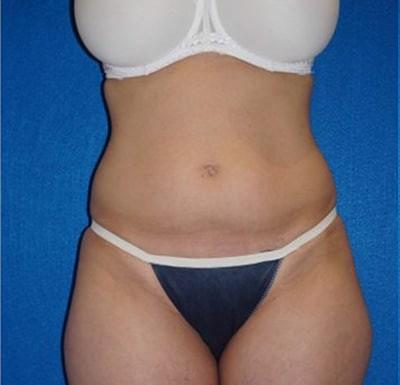
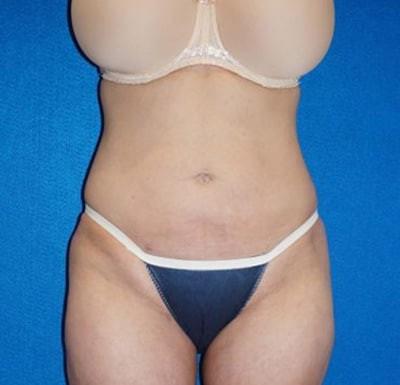
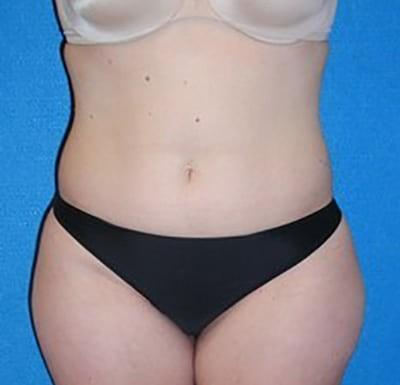
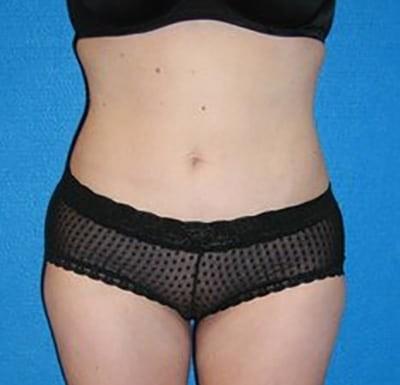
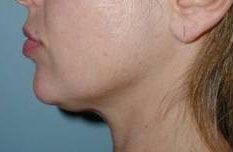
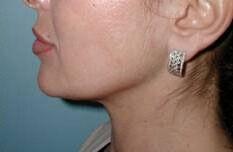
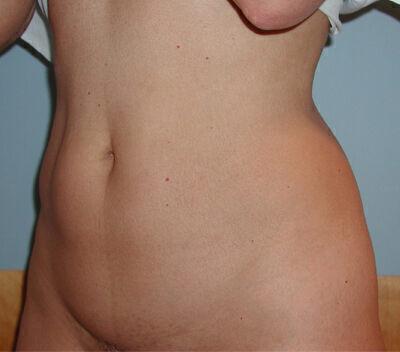
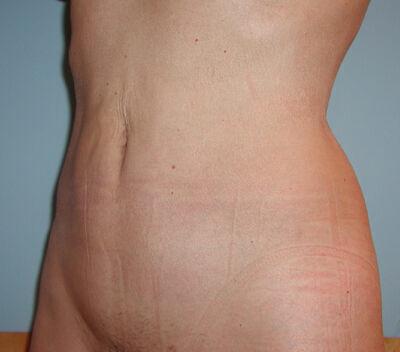
Real patient results
From verified board-certified surgeons in our directory.
How to actually reduce risk
The largest determinants of liposuction safety are not the device or the marketing — they are surgeon credentials, facility accreditation, patient selection, and volume limits.
- Choose a board-certified plastic surgeon (ABPS) or board-certified cosmetic surgeon. Board certification requires documented training in body contouring and an oral examination on complication management.
- Confirm facility accreditation. AAAASF, AAAHC, or state-licensed surgical facilities have emergency protocols, monitored anesthesia, and crash carts. Office "medspas" performing liposuction under local anesthesia without these standards are higher-risk environments.
- Get medical clearance. Patients over 40 or with comorbidities should have preoperative labs, EKG, and primary care or specialist clearance.
- Disclose every medication and supplement. Fish oil, vitamin E, ginkgo, garlic supplements, NSAIDs, and many prescription drugs affect bleeding and lidocaine metabolism.
- Stop nicotine at least 4 weeks before and after surgery. This includes vaping, patches, and gum containing nicotine.
- Respect volume limits. Single-session aspirate above 5 liters is associated with higher complication rates [4]. Staged procedures are safer for larger reductions.
- Wear compression garments as directed. Typically 2 to 4 weeks of continuous wear, then transition to part-time [4].
- Walk early and often. Ambulation within hours of surgery is the single most effective VTE prevention measure for low-to-moderate-risk patients.
Find a board-certified liposuction surgeon
Get matched with verified Liposuction surgeons in your area.
For patients researching geographically, the major US markets for liposuction include Miami, Los Angeles, New York, Houston, and Atlanta. Surgeon density does not equal surgeon quality — credential verification matters more than zip code.
Long-term outcomes and revision
Liposuction permanently removes fat cells from treated areas. However, remaining fat cells can enlarge with weight gain, and fat reaccumulation occurs in 10 to 30% of patients within 5 years if significant weight gain occurs [7]. The distribution may shift: patients who gain weight after abdominal liposuction sometimes accumulate fat in untreated areas (back, arms, thighs).
Revision surgery is required in 5 to 15% of cases, most commonly for contour irregularities, asymmetry, or incomplete reduction [7]. Revision costs are typically out of pocket and can equal or exceed the original procedure. Patients should factor potential revision into the total cost of liposuction when budgeting.
Chronic pain or dysesthesia (abnormal sensation) persists in 5 to 10% of patients at 6-month follow-up [7]. Psychological complications, including body dissatisfaction and dysmorphic concerns, occur in 2 to 5% [7]. Patients with pre-existing body dysmorphic disorder are at meaningfully elevated risk and benefit from psychological evaluation before surgery.
The honest verdict
Liposuction is reasonably safe for the right patient, performed by the right surgeon, in the right facility, at the right volume. It is not safe for everyone, and the marketing around "lunch-break lipo," "awake liposuction," and ultra-high-volume single-session cases has consistently outpaced the safety data.
The complications that kill patients — pulmonary embolism, fat embolism, lidocaine toxicity, fluid overload — are concentrated in predictable scenarios: high-volume cases, combined procedures, inadequate facilities, and patients whose comorbidities were not properly addressed preoperatively. None of these are random events. They are the foreseeable consequences of pushing the limits of the procedure.
The complications that hurt patients aesthetically — contour irregularities, asymmetry, persistent numbness, unsatisfying results — are far more common than the catastrophic ones, and they are also predictable. They correlate with surgeon experience, technique selection, and realistic patient expectations.
For a healthy patient at a stable weight, with realistic goals, choosing a board-certified surgeon operating in an accredited facility, liposuction is a defensible procedure with a well-characterized risk profile. The risk only becomes unreasonable when one or more of those conditions is missing.
Find a board-certified liposuction surgeon
Get matched with verified Liposuction surgeons in your area.
This article is for educational purposes only and does not constitute medical advice. Individual risk profiles vary significantly. Consult a board-certified plastic surgeon for personalized evaluation before making any surgical decision.