
Rhinoplasty before-and-after photos are the most-searched, least-understood content in cosmetic surgery. Patients scroll through hundreds of gallery images expecting a preview of their own outcome, but galleries are curated, lighting changes everything, and most photos labeled "after" were taken before the nose had finished healing. A realistic understanding of what rhinoplasty actually delivers — and over what timeline — matters more than any single image. This guide explains what before-and-after photos genuinely demonstrate, where they mislead, how results evolve from week one to year three, and what distinguishes a credible surgical portfolio from a marketing reel.
Quick overview
Rhinoplasty is among the most technically demanding cosmetic procedures performed today, with patient satisfaction rates ranging from 70 to 85 percent depending on surgeon experience and how realistic preoperative expectations were [1]. The visual transformation shown in before-and-after photos is real, but it is also slow. Final results are not visible at six weeks, three months, or even six months. Most of the swelling that obscures definition in the nasal tip resolves between months six and twelve, with subtle refinement continuing through month eighteen and, in thick-skinned patients, into year two [2].
This means almost every "after" photo on a surgeon's website represents a single moment in a long arc. A photo taken at three months will not show the same nose as a photo taken at fifteen months. Patients evaluating galleries should ask when each post-op image was captured, because the answer changes how that image should be interpreted.
The second thing photos cannot show is function. A beautifully refined nose that obstructs breathing is a failed rhinoplasty. Breathing obstruction occurs in 10 to 15 percent of cases and is one of the leading reasons for revision surgery [5]. Good before-and-after documentation includes notes on airway preservation, not just aesthetic change.
What before-and-after photos actually show
A technically honest rhinoplasty gallery demonstrates three things: structural change, healing stage, and consistency across patient anatomies. Structural change is the easy part — a reduced dorsal hump, a refined tip, narrowed alar base, or corrected deviation [1]. These are the standard goals of primary rhinoplasty and the changes most visible in photographs.
Healing stage is harder to read. A nose photographed at three months still carries significant tip swelling, particularly in patients with thicker skin. The supratip area (just above the tip) often appears fuller than it will look at twelve months. Lighting hides or exaggerates these differences. A surgeon photographing under flat clinical lighting at standardized angles is showing something fundamentally different from one shooting under directional studio lighting that flatters every contour.
Consistency is the most diagnostic element of a gallery. One stunning result proves little — every experienced surgeon has produced exceptional outcomes. Twenty consecutive results across different starting anatomies, ethnicities, and skin types prove a reproducible technique. Patients evaluating galleries should look for diversity of starting points, not just the polish of the finish.
What photos cannot show
Photos cannot show breathing. They cannot show how the nose feels under the patient's own fingers, the stiffness in year one, the residual numbness in the tip that may persist for twelve to eighteen months, or the subtle asymmetries visible only in profile under specific lighting. Photos also cannot capture the revision history. A polished "after" image from a revision case looks identical to a primary case in the photo, but the surgical complexity and risk profile behind it are entirely different [4].
How results evolve: a realistic timeline
Rhinoplasty heals on its own schedule, and the schedule is longer than most patients are told during consultation. Visible bruising and external swelling resolve in the first two to three weeks, which is when the splint comes off and the initial "reveal" happens [2]. This is not the result. It is a heavily swollen approximation of the result, and patients who judge their nose at this stage frequently panic over fullness, asymmetry, or a tip that looks rounder than expected.
Weeks 1 to 6
The splint comes off around day seven. Bruising under the eyes fades by week two or three. By week six, the nose looks presentable in social settings, but the tip remains swollen, the bridge may feel firm or numb, and fine definition is absent. Approximately 60 to 70 percent of the swelling has resolved by this point.
Months 3 to 6
This is the period of fastest visible refinement. The bridge settles, the tip begins to define, and patients see meaningful change month over month. Most before-and-after photos posted on social media come from this window because the change is dramatic and the timeline is convenient. It is also the window when patients with thicker skin become anxious — their tips are still swollen while thinner-skinned peers appear to be healing faster.
Months 6 to 12
Definition continues to emerge in the tip. The supratip break (the small dip above the tip) becomes visible. Subtle asymmetries that were masked by swelling may appear and then resolve as swelling continues to redistribute. By month twelve, most patients are at or near final result, with roughly 90 to 95 percent of swelling resolved [2].
Year 2 and beyond
Final refinement, particularly in thick-skinned and revision patients, can continue into month eighteen or even year two. The nose then enters a long, stable plateau. Rhinoplasty results are durable: barring trauma or aging-related soft tissue changes, the structural work performed during surgery remains intact for decades.
Rhinoplasty — what to expect, week by week
Typical recovery 10–14 days before patients return to most normal activities.
- Day 1–7Most pain & swelling. Compression garment 23 h/day. Walk daily.
- Week 2Off prescription meds, light activity, swelling starts to drop.
- Weeks 3–4Return to desk work. Light cardio. Sleep position may relax.
- Weeks 5–8Resistance training cleared by most surgeons. Garment off.
- Months 3–6Final shape emerges, swelling fully resolved, scars mature.
General guidance only. Your surgeon's instructions take precedence.
Primary vs revision: why the before-and-after looks different
Primary rhinoplasty — a first-time operation on an unoperated nose — has a revision rate of 5 to 15 percent in experienced hands [1]. Revision rhinoplasty, performed on a nose that has already had surgery, has a revision rate of 20 to 40 percent and is significantly more technically demanding [1][6]. The before-and-after photos in these two categories are not comparable.
In a primary case, the surgeon works with intact anatomy, predictable tissue planes, and native cartilage. In a revision, scar tissue distorts those planes, cartilage may have been over-resected by the prior surgeon, and structural grafts (often harvested from the rib) are frequently required to rebuild support [8]. A revision "after" photo that looks merely natural represents far more surgical work than a primary "after" that looks dramatic.
Patients viewing galleries should ask whether the cases shown are primary or revision. A surgeon who performs significant revision work and shows those outcomes honestly — including the modest improvements that revision sometimes delivers — is offering a more truthful picture than one who shows only the most photogenic primary cases.
Open vs closed rhinoplasty: does the approach change the result?
The distinction between open and closed rhinoplasty refers to surgical access, not to the final visual result. Open rhinoplasty uses a small incision across the columella (the strip of skin between the nostrils), allowing the surgeon to lift the nasal skin and visualize the underlying structure directly. Closed rhinoplasty works entirely through incisions inside the nostrils [4].
Open rhinoplasty offers superior visualization for complex tip work, asymmetries, and revision cases. The columellar scar, when properly placed and closed, becomes nearly invisible within six to twelve months. Closed rhinoplasty leaves no external scar and typically involves slightly less tip swelling early in recovery, but the surgeon operates with reduced visibility, making it less suitable for complex reconstruction [4].
In before-and-after photos, the approach is usually invisible. A skilled surgeon's open rhinoplasty result is indistinguishable from a closed result of equivalent quality. The choice of approach should be driven by the anatomy and goals, not by patient preference for "no scar." A surgeon who insists on closed rhinoplasty for a complex revision case is prioritizing marketing over outcomes.
For a detailed comparison of surgical versus non-surgical approaches, see Non-Surgical Rhinoplasty vs Surgical: The Honest Comparison.
What realistic results look like by nose type
Not every nose can become every other nose. A heavy, thick-skinned nose with weak underlying cartilage cannot be transformed into a thin, sharply defined nose, regardless of surgical skill. Skin thickness is the rate-limiting factor in tip definition — thick skin drapes over refined cartilage and softens every angle [7].
Dorsal hump reduction is among the most predictable changes. A bony or cartilaginous hump can be reduced cleanly, with results visible early and stable long-term.
Tip refinement depends heavily on skin thickness, cartilage strength, and existing tip projection. Thin-skinned patients see the most dramatic tip changes; thick-skinned patients see softer, more gradual refinement that may not fully reveal until month eighteen.
Alar base narrowing addresses wide nostrils through small incisions at the base of the nose. Results are predictable but require careful technique to avoid visible scarring or overly narrowed nostrils that look operated.
Deviation correction combines functional septoplasty with aesthetic straightening. Photos may show residual minor deviation that is acceptable given the starting point — perfect symmetry is rarely achievable and not always anatomically desirable.
Ethnic rhinoplasty preserves the patient's heritage features while refining specific elements. A good before-and-after in this category looks like the same person, refined — not like a different ethnicity superimposed on the original face [7].
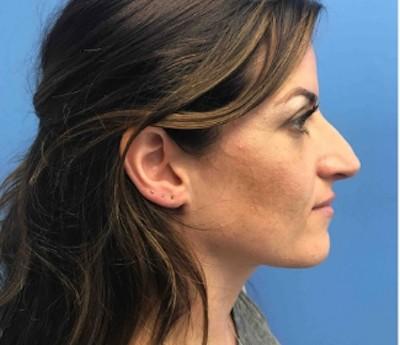
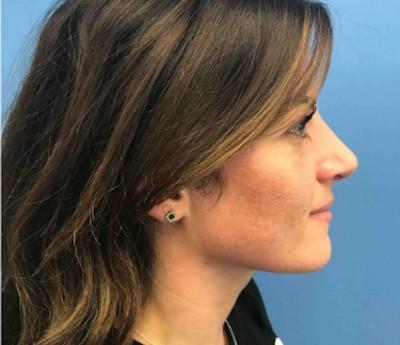
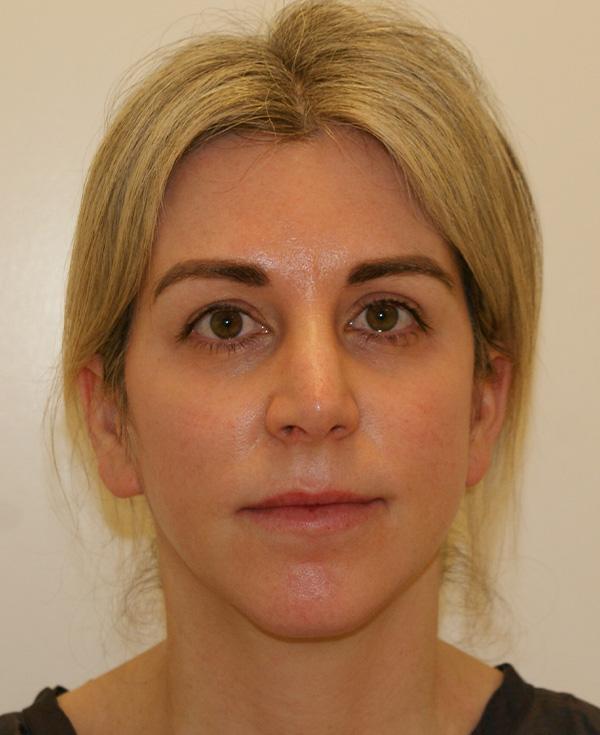
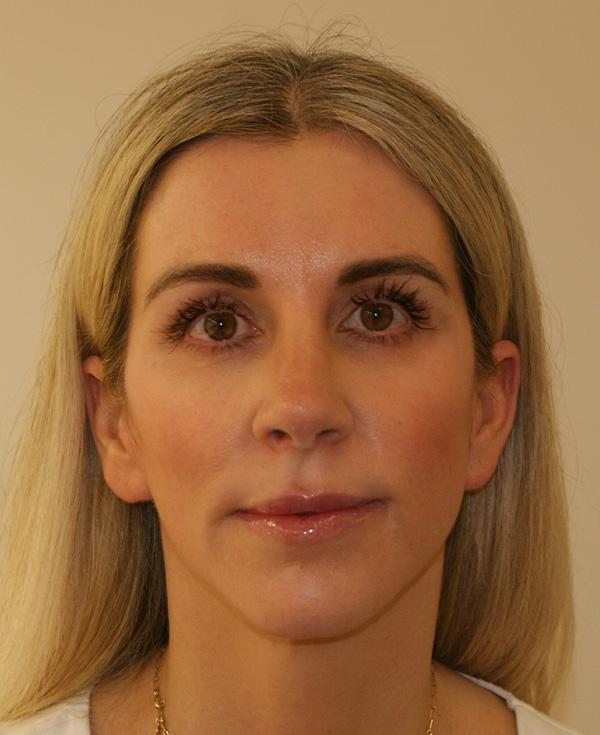
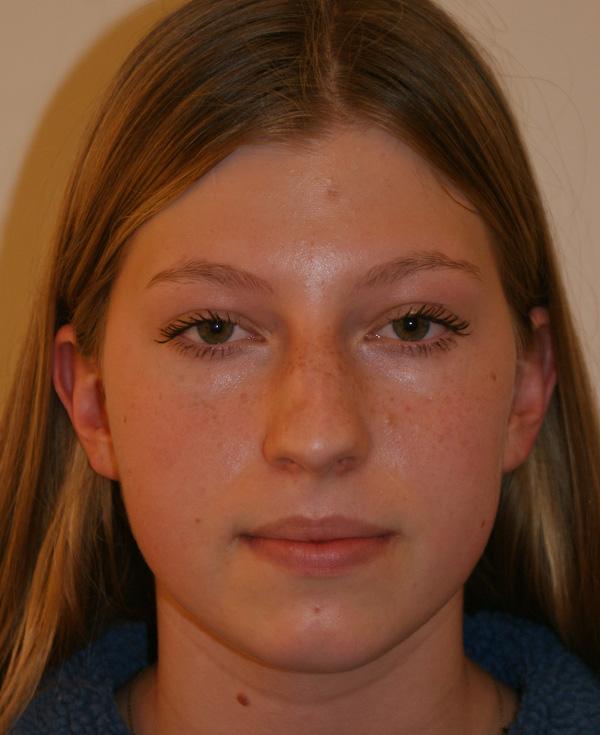
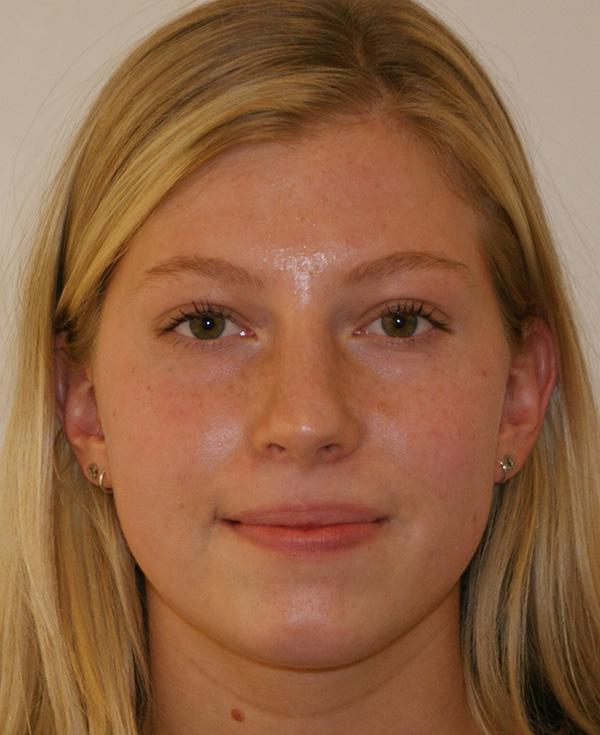
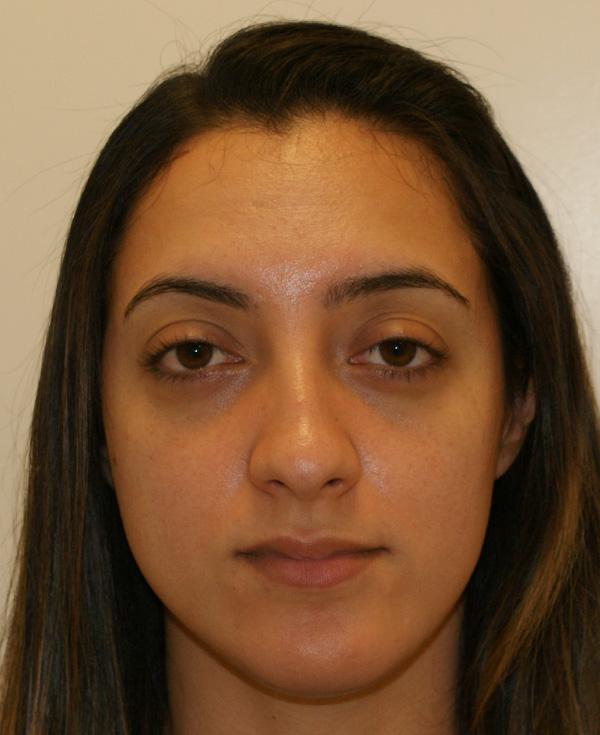
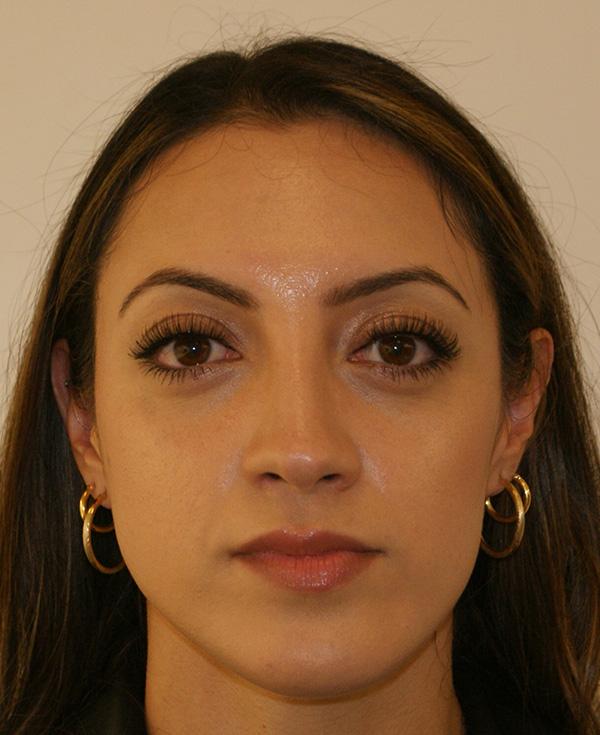
Real patient results
From verified board-certified surgeons in our directory.
Choosing a surgeon based on their portfolio
A surgeon's before-and-after gallery is the single most useful piece of evidence a patient has during research, but only if it is read critically. Board certification by the American Board of Plastic Surgery or the American Board of Facial Plastic and Reconstructive Surgery is the baseline credential, indicating a minimum of five to seven years of accredited training including dedicated rhinoplasty instruction [6]. Beyond credentialing, surgeon experience correlates directly with lower complication rates and higher patient satisfaction [6].
Location matters less than skill, but rhinoplasty volume is concentrated in major surgical markets. Patients researching options can review board-certified specialists in cities including Miami, Los Angeles, New York, and Dallas, where high-volume rhinoplasty practices have established documented outcome records.
For a structured framework on credentialing, see How to Choose a Board-Certified Plastic Surgeon: 7 Steps.
Find a board-certified rhinoplasty surgeon
Get matched with verified Rhinoplasty surgeons in your area.
Cost and what it buys
Rhinoplasty pricing varies widely based on surgeon experience, geographic market, surgical complexity, and whether functional work is included. Primary rhinoplasty in major U.S. markets typically falls within a defined range, while revision rhinoplasty commands a premium that reflects its higher technical demand and longer operative time [3]. The least expensive surgeon in a market is almost never the right choice for a procedure with this level of technical difficulty.
For a complete breakdown of pricing factors and what is included in quoted fees, see Rhinoplasty Cost: What Patients Actually Pay in 2026 and the full cost-of-rhinoplasty reference.
Long-term durability: what the 10-year photos show
Rhinoplasty results are structurally durable. The cartilage and bone modifications performed during surgery do not reverse. What changes over a decade is the surrounding soft tissue — skin loses elasticity with age, subcutaneous fat redistributes, and the nasal tip may descend slightly as ligaments relax. These are aging changes, not failures of the surgery.
In patients followed for ten or more years, the dominant structural elements — reduced dorsum, refined tip, narrowed base — remain intact. Complications that emerge late include nasal valve collapse, occurring in 1 to 3 percent of cases, and persistent asymmetry that may become more visible as overlying tissue thins [5]. Alloplastic implants (silicone, expanded PTFE) carry a 5 to 10 percent risk of infection or extrusion over a ten-year follow-up, which is one reason most contemporary surgeons prefer autologous cartilage grafts [8].
Long-term before-and-after comparisons — those showing year-one alongside year-ten — are rare in surgeon portfolios but are the most informative evidence of durable technique.
The honest verdict
Before-and-after photos are useful evidence and dishonest marketing in roughly equal measure. The same gallery can demonstrate genuine surgical skill and conceal three months of swelling, lighting tricks, and selection bias. Patients who use galleries well treat them as one data point among several — alongside board certification, surgical volume, revision rate disclosure, and direct conversation about expectations.
The nose shown in a photogenic "after" image was a nose, attached to a person, that took twelve to eighteen months to look that way. It went through stages that were not photographed: the second-week swelling, the four-month plateau, the small asymmetries that resolved as edema redistributed. Patients who expect their own healing to skip those stages are setting themselves up for the dissatisfaction that drives the 5 to 15 percent primary revision rate [1].
The surgeons producing the most credible portfolios are also the ones most willing to discuss what photos cannot show. That conversation — not the gallery itself — is the strongest predictor of a satisfied outcome.
Find a board-certified rhinoplasty surgeon
Get matched with verified Rhinoplasty surgeons in your area.
This article is for educational purposes only and does not constitute medical advice. Rhinoplasty outcomes vary by individual anatomy, surgical technique, and healing response. Consult a board-certified plastic surgeon or facial plastic surgeon for evaluation specific to your case.