
Silicone and saline breast implants are both FDA-approved, both implanted by the millions, and both come with tradeoffs that marketing brochures tend to flatten. The honest comparison is not which implant is "better," but which implant matches a specific patient's tissue thickness, lifestyle, monitoring tolerance, and revision appetite. This article breaks down the clinical, financial, and long-term differences between silicone gel and saline implants using current FDA guidance and peer-reviewed data — and gives readers a decision framework instead of a verdict.
Quick overview
Silicone gel implants dominate the U.S. market today, accounting for the majority of primary breast augmentations. They are favored for a more natural feel and reduced rippling, particularly in patients with thin soft-tissue coverage [5]. Saline implants, filled with sterile salt water inside a silicone shell, remain FDA-approved and offer their own advantages: a smaller incision, immediate visible detection of rupture, and harmless absorption of the saline filler if the shell fails [2].
Both devices share the same underlying surgical procedure, similar capsular contracture rates, and similar revision timelines. The differences that actually matter to a patient sit in five domains: tactile feel, rupture behavior, monitoring requirements, candidacy based on body composition, and lifetime cost. Each is covered below.
Neither implant is permanent. The American Board of Plastic Surgery and FDA both treat breast implants as devices with a finite functional lifespan, and patients should plan for at least one revision or replacement over their lifetime [1][8].
How silicone and saline implants actually differ
Both implant types use a silicone elastomer shell. The difference is what's inside.
Silicone gel implants are pre-filled at the manufacturer with a cohesive silicone gel. Modern "fifth-generation" cohesive gels — sometimes marketed as gummy bear implants — hold their shape even when the shell is cut, which reduces gel migration if rupture occurs [1]. They feel closer to natural breast tissue because the gel's viscosity approximates fat.
Saline implants are inserted empty and filled with sterile saline solution during surgery through a valve. This allows the surgeon to make a smaller incision and to fine-tune volume intraoperatively, including correcting minor asymmetry by filling one implant slightly more than the other [2]. The tradeoff: saline has a thinner, more water-like feel and is more prone to visible rippling along the upper and lateral breast.
FDA age restrictions
The FDA approves saline implants for breast augmentation in patients 18 and older, while silicone gel implants are approved only for patients 22 and older for cosmetic augmentation [1][2]. Both are approved at any adult age for reconstruction. This age difference is regulatory, not biological — it reflects the historical timeline of post-market surveillance, not a finding that silicone is unsafe for younger patients.
Feel and appearance
For most patients with average to thick breast tissue, the cosmetic outcome of silicone and saline can look nearly identical on camera. The difference shows up to the touch and in low-coverage scenarios.
Silicone gel reproduces the tactile feel of natural breast tissue more closely. Independent aesthetic outcomes research published in the Aesthetic Surgery Journal reports higher patient-rated naturalness scores for silicone, particularly in submuscular placements with thin soft-tissue coverage [5]. Saline tends to feel firmer and can develop a noticeable "sloshing" sensation if underfilled.
Rippling — visible wrinkles in the implant shell showing through the skin — is the most common cosmetic complaint specific to saline. It tends to appear along the cleavage line and outer breast, and is significantly more visible in patients with low body fat or minimal natural breast tissue [2][5]. Silicone gel, because it holds its form, masks shell folds more effectively.
Safety profile and long-term risks
Both implant types are FDA-approved Class III medical devices subject to ongoing post-market surveillance. Neither is risk-free.
Capsular contracture
Capsular contracture — abnormal hardening of the scar capsule around the implant — is the single most common reason for revision surgery. Reported rates range from roughly 5% to 10% within the first 10 years, with some variation depending on implant surface, pocket placement, and surgical technique [4][6]. Rates are broadly similar between silicone and saline, though some studies show a modest advantage for submuscular placement and for textured saline cohorts historically.
Rupture behavior
This is where the two implants diverge dramatically.
Saline rupture is immediately obvious. The shell fails, the saline absorbs into the body harmlessly within days to weeks, and the breast visibly deflates [2][7]. There is no diagnostic ambiguity and no toxicity concern.
Silicone rupture is often silent. Cohesive gel can stay contained within the capsule, producing no visible change. The FDA estimates rupture rates of roughly 10–15% at 10 years for silicone implants and recommends MRI or ultrasound screening starting 5–6 years after implantation, then every 2–3 years thereafter, to catch silent ruptures [1][4][7]. This screening obligation is a real cost — financial and logistical — that should factor into the decision.
BIA-ALCL
Breast Implant-Associated Anaplastic Large Cell Lymphoma is a rare T-cell lymphoma associated almost exclusively with textured implant surfaces. The FDA estimates incidence between roughly 1 in 3,000 and 1 in 30,000 patients with textured implants [3]. The risk applies to both silicone and saline implants when the shell is textured. Smooth-shell implants — the vast majority of devices placed in the U.S. today — carry essentially no documented BIA-ALCL risk [3]. Patients should ask their surgeon specifically whether the proposed device is smooth or textured.
Breast Implant Illness
Breast Implant Illness (BII) describes a constellation of systemic symptoms — fatigue, brain fog, joint pain, autoimmune-like complaints — reported by some patients with implants. The FDA acknowledges these reports and requires manufacturers to include them in patient labeling, while noting that no causal mechanism has been established in controlled studies [1]. Symptoms have been reported with both silicone and saline implants. Patients with autoimmune history or strong concerns about systemic symptoms should discuss this candidly with their surgeon.
Longevity and revision rates
No breast implant is a lifetime device. The ABPS and FDA both advise patients to expect at least one reoperation in their lifetime [1][8].
Modern silicone gel implants typically last 10 to 20+ years before requiring replacement, with rupture rates climbing gradually with implant age [4][5]. Saline implants have a similar functional lifespan, but because deflation is immediately visible, replacement tends to happen sooner after a rupture event rather than being deferred.
At 10 years, published cohort data suggest reoperation rates in the range of 20–30% for primary cosmetic augmentation across both implant types — driven primarily by capsular contracture, size change requests, malposition, and rupture [4][6]. This is not a complication rate in the strict sense; size revision and elective replacement account for a substantial portion of reoperations.
Cost comparison
Silicone implants cost more than saline. The differential typically runs $500–$1,500 per pair at the device level, which translates to a similar range in the patient's total bill once facility markups are applied.
That upfront delta is only part of the picture. The true lifetime cost of either implant type includes surveillance, replacement, and revision. Silicone implants add the cost of periodic MRI or high-resolution ultrasound screening for silent rupture — a recurring expense rarely covered by insurance for cosmetic patients [1].
A detailed breakdown of all-in pricing including anesthesia, facility, follow-up, and revision reserves is available in Breast Implant Cost: True Lifetime Price Breakdown and on the cost of breast augmentation page.
Candidacy: who should choose which
Implant selection is not a preference question — it's a tissue and lifestyle question. Board-certified plastic surgeons evaluate several measurable factors before recommending one over the other.
Silicone is generally preferred when
- Soft-tissue pinch test at the upper pole measures less than 2 cm
- The patient has a slender frame, low body fat, or minimal native breast tissue
- Subglandular placement is planned (over the muscle)
- The patient prioritizes natural feel over scar length
- Revision surgery is being performed on a thin or contracted capsule
Saline is generally reasonable when
- The patient is between 18 and 22 years old (silicone is not FDA-approved for cosmetic use under 22) [2]
- Adequate native breast tissue exists to mask rippling (pinch test >2 cm)
- The patient strongly prefers immediate rupture detection without MRI surveillance
- Minor asymmetry needs intraoperative volume correction
- A shorter incision is a high priority
How to choose a surgeon
Implant choice matters less than surgeon choice. A board-certified plastic surgeon performing high volumes of breast augmentation will produce better outcomes with either device than a less experienced surgeon will with the "better" implant on paper.
Verify board certification through the American Board of Plastic Surgery [8]. Ask for the surgeon's specific revision rate, not industry averages. Review unretouched before-and-after galleries of patients with similar starting anatomy. Confirm hospital privileges for the procedure — surgeons unable to obtain hospital privileges for breast augmentation are a red flag.
Real patient results
From verified board-certified surgeons in our directory.


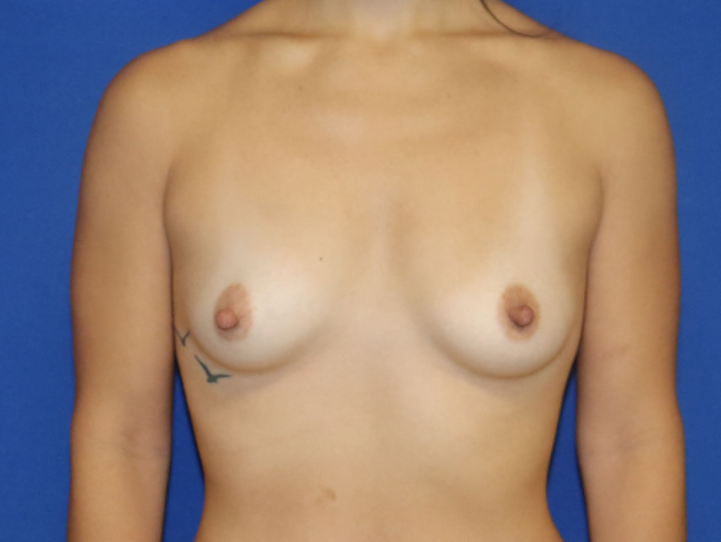
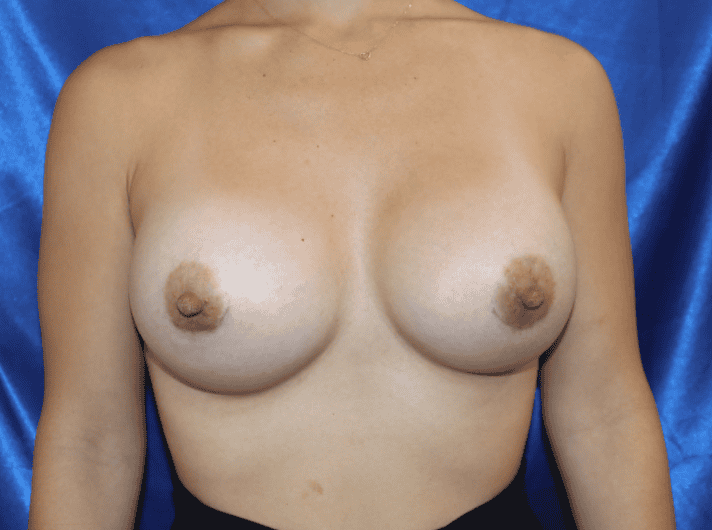
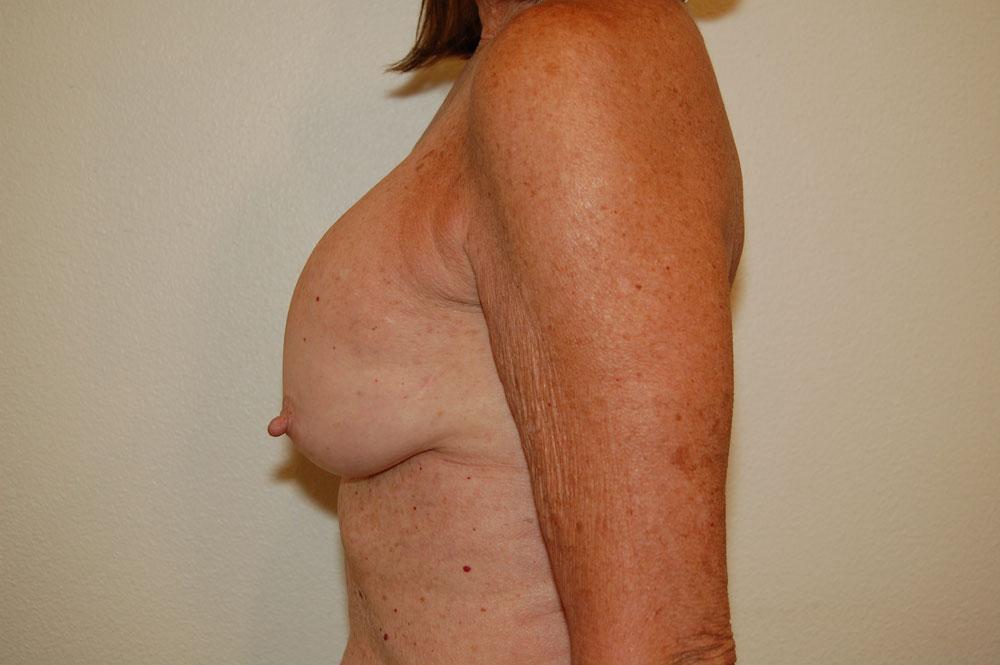
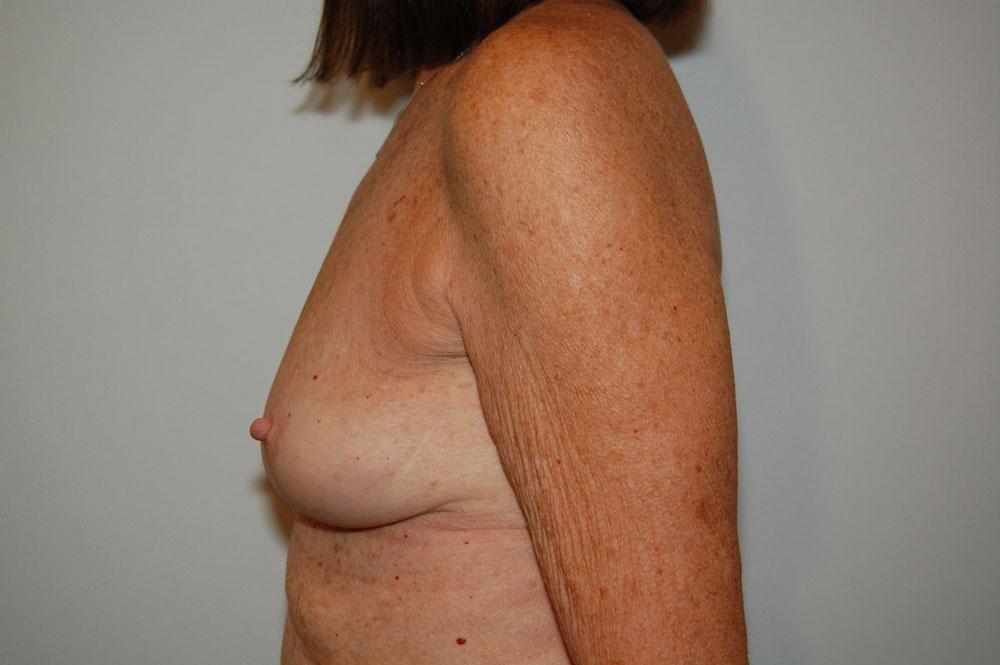
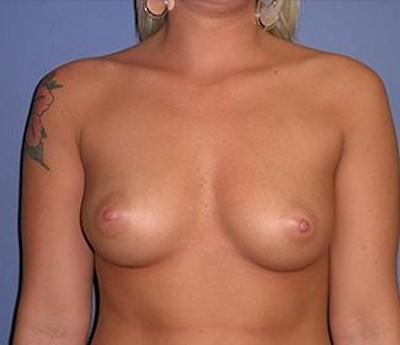
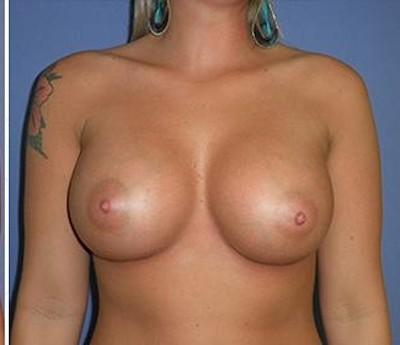
Major metropolitan markets concentrate the highest-volume breast augmentation specialists. Patient density and competition tend to produce better-trained surgeons in Miami, Los Angeles, New York, and Dallas, though excellent surgeons practice in every major U.S. city.
Find a board-certified breast augmentation surgeon
Get matched with verified Breast Augmentation surgeons in your area.
Emerging alternatives
The silicone-versus-saline binary is no longer the full picture. Two alternatives deserve mention.
Cohesive "gummy bear" implants are a subtype of silicone gel with a higher cohesivity rating. The gel holds its shape under pressure and minimizes migration in the event of shell failure [1]. They are still classified as silicone gel implants by the FDA but offer a different feel — slightly firmer than traditional gel, with better upper-pole shape retention.
Autologous fat transfer uses liposuctioned fat from the patient's own body to augment breast volume. It avoids implants entirely but produces modest size increases (typically a half to one cup), has variable fat survival rates, and may require multiple sessions. It is not a direct substitute for implant-based augmentation in patients seeking larger volume changes, but it is a legitimate option for modest enhancement or for revision cases where implant removal is desired.
Structured saline implants use an internal scaffold to reduce rippling and produce a feel closer to silicone. Availability is limited and long-term cohort data are less mature than for traditional implants.
Monitoring and follow-up
Post-operative surveillance differs meaningfully between the two implant types.
Saline implants require no routine imaging. Rupture is self-evident: the breast deflates. Standard annual clinical exams are sufficient [2].
Silicone implants require imaging surveillance to detect silent rupture. The FDA recommends MRI or high-resolution ultrasound starting 5–6 years after implantation, then every 2–3 years thereafter [1][7]. Ultrasound has improved sensitivity in recent years and is often used as a lower-cost first-line screening tool, with MRI reserved for equivocal findings.
Patients should also perform monthly self-exams — not for cancer screening alone, but to detect changes in implant feel, position, or contour that may indicate complication.
The honest verdict
There is no universally better implant. The clinical literature does not support a categorical recommendation [4][5][6].
For most adult patients with adequate native breast tissue, modern cohesive silicone gel implants offer the best balance of natural feel, durability, and aesthetic outcome — which is why they account for the majority of primary augmentations in the U.S. today. The tradeoffs are higher upfront cost and the obligation to undergo periodic imaging surveillance for silent rupture.
Saline implants remain a defensible, evidence-supported choice — especially for younger patients, those with adequate soft-tissue coverage, and those who prefer the certainty of immediate rupture detection without imaging follow-up. The cosmetic outcome is not inferior in a well-selected patient; the tactile feel and rippling risk are the genuine differences.
The more consequential decisions are surgeon selection, implant size, and pocket placement — covered in How to Choose Breast Implant Size and the breast augmentation recovery timeline. Choose the surgeon first. The implant choice will follow logically from a careful examination.
Find a board-certified breast augmentation surgeon
Get matched with verified Breast Augmentation surgeons in your area.
This article is for educational purposes only and does not constitute medical advice. Implant selection should be made in consultation with a board-certified plastic surgeon based on individual anatomy, health history, and goals.