
Patients researching body contouring quickly discover that "liposuction" is not one procedure. The dominant modern variants — VASER (ultrasound-assisted) and traditional tumescent (suction-assisted) liposuction — use different energy sources, produce different tissue effects, and carry different complication profiles. The marketing around VASER often overstates the gap; the marketing around traditional liposuction often understates it. This article compares the two techniques on mechanism, safety, recovery, cost, and candidate selection using peer-reviewed data, and identifies where each procedure genuinely outperforms the other.
Quick overview
Traditional tumescent liposuction has been the standard of care since the mid-1980s. It uses a saline-based infiltration fluid containing lidocaine and epinephrine to numb tissue and constrict blood vessels, then a hollow cannula mechanically disrupts and suctions fat. VASER — Vibration Amplification of Sound Energy at Resonance — is an ultrasound-assisted technique introduced in the early 2000s. A probe operating at 36 kHz emulsifies fat selectively before a specialized cannula aspirates it [5].
Both procedures remove fat. The clinically meaningful differences are in how the surrounding tissue is treated. VASER preserves more blood vessels, nerves, and lymphatics, produces measurable skin retraction through thermal collagen contraction, and shows lower complication rates in head-to-head studies [6][8]. Traditional liposuction is faster to learn, less equipment-dependent, and remains the better choice for large-volume debulking where skin quality is already excellent.
Neither technique is a weight-loss procedure. Both are contouring tools for patients within 30% of their goal weight with localized fat deposits resistant to diet and exercise [4].
How traditional liposuction works
Tumescent liposuction begins with infiltration of a large volume of dilute anesthetic solution into the target area. The fluid swells the fat layer, separates adipocytes, numbs the tissue, and reduces bleeding through epinephrine-mediated vasoconstriction. Complete infiltration typically takes 4 to 6 hours of tissue saturation time, though modern protocols compress this significantly [5].
Once the tissue is tumesced, the surgeon inserts blunt-tipped cannulas (typically 2 to 5 mm in diameter) through small incisions and moves them in a fanning motion. The cannula physically tears fat cells loose from surrounding connective tissue while negative pressure aspirates the resulting fat-fluid slurry. The technique is purely mechanical — there is no thermal component [8].
Blood loss averages 200 to 300 mL per 1,000 mL of aspirate, the highest among contemporary techniques [5]. Bruising is more pronounced because mechanical disruption damages capillaries indiscriminately. Skin retraction is minimal, which is why traditional liposuction performs poorly in patients with pre-existing laxity.
How VASER liposuction works
VASER also begins with tumescent infiltration, but the next step is different. A solid titanium probe is inserted through the incisions and delivers ultrasonic energy at 36 kHz. This frequency was selected because it resonates with the lipid bilayer of adipocytes, emulsifying fat into a liquid suspension while leaving denser structures — nerves, blood vessels, dermis, and fibrous tissue — substantially intact [5][8].
After emulsification, the liquefied fat is aspirated with a smaller, vented cannula at lower vacuum pressures. The thermal byproduct of ultrasound — tissue temperatures of 40 to 45°C — triggers dermal collagen contraction, which is the mechanism behind VASER's skin-tightening effect [5][8].
The selectivity of the ultrasound is the key clinical advantage. Studies measuring postoperative sensory function show 98% nerve preservation with VASER versus 95% with traditional liposuction, and 85 to 90% lymphatic vessel integrity versus 70 to 75% — which translates to less prolonged swelling [8]. Blood loss drops to 50 to 100 mL per 1,000 mL of aspirate [5].
VASER vs traditional: head-to-head data
The most rigorous comparison comes from a systematic review and meta-analysis published in Plastic and Reconstructive Surgery, which pooled outcomes from multiple controlled trials [2]. Key findings:
- Fat removal efficiency: VASER removes 15 to 20% more fat per unit operative time [2].
- Contour irregularities: 3 to 5% with VASER versus 8 to 12% with traditional liposuction [2].
- Patient satisfaction at 6 months: 8.5/10 for VASER versus 7.2/10 for traditional [2].
- Overall complication rate: 4.2% for VASER versus 8.7% for traditional in a 5,000-case review [6].
- Seroma formation: 2.1% VASER versus 4.5% traditional [6].
- Infection rate: 0.3% VASER versus 0.8% traditional [6].
- Revision surgery within 12 months: 1.8% VASER versus 3.2% traditional [6].
These numbers favor VASER, but they come with a caveat: VASER outcomes are heavily operator-dependent. The technique has a steeper learning curve, and complication rates rise sharply when surgeons exceed safe ultrasonic exposure times or fail to maintain adequate tumescent fluid coverage. The 0.1 to 0.5% rate of skin burns is a VASER-specific risk that does not exist with traditional liposuction [3].
Skin retraction: where VASER genuinely wins
The single most clinically significant difference between the two techniques is skin retraction. Traditional liposuction relies entirely on the patient's intrinsic skin elasticity to redrape over the new contour. In patients with good elasticity — typically under age 35 with no significant weight fluctuation history — this works adequately. In patients with moderate laxity, the result is often a smoother but loose contour that disappoints.
VASER's thermal effect produces measurable dermal collagen contraction. Histologic studies document 20 to 30% collagen contraction in VASER-treated tissue, compared to minimal effect with mechanical liposuction [5]. Clinically, this translates to noticeably better skin tone in the abdomen, inner thighs, upper arms, and submental area — the zones where laxity most often disappoints liposuction patients.
This is not equivalent to a tummy tuck or arm lift. Patients with significant skin redundancy still need excisional surgery. But for the large middle category — patients with mild to moderate laxity who are not yet candidates for a drainless tummy tuck or brachioplasty — VASER closes a meaningful gap.
Recovery and downtime
Recovery differences are real but often overstated by clinics promoting VASER.
Pain. Visual analog scores at 48 hours postoperatively average 3.2/10 for VASER versus 5.1/10 for traditional [7]. This is consistent with the reduced mechanical trauma to nerves and connective tissue.
Bruising and swelling. Postoperative bruising and edema resolve 30 to 40% faster with VASER [1]. The lymphatic preservation is the primary mechanism — undisrupted lymphatic channels clear interstitial fluid more efficiently.
Compression garments. VASER patients typically wear compression for 2 to 3 weeks; traditional liposuction patients wear it for 4 to 6 weeks [7].
Return to exercise. 3 to 4 weeks for VASER, 4 to 6 weeks for traditional [7].
Return to normal activities. 1 to 2 weeks for VASER, 2 to 3 weeks for traditional [4].
Liposuction — what to expect, week by week
Typical recovery 7–14 days before patients return to most normal activities.
- Day 1–7Most pain & swelling. Compression garment 23 h/day. Walk daily.
- Week 2Off prescription meds, light activity, swelling starts to drop.
- Weeks 3–4Return to desk work. Light cardio. Sleep position may relax.
- Weeks 5–8Resistance training cleared by most surgeons. Garment off.
- Months 3–6Final shape emerges, swelling fully resolved, scars mature.
General guidance only. Your surgeon's instructions take precedence.
Final contour from either procedure is not visible until 3 to 6 months postoperatively, when residual edema has fully resolved. Aggressive marketing showing "two-week results" is misleading — what is visible at two weeks is preliminary.
Cost comparison
VASER costs more than traditional liposuction in every market. The differential reflects three real factors: equipment cost amortization (VASER consoles and disposable probes are expensive), longer operative time on a per-area basis, and selection bias — VASER tends to be offered by higher-fee plastic surgeons.
National averages compiled by ASPS and confirmed across recent provider surveys:
- Traditional liposuction: $2,000 to $5,000 per area [4]
- VASER liposuction: $3,500 to $8,000 per area [4]
Multiple-area treatment, high-definition techniques (etching), and combination with fat grafting push pricing well above these ranges. Full pricing details by region are available on the cost of liposuction page.
The cost differential narrows when revision rates are factored in. With traditional liposuction's 3.2% revision rate versus VASER's 1.8% [6], the all-in cost over 12 months is closer than the sticker price suggests for patients in the higher-risk anatomical zones.
Candidate selection: which procedure for which patient
The choice is not VASER-vs-traditional in the abstract. It is which technique matches a specific patient's anatomy, goals, and risk tolerance.
Traditional liposuction is often the better choice when:
- The patient has excellent skin elasticity (typically under 35, no significant weight loss history).
- The treatment area is a single large zone with high fat volume (outer thighs, abdomen in a patient with good skin).
- The patient wants the most cost-effective option and skin retraction is not a concern.
- The surgeon is highly experienced in tumescent technique but does not perform VASER routinely.
VASER is often the better choice when:
- Mild to moderate skin laxity is present and the patient is not ready for excisional surgery.
- The treatment area is anatomically complex (submental, upper arms, male chest, inner thighs).
- Fat grafting is planned in the same operation — VASER-harvested fat shows 10 to 15% higher graft viability for transfer [1].
- High-definition contouring (visible muscle definition) is a goal.
- Multiple smaller zones will be treated in one session.
How to choose a surgeon
Both procedures are technique-dependent, but VASER more so. The ultrasonic energy can cause thermal injury if the probe is held in one location too long or if tumescent fluid coverage is inadequate. Surgeon volume matters.
Minimum criteria when evaluating a surgeon for either procedure:
- Board certification by the American Board of Plastic Surgery (or equivalent board for facial cases).
- Hospital privileges for the procedure being performed, even if surgery is done in an accredited office facility.
- For VASER specifically: documented training on the device and a personal case volume of at least 100 VASER procedures.
- Accredited surgical facility (AAAASF, AAAHC, or state equivalent).
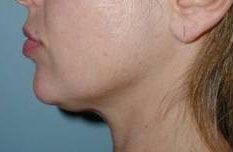
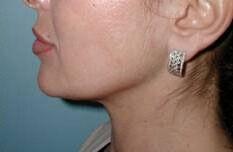
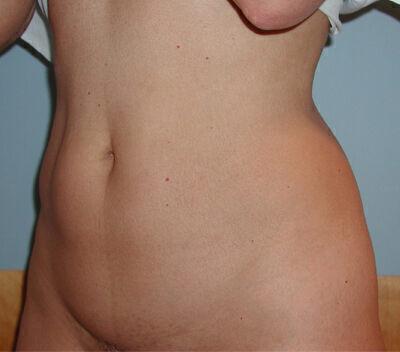
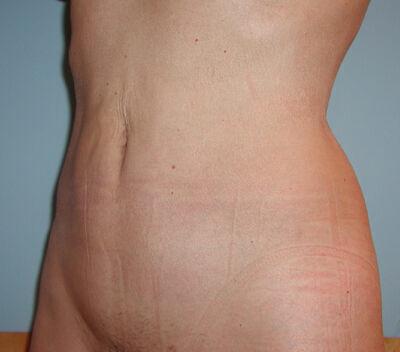
- Willingness to show unedited before-and-after photos of their own patients at 6+ months postoperatively, not stock images.
Real patient results
From verified board-certified surgeons in our directory.
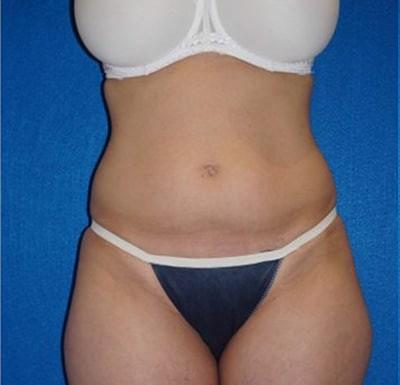
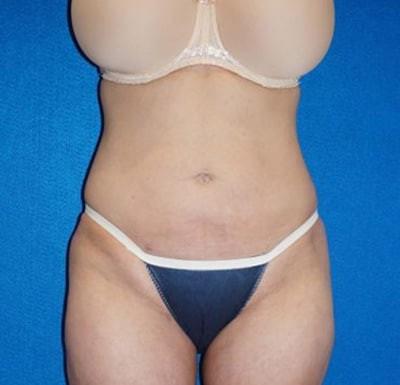
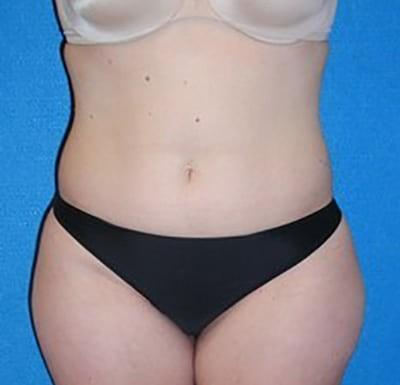
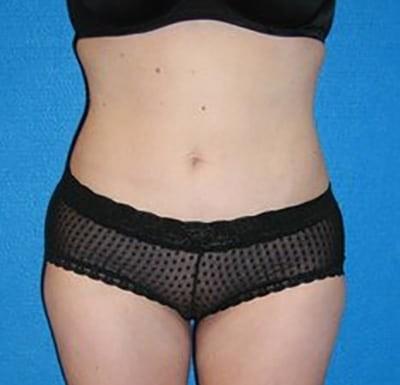
Geographic surgeon directories: Miami liposuction surgeons, Los Angeles liposuction surgeons, New York liposuction surgeons, and Houston liposuction surgeons.
Find a board-certified liposuction surgeon
Get matched with verified Liposuction surgeons in your area.
Long-term outcomes
Fat cells removed by either technique do not regenerate. The contour change is structurally permanent, provided weight remains stable. Weight gain after liposuction redistributes to remaining fat cells, often in areas that were not previously prominent — a phenomenon documented across both techniques.
Long-term satisfaction data favors VASER modestly: 92% satisfaction at 12 months for VASER versus 85% for traditional liposuction [7]. The gap likely reflects the cumulative effect of better skin retraction, fewer contour irregularities, and lower revision rates rather than any difference in the underlying fat removal.
For patients combining liposuction with fat grafting — gluteal augmentation, breast augmentation, or facial volume restoration — the VASER advantage in graft viability becomes clinically significant over years. Related reading on long-term contouring outcomes: how long BBL results last and the broader profile of liposuction risks.
The honest verdict
VASER liposuction outperforms traditional liposuction on most measurable endpoints in published comparative studies: lower complication rates, less blood loss, faster recovery, better skin retraction, higher patient satisfaction. The data is consistent across multiple peer-reviewed sources [2][6][7].
That does not make VASER the right choice for every patient. Traditional tumescent liposuction performed by an experienced surgeon on a well-selected patient produces excellent results at lower cost, and the complication rate differential — 8.7% versus 4.2% — is dominated by minor issues rather than serious adverse events [6]. A great surgeon doing traditional liposuction beats an average surgeon doing VASER, every time.
The most useful question is not "VASER or traditional?" but "which surgeon, doing which technique, on which anatomy?" Patients with excellent skin and a single large fat deposit may see no meaningful difference between the two. Patients with mild laxity, multiple zones, or fat-grafting plans are likely to benefit from VASER. Patients with significant skin redundancy need to be evaluated for excisional surgery regardless of energy source.
What is not honest is marketing that frames VASER as scarless, painless, or downtime-free. It is real surgery, with real recovery, real cost, and real risks. The advantage is incremental and clinically meaningful — not transformative.
Find a board-certified liposuction surgeon
Get matched with verified Liposuction surgeons in your area.
This article is for educational purposes only and does not constitute medical advice. Treatment decisions should be made in consultation with a board-certified plastic surgeon who has personally examined the patient.